TR
TR EN
EN

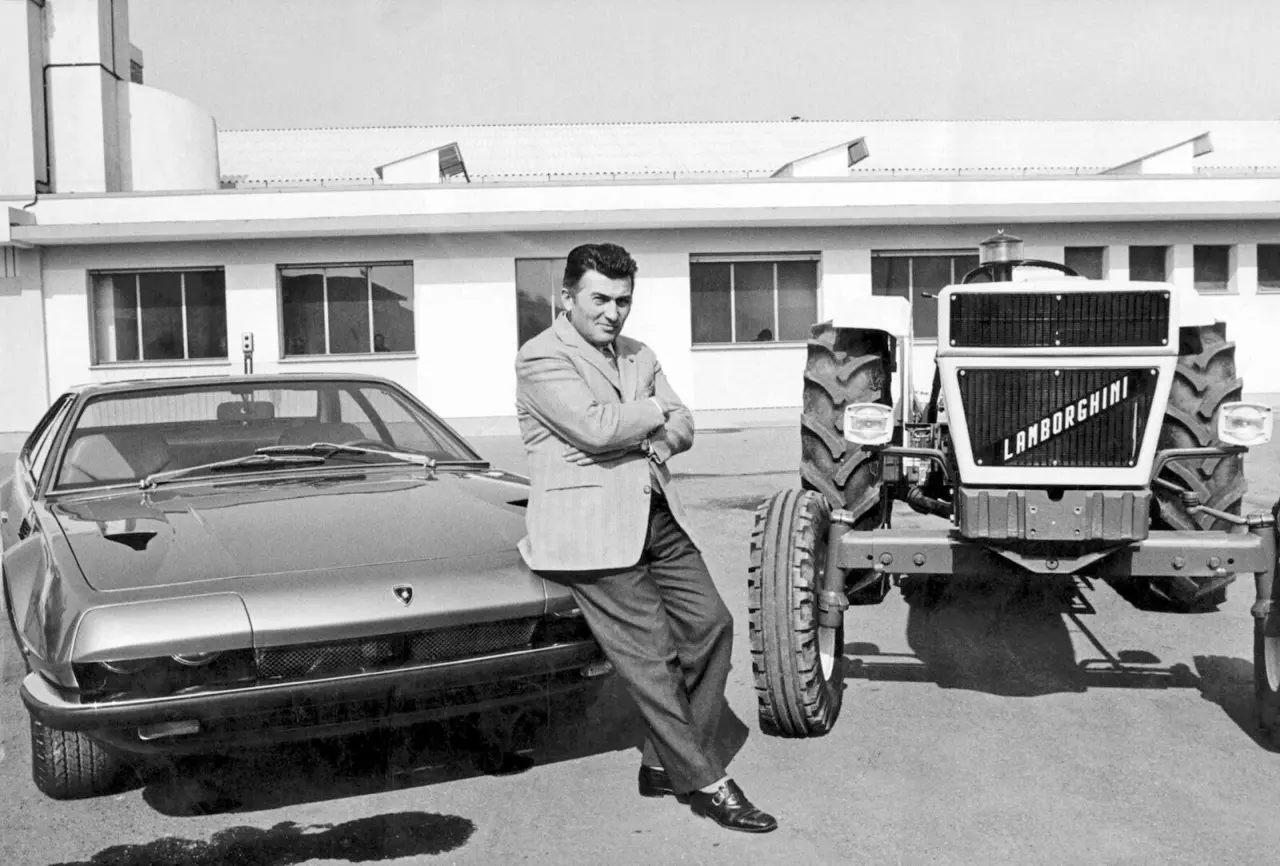
Lamborghini History: The Birth of an Italian Legend
Today, Lamborghini is recognized as one of the world's most prestigious manufacturers of exotic supercars. Its dramatic styling, naturally aspirated V12 engines, and unmistakable Italian character have made the brand an icon among automotive enthusiasts. However, Lamborghini's story is about much more than speed and luxury. It is a tale of determination, engineering ambition, and one entrepreneur's desire to build a better sports car.
Unlike many legendary automakers that evolved gradually over decades, Lamborghini was founded with a clear purpose—to challenge Ferrari. What began as a disagreement between two successful Italians ultimately gave birth to one of the most influential names in automotive history.
The Early Life of Ferruccio Lamborghini
From Farm Equipment to Industrial Success
Ferruccio Lamborghini was born on April 28, 1916, in the small town of Renazzo di Cento, near Bologna, Italy. Growing up on a farming family estate, he developed an early fascination with engines, machinery, and mechanical engineering. Rather than pursuing traditional farming, Ferruccio preferred repairing agricultural equipment and experimenting with mechanical improvements.
During World War II, he served as a mechanic in the Italian Royal Air Force, where he gained valuable experience maintaining military vehicles and engines. His technical expertise and practical engineering skills would later become the foundation of his industrial success.
After the war ended, Italy faced an urgent need for agricultural machinery to rebuild its economy. Recognizing this opportunity, Ferruccio founded Lamborghini Trattori in 1948.
Using surplus military components combined with his own engineering innovations, he began producing reliable and affordable tractors. Demand increased rapidly, and within only a few years Lamborghini Trattori became one of Italy's largest agricultural machinery manufacturers.
Ferruccio later expanded into additional industries by establishing companies producing heating systems and air-conditioning equipment. By the early 1960s, he had become one of Italy's wealthiest industrialists.
His financial success allowed him to indulge another lifelong passion—high-performance automobiles.
Ferrari Sparks an Unexpected Rivalry
The Conversation That Changed Automotive History
Ferruccio Lamborghini admired powerful grand touring cars and owned several prestigious models, including vehicles from Ferrari, Maserati, Jaguar, and Mercedes-Benz.
Among his favorites were Ferrari grand tourers, but despite appreciating their performance, he became increasingly frustrated with their reliability and refinement. According to the widely accepted story, Ferruccio repeatedly experienced clutch problems with his Ferrari 250 GT.
After discovering that Ferrari was using a clutch similar to the one installed in his tractors, he believed the issue could be solved with relatively simple engineering improvements.
Confident in his technical knowledge, Ferruccio visited Enzo Ferrari to discuss the problem.
The exact details of their conversation have been debated over the years, but the story has become one of the most famous legends in automotive history. Enzo Ferrari allegedly dismissed Ferruccio's criticism by suggesting that a tractor manufacturer should not tell Ferrari how to build sports cars.
Whether every word of this exchange is historically accurate remains uncertain. However, there is no doubt that the disagreement motivated Ferruccio Lamborghini to pursue an ambitious new goal.
Instead of merely criticizing Ferrari, he decided to build his own grand touring car—one that combined exceptional performance with greater comfort, refinement, and reliability.
The Birth of Automobili Lamborghini
In 1963, Ferruccio officially founded Automobili Lamborghini in Sant'Agata Bolognese, a small town located between Modena and Bologna in Italy's famous Motor Valley.
Unlike many new manufacturers that relied on inexperienced engineers, Ferruccio recruited some of the finest automotive talent available.
His growing engineering team included:
-
Giotto Bizzarrini, responsible for developing the legendary V12 engine.
-
Gian Paolo Dallara, an exceptionally talented chassis engineer.
-
Paolo Stanzani, who would later help create several iconic Lamborghini models.
-
Bob Wallace, an experienced New Zealand test driver whose development work greatly influenced Lamborghini's early success.
Ferruccio gave his engineers one simple objective:
Create a grand touring automobile capable of outperforming Ferrari while offering superior comfort and everyday usability.
Only one year later, Lamborghini introduced its first production car.
Lamborghini 350 GT (1964–1966)
The First Production Lamborghini
Although the 350 GTV prototype debuted at the 1963 Turin Motor Show, Lamborghini's first true production model was the 350 GT, introduced in 1964.
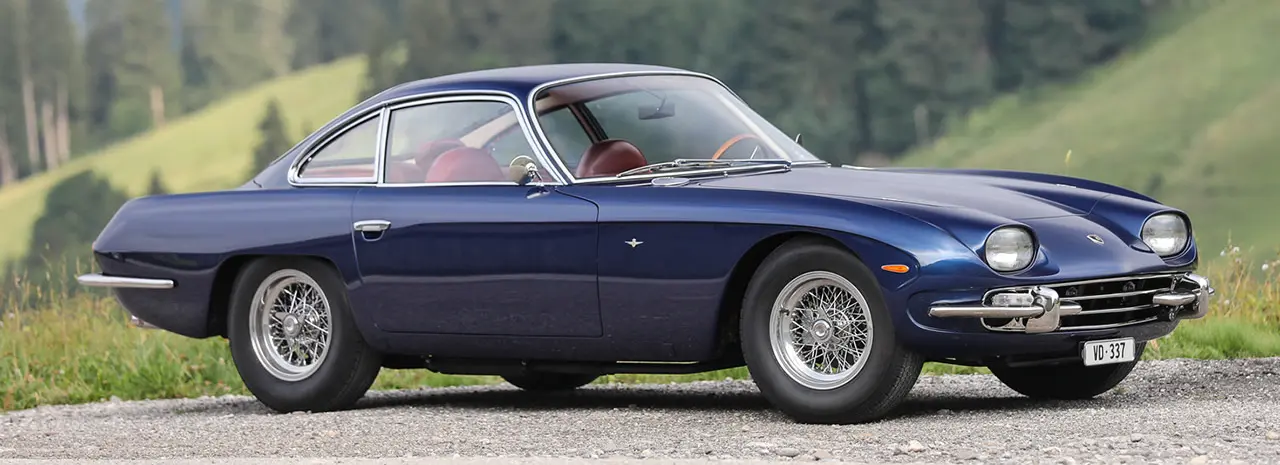
The production version retained the advanced engineering philosophy of the prototype while becoming a far more refined and practical grand touring car.
Instead of creating an aggressive race-inspired machine, Lamborghini focused on building a luxurious high-performance GT that drivers could comfortably use every day.
The result immediately established Lamborghini as a serious competitor to Ferrari.
Design
Elegant Italian Styling
The body of the 350 GT was designed by Carrozzeria Touring using the famous Superleggera construction method.
This lightweight engineering technique combined a tubular framework with thin aluminum body panels, reducing weight while maintaining structural rigidity.
Compared with many competitors of the era, the 350 GT featured cleaner proportions, smooth flowing body lines, and understated elegance rather than excessive styling.
Its long hood, low roofline, wide grille, and graceful curves created a timeless appearance that still looks sophisticated today.
Interior
Luxury Meets Performance
Ferruccio believed that a high-performance automobile should also provide exceptional comfort.
As a result, the 350 GT featured a beautifully finished cabin trimmed with premium leather, polished metal accents, and carefully crafted instrumentation.
Large analog gauges sat directly in front of the driver, while supportive seats and generous cabin space made the car suitable for long-distance touring.
Unlike many sports cars of the period, the Lamborghini emphasized refinement without sacrificing driving enjoyment.
Engine and Performance
One of the greatest achievements of the 350 GT was its remarkable engine.
Designed by legendary engineer Giotto Bizzarrini, Lamborghini's new all-aluminum V12 quickly became one of the finest naturally aspirated engines ever produced.
For production use, the high-revving racing design was refined by Paolo Stanzani and Gian Paolo Dallara to improve durability and drivability.
Key specifications included:
-
3.5-liter naturally aspirated V12 engine
-
Approximately 280 horsepower
-
Five-speed manual transmission
-
Rear-wheel drive
-
Top speed of around 250 km/h (155 mph)
-
0–100 km/h acceleration in approximately 6.5 seconds
For the mid-1960s, these figures placed the Lamborghini among the fastest grand touring cars in the world.
Driving Characteristics
The 350 GT delivered an entirely different driving experience from many of its competitors.
Its carefully balanced chassis, independent suspension, responsive steering, and powerful V12 engine made it both exciting and surprisingly comfortable.
Rather than building an uncompromising racing car for public roads, Lamborghini successfully created a refined grand tourer capable of high-speed European travel without sacrificing comfort.
This philosophy would remain central to Lamborghini for many years.
Production and Legacy
Production of the Lamborghini 350 GT continued from 1964 until 1966.
Only 120 examples were built, making it one of the rarest production Lamborghinis ever manufactured.
Although produced in limited numbers, the 350 GT proved that Ferruccio Lamborghini's vision was achievable. More importantly, it demonstrated that Ferrari was no longer the only manufacturer capable of building world-class Italian grand touring automobiles.
Lamborghini 400 GT (1966–1968)
More Powerful, More Practical
Following the success of the 350 GT, Lamborghini introduced the 400 GT in 1966.
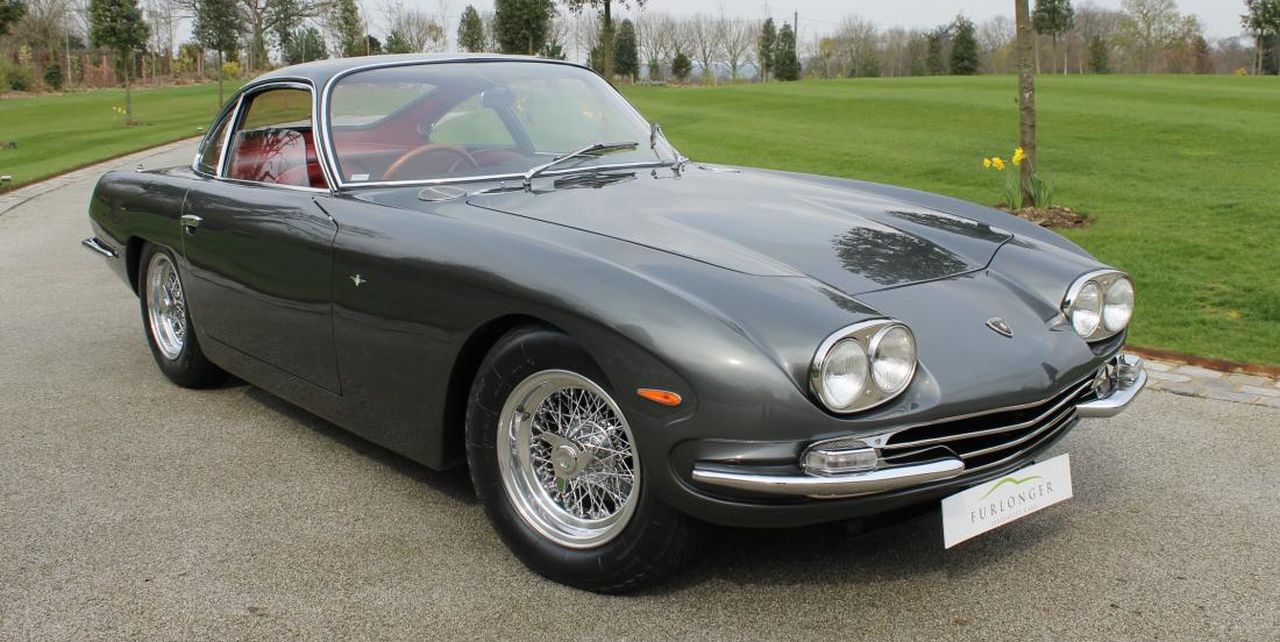
Rather than completely redesigning the vehicle, engineers focused on improving nearly every aspect of the original formula.
The new model offered greater power, increased comfort, improved refinement, and additional practicality while maintaining the elegant styling that had established Lamborghini's reputation.
Initially introduced as the 400 GT Interim, the model soon evolved into the 400 GT 2+2, featuring two small rear seats and a redesigned roofline.
The 2+2 version became Lamborghini's first true four-seat grand touring car.
Design
The 400 GT retained the beautiful Touring-designed body while incorporating several subtle improvements.
The revised front fascia, updated lighting, enlarged cabin, and smoother proportions gave the car a more mature appearance without losing its distinctive Italian elegance.
Despite the additional passenger space, the overall design remained sleek and well balanced.
Interior
Luxury became an even greater priority inside the 400 GT.
The cabin featured handcrafted leather upholstery, premium carpeting, polished wood trim, improved instrumentation, and greater attention to passenger comfort.
The addition of rear seating transformed the vehicle into a genuine grand touring car capable of carrying four occupants over long distances.
Engine and Performance
The biggest improvement came under the hood.
Engine displacement increased from 3.5 liters to 4.0 liters while retaining the magnificent naturally aspirated V12 architecture.
Major specifications included:
-
4.0-liter naturally aspirated V12
-
Approximately 320 horsepower
-
Five-speed manual transmission
-
Rear-wheel drive
-
Top speed approaching 270 km/h (168 mph)
-
0–100 km/h acceleration in under six seconds
The larger engine delivered stronger acceleration, improved flexibility, and a more effortless driving experience, particularly at high cruising speeds.
Driving Experience
The Lamborghini 400 GT successfully combined luxury with outstanding performance.
Its smooth V12 engine, refined suspension, stable high-speed handling, and comfortable interior made it one of Europe's finest grand touring automobiles.
Unlike many sports cars of the era that prioritized outright performance, the 400 GT offered an ideal balance between speed, refinement, and everyday usability.
Production and Importance
Production of the Lamborghini 400 GT remained relatively limited.
Approximately 247 examples of the 400 GT 2+2 were produced, alongside a small number of Interim models.
Although overshadowed today by the Miura, the 400 GT played a crucial role in Lamborghini's early development.
It proved that the young company could consistently produce sophisticated, high-quality automobiles while refining the engineering principles that would soon lead to one of the greatest supercars ever built.
That next chapter arrived in 1966 with the introduction of the revolutionary Lamborghini Miura—a car that would forever change the supercar industry.
Lamborghini's Rise to Global Fame
After establishing itself with the 350 GT and 400 GT, Lamborghini entered a new chapter that would forever change the automotive industry. During the late 1960s, the company shifted its focus from producing luxurious grand touring cars to creating revolutionary high-performance machines.
This transformation began with a single model that redefined what a supercar could be—the Lamborghini Miura.
Its breathtaking styling, innovative engineering, and extraordinary performance immediately elevated Lamborghini from an ambitious newcomer into one of the world's most respected exotic car manufacturers.
Lamborghini Miura (1966–1973)
The World's First Modern Supercar
Few automobiles have influenced automotive history as profoundly as the Lamborghini Miura.
When it debuted at the 1966 Geneva Motor Show, the Miura stunned journalists, engineers, and enthusiasts alike. Although racing cars had previously used mid-engine layouts, the Miura became the first production road car to successfully combine a transverse mid-mounted V12 engine with everyday usability.
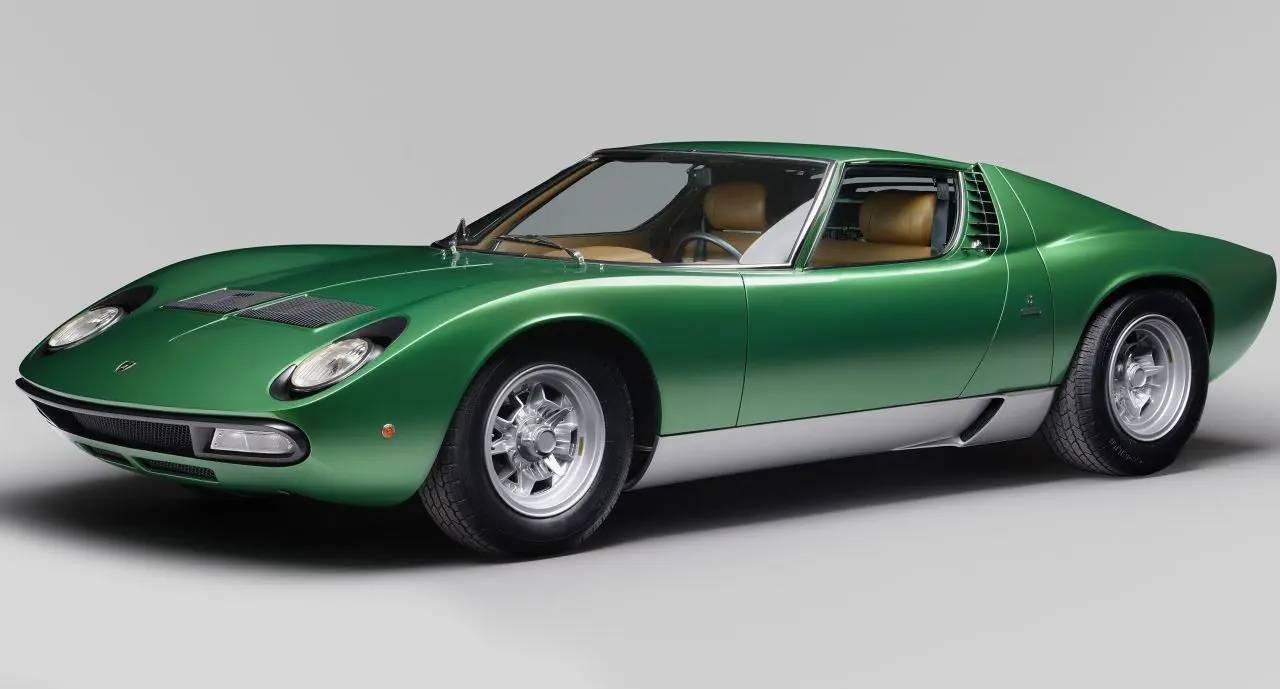
Many automotive historians consider the Miura to be the world's first true supercar.
Its arrival changed the direction of high-performance automotive design for decades to come.
Design
A Masterpiece by Marcello Gandini
The Miura was designed by Marcello Gandini of Bertone, whose bold vision created one of the most beautiful sports cars ever produced.
Unlike the elegant grand touring cars of the era, the Miura featured dramatic proportions:
-
Extremely low ride height
-
Wide stance
-
Curved front fenders
-
Hidden headlamps with distinctive "eyelashes"
-
Flowing roofline
-
Muscular rear bodywork
Its sleek silhouette appeared futuristic in the 1960s and continues to inspire automotive designers today.
The Miura proved that engineering excellence and artistic beauty could exist in perfect harmony.
Interior
Despite its performance-focused nature, the Miura offered a luxurious cabin finished with premium leather, elegant switchgear, and carefully crafted instrumentation.
The dashboard wrapped around the driver, while the large central tunnel emphasized the location of the powerful V12 engine positioned directly behind the seats.
Although cabin space was limited compared with grand touring cars, the Miura delivered an unmistakably exotic driving experience.
Revolutionary Engineering
The Miura's greatest innovation was its chassis layout.
Instead of placing the engine in the front like most grand touring cars, Lamborghini engineers Gian Paolo Dallara and Paolo Stanzani mounted the V12 transversely behind the passenger compartment.
This configuration dramatically improved weight distribution, cornering balance, and overall handling.
The lightweight chassis, fully independent suspension, four-wheel disc brakes, and advanced engineering made the Miura one of the most technically sophisticated automobiles of its era.
Many manufacturers—including Ferrari—would later adopt similar layouts for their flagship supercars.
Engine and Performance
Power came from Lamborghini's legendary naturally aspirated V12.
The Miura P400 featured:
-
3.9-liter naturally aspirated V12
-
Approximately 350 horsepower
-
Five-speed manual transmission
-
Rear-wheel drive
-
Top speed exceeding 275 km/h (171 mph)
-
0–100 km/h acceleration in approximately 6.5 seconds
For the late 1960s, these numbers placed the Miura among the fastest production cars in the world.
Its combination of speed, handling, and breathtaking styling made it unlike anything else available.
Miura Variants
Throughout its production life, Lamborghini continuously refined the Miura.
Miura P400 (1966–1969)
The original production model introduced the revolutionary mid-engine concept and immediately established Lamborghini as Ferrari's most serious rival.
Miura P400 S (1968–1971)
The "S" version received approximately 370 horsepower along with numerous improvements.
Interior materials became more luxurious, electric windows were introduced, suspension settings were refined, and braking performance improved.
Miura P400 SV (1971–1973)
The final and most advanced version produced approximately 385 horsepower.
The suspension was upgraded, rear bodywork widened, lubrication systems improved, and handling became significantly more predictable.
Many collectors consider the SV to be the ultimate evolution of the Miura.
Production and Legacy
Between 1966 and 1973, Lamborghini produced 764 Miuras.
Although production numbers were relatively low, the Miura completely transformed Lamborghini's reputation.
More importantly, it established the blueprint for future supercars:
-
Mid-mounted engine
-
Exotic styling
-
Naturally aspirated V12 power
-
Driver-focused engineering
-
Limited production exclusivity
Even today, the Miura remains one of the most valuable and celebrated collector cars in the world.
Lamborghini Espada (1968–1978)
Performance for Four
Following the success of the Miura, Lamborghini introduced a very different type of grand touring car.
The Espada demonstrated that a high-performance Lamborghini could comfortably accommodate four passengers without sacrificing speed or luxury.
Designed once again by Marcello Gandini, the Espada featured sharp, angular styling that reflected the changing design language of the late 1960s.
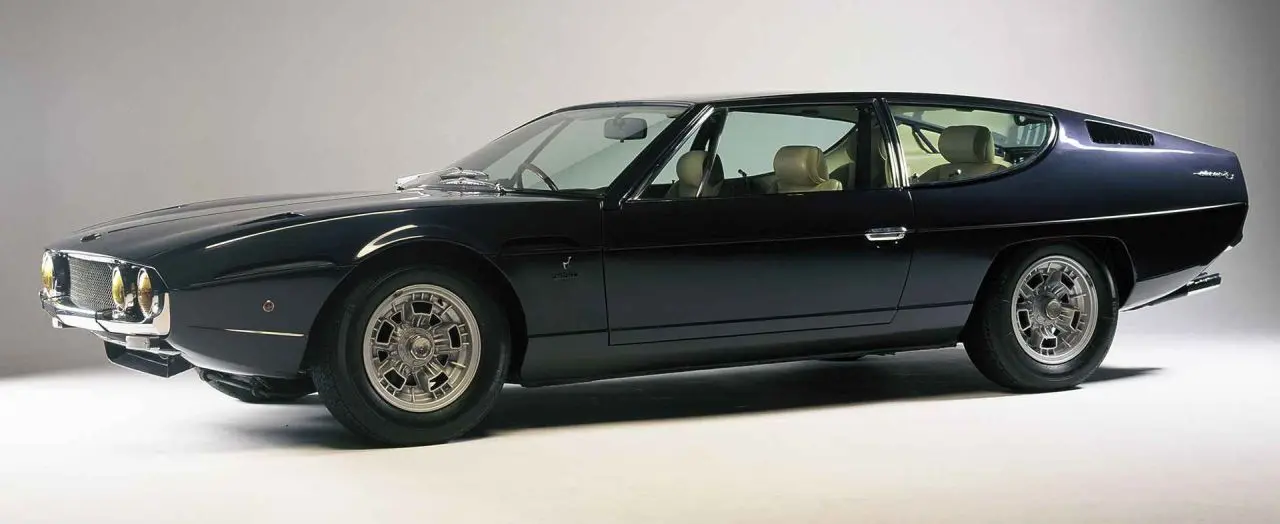
Its large glass surfaces, long wheelbase, and spacious cabin distinguished it from traditional sports cars.
Engine and Performance
The Espada used Lamborghini's proven naturally aspirated V12 engine.
Key specifications included:
-
4.0-liter V12
-
Up to 350 horsepower in later versions
-
Five-speed manual or optional automatic transmission
-
Rear-wheel drive
-
Top speed approaching 250 km/h (155 mph)
Unlike the Miura, the Espada prioritized long-distance comfort while still offering exceptional performance.
Luxury and Practicality
The Espada became Lamborghini's first true four-seat grand tourer.
Its spacious cabin, generous luggage capacity, comfortable suspension, and refined interior allowed owners to travel across Europe at high speed with family or friends.
Production continued for a full decade, making the Espada one of Lamborghini's longest-running early models.
Other Important Models of the Late 1960s and Early 1970s
During this period Lamborghini continued expanding its lineup.
Islero (1968–1970)
Designed as the successor to the 400 GT, the Islero retained the front-engine V12 layout while offering improved refinement and performance.
Although produced in limited numbers, it became known as one of Lamborghini's most elegant grand touring cars.
Jarama (1970–1976)
The Jarama combined strong V12 performance with improved practicality and was among Ferruccio Lamborghini's personal favorite automobiles.
Urraco (1972–1979)
Seeking to compete with smaller Ferrari models, Lamborghini introduced the Urraco.
Powered by a V8 engine rather than the traditional V12, it offered a more affordable entry into Lamborghini ownership while introducing new engineering concepts that would later influence future models.
Lamborghini Countach (1974–1990)
The Supercar That Defined an Era
If the Miura created the supercar, the Countach became its ultimate symbol.
When Lamborghini revealed the Countach LP500 concept in 1971, the automotive world had never seen anything like it.
Production began in 1974, and the Countach immediately became one of the most recognizable automobiles ever built.
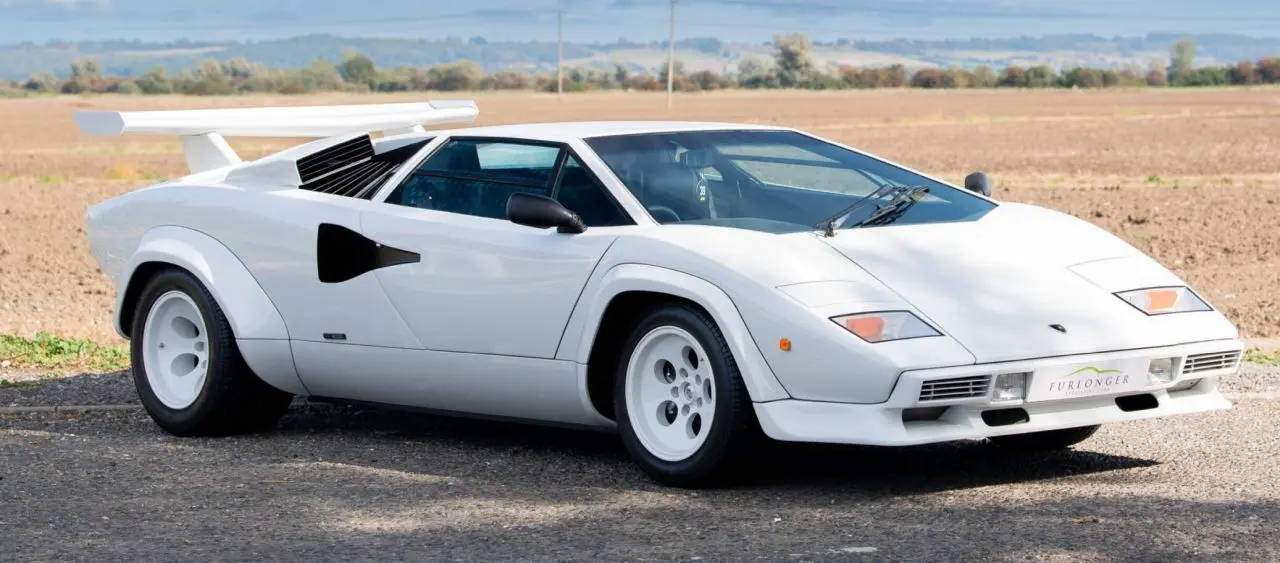
Its aggressive wedge-shaped body, dramatic proportions, and futuristic appearance represented a complete departure from traditional sports car design.
Nearly every modern supercar owes something to the Countach.
Radical Design
Once again designed by Marcello Gandini, the Countach abandoned the flowing curves of the Miura in favor of razor-sharp geometric lines.
Its defining features included:
-
Extremely low profile
-
Wide rear bodywork
-
Flat nose
-
Sharp angular styling
-
Massive rear air intakes
-
Iconic scissor doors
The upward-opening doors became one of Lamborghini's most recognizable design signatures and continue to appear on many flagship V12 models today.
Engine Evolution
Unlike the Miura's transverse engine layout, the Countach adopted a longitudinally mounted V12.
Throughout its production life, displacement steadily increased.
Major engine versions included:
-
4.0-liter V12
-
4.8-liter V12
-
5.0-liter V12
-
5.2-liter V12 (5000 Quattrovalvole)
Power outputs eventually exceeded 450 horsepower in the final versions.
Combined with improved aerodynamics and wider tires, the Countach became one of the fastest production cars of the 1980s.
Performance
Depending on the version, the Countach offered:
-
0–100 km/h in approximately 4.8 to 5.5 seconds
-
Top speeds exceeding 295 km/h
These figures placed it among the world's fastest production automobiles for many years.
Cultural Impact
The Countach became much more than an automobile.
It appeared in countless films, television shows, magazines, posters, and video games throughout the 1980s.
For an entire generation, the Countach represented the ultimate dream car.
Its dramatic styling influenced sports car design worldwide and cemented Lamborghini's identity as the manufacturer of the world's most visually exciting automobiles.
Lamborghini Jalpa (1981–1988)
An Accessible Lamborghini
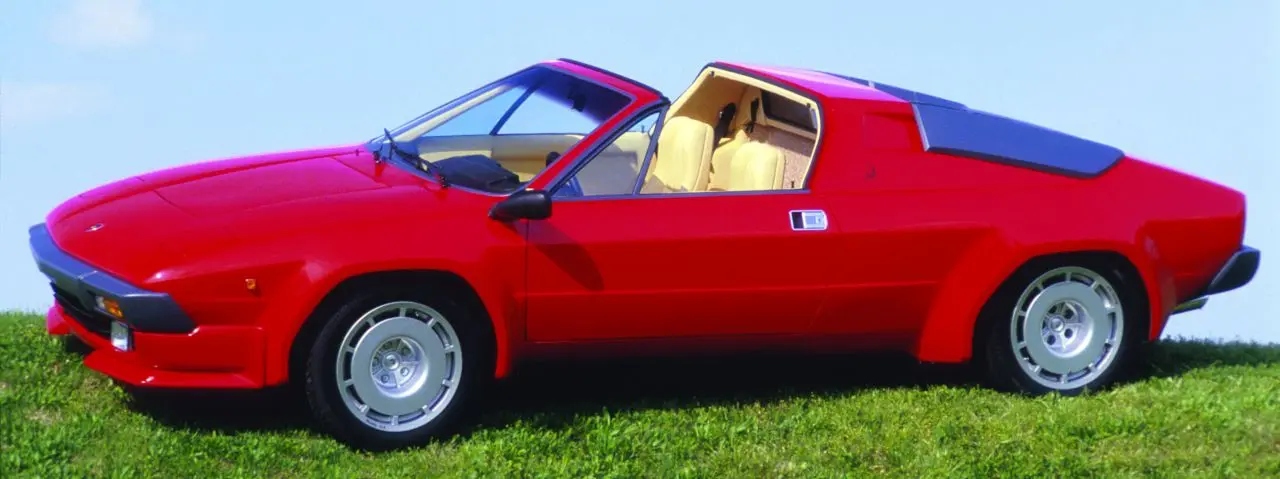
While the Countach served as Lamborghini's flagship, the Jalpa expanded the company's customer base.
Designed as a more affordable alternative, it retained Lamborghini's unmistakable styling while offering lower running costs and easier everyday usability.
Engine and Performance
The Jalpa featured:
-
3.5-liter naturally aspirated V8
-
Approximately 255 horsepower
-
Five-speed manual transmission
-
Rear-wheel drive
-
Top speed around 248 km/h
-
0–100 km/h acceleration in roughly six seconds
Although less powerful than the Countach, the Jalpa delivered excellent balance and enjoyable handling.
Its targa roof added versatility, while its compact dimensions made it easier to drive than Lamborghini's larger V12 models.
Lamborghini Faces Difficult Times
Despite producing some of the world's most admired sports cars, Lamborghini faced severe financial challenges during the 1970s.
The 1973 global oil crisis dramatically reduced demand for large-displacement performance automobiles.
Sales declined sharply, placing enormous financial pressure on the company.
Ferruccio Lamborghini had already sold part of his ownership in 1972, and by 1974 he sold his remaining shares before retiring from the automotive industry.
Over the following decades Lamborghini experienced several ownership changes, periods of bankruptcy, and repeated attempts at financial recovery.
Despite these difficulties, the company never abandoned its commitment to producing extraordinary performance cars.
This resilience ultimately ensured Lamborghini's survival and prepared the brand for an entirely new era of growth.
Lamborghini Under New Ownership
Surviving Through Change
Following Ferruccio Lamborghini's departure, the company entered one of the most turbulent periods in its history. Without its founder at the helm, Lamborghini faced financial uncertainty and frequent ownership changes.
In 1972, Ferruccio sold a 51 percent stake in Automobili Lamborghini to Swiss businessman Georges-Henri Rossetti. Two years later, he sold his remaining shares to René Leimer, officially ending his involvement with the company he had created.
Unfortunately, the timing could not have been worse. The global oil crisis of the early 1970s severely affected demand for high-performance sports cars. As fuel prices increased and economic conditions worsened, sales declined dramatically across the luxury automotive market.
By 1978, Lamborghini entered bankruptcy and was placed under court-appointed administration. Although production continued in limited numbers, the future of the company appeared uncertain.
Throughout the late 1970s and 1980s, Lamborghini changed ownership several times as investors attempted to restore financial stability and modernize production.
Despite these difficulties, Lamborghini's engineers continued developing innovative sports cars that preserved the brand's distinctive character.
The Chrysler Era (1987–1994)
American Investment, Italian Passion
A major turning point arrived in 1987 when the American automotive giant Chrysler Corporation acquired Lamborghini.
For the first time, Lamborghini had the financial backing of a major international manufacturer.
Chrysler invested heavily in manufacturing facilities, engineering resources, quality control, and product development. While Lamborghini retained its Italian design philosophy, the additional funding allowed engineers to develop an entirely new flagship supercar.
This collaboration resulted in one of the company's most famous models.
Lamborghini Diablo (1990–2001)
The Successor to the Countach
Replacing the legendary Countach was never going to be easy.
Lamborghini answered the challenge in 1990 with the introduction of the Diablo.
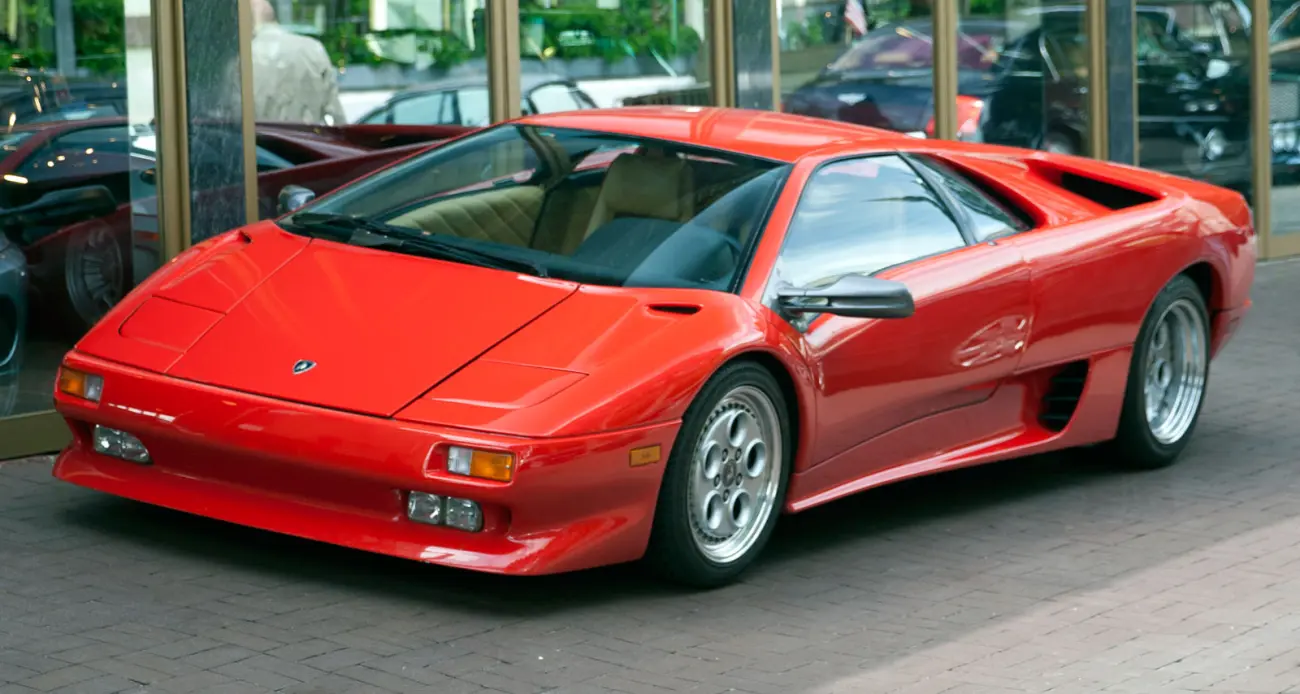
Originally designed by Marcello Gandini and later refined before production, the Diablo successfully modernized Lamborghini's V12 supercar formula while maintaining the aggressive styling and dramatic presence expected from the brand.
The name "Diablo" came from a famous fighting bull, continuing Lamborghini's long-standing tradition of naming many of its flagship models after legendary bulls from Spanish bullfighting history.
Design
The Diablo retained Lamborghini's unmistakable wedge-shaped profile while introducing smoother, more aerodynamic bodywork.
Key styling elements included:
-
Retractable pop-up headlights
-
Wide rear fenders
-
Large side air intakes
-
Low driving position
-
Dramatic proportions
-
Signature scissor doors
Although clearly inspired by the Countach, the Diablo appeared more refined and considerably more modern.
Interior
Unlike previous Lamborghini supercars, the Diablo placed greater emphasis on comfort.
The cabin featured improved ergonomics, higher-quality materials, better visibility, and increased refinement.
Leather upholstery, air conditioning, electrically adjustable seats, and upgraded audio systems made the Diablo suitable for both everyday driving and long-distance touring.
Engine and Performance
Power came from an updated version of Lamborghini's legendary naturally aspirated V12.
Early specifications included:
-
5.7-liter naturally aspirated V12
-
Approximately 492 horsepower
-
Five-speed manual transmission
-
Rear-wheel drive
Performance figures were extraordinary for the early 1990s.
The Diablo accelerated from 0 to 100 km/h in approximately 4.5 seconds while reaching a top speed exceeding 325 km/h (202 mph), making it one of the fastest production cars in the world.
Evolution of the Diablo
During its eleven-year production run, the Diablo received continuous improvements.
Important versions included:
Diablo VT
Introduced Lamborghini's first viscous-coupling all-wheel-drive system, significantly improving traction and stability.
Diablo SE30
Built to celebrate Lamborghini's 30th anniversary, this lightweight special edition emphasized track-focused performance.
Diablo SV
The Super Veloce version prioritized rear-wheel-drive excitement while increasing engine output.
Diablo GT
Designed with circuit performance in mind, the GT featured extensive aerodynamic upgrades, reduced weight, and increased power.
Diablo 6.0
The final version benefited from improved engineering and quality following Audi's acquisition of Lamborghini.
Powered by a 6.0-liter V12 producing approximately 550 horsepower, it represented the ultimate evolution of the Diablo platform.
Production and Legacy
Over 2,900 Diablo models were produced between 1990 and 2001.
The Diablo successfully carried Lamborghini into the modern era while maintaining the company's reputation for dramatic styling and extraordinary performance.
Changing Ownership Once Again
Despite the Diablo's success, Lamborghini continued experiencing corporate instability.
In 1994, Chrysler sold Lamborghini to an Indonesian investment group controlled by MegaTech.
Although MegaTech continued supporting Lamborghini's operations, the company still required greater financial stability to compete with rapidly advancing rivals such as Ferrari and Porsche.
That stability finally arrived in 1998.
Audi Acquires Lamborghini (1998)
A New Beginning
In 1998, Audi AG, a member of the Volkswagen Group, purchased Lamborghini.
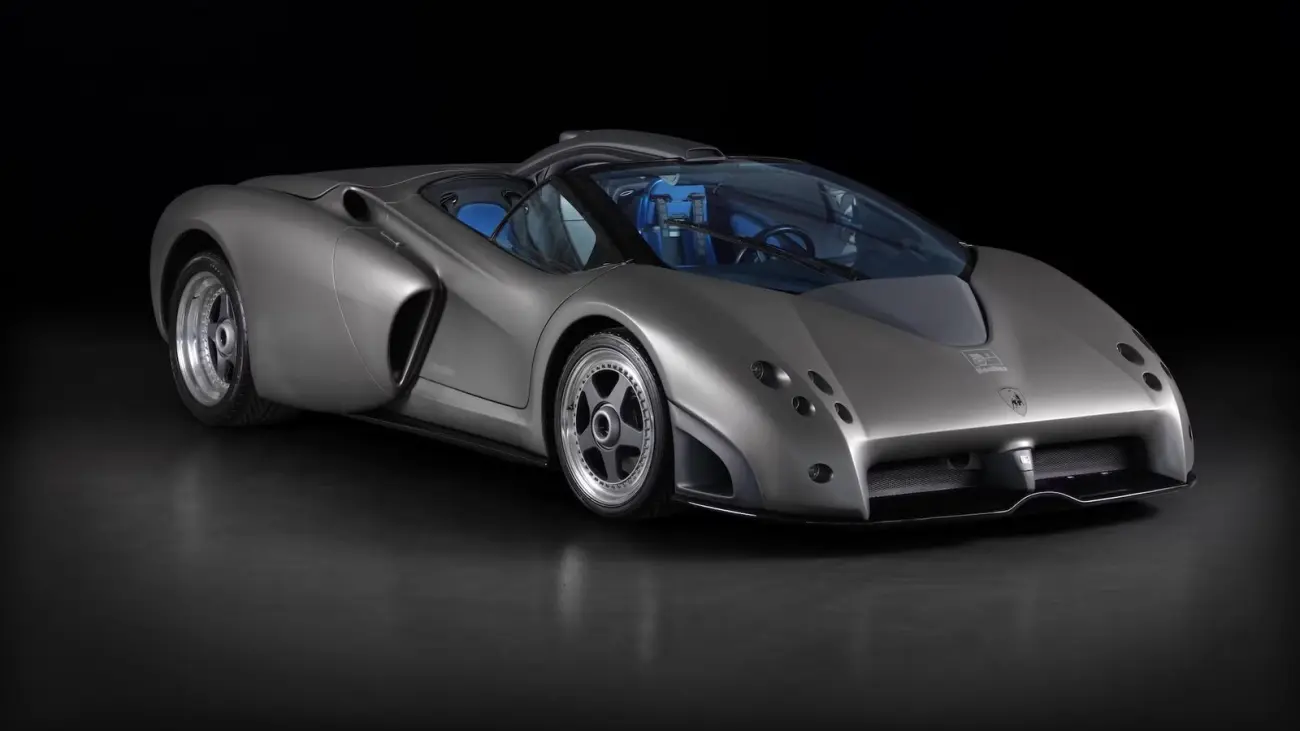
This acquisition proved to be one of the most important moments in Lamborghini's history.
Audi introduced significantly higher manufacturing standards, advanced engineering processes, improved quality control, and major investments in research and development.
Rather than changing Lamborghini's identity, Audi strengthened it.
Italian design and emotional character remained at the heart of every vehicle, while German engineering precision dramatically improved reliability, build quality, and production efficiency.
The results became evident almost immediately.
Lamborghini Murciélago (2001–2010)
The First Lamborghini of the Audi Era
Introduced in 2001, the Murciélago became the first entirely new Lamborghini developed under Audi ownership.
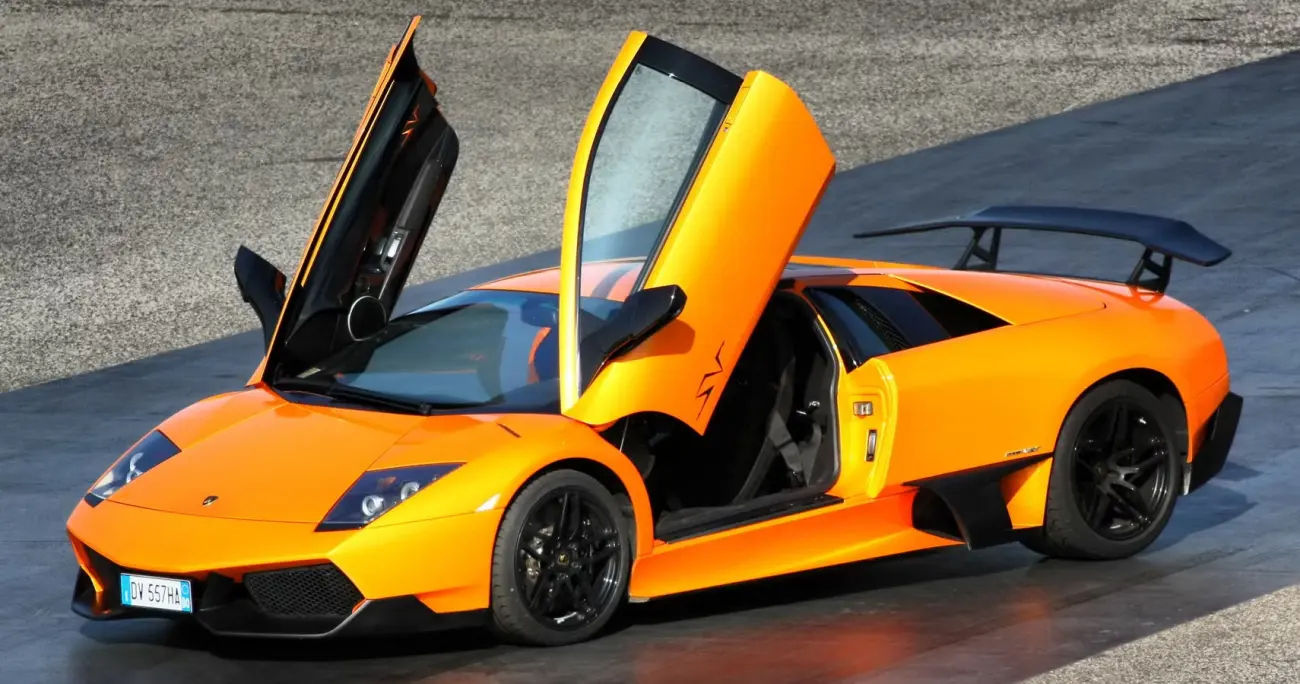
Named after a legendary fighting bull that famously survived numerous sword strikes in the bullring, the Murciélago represented strength, endurance, and resilience.
Design
Although unmistakably a Lamborghini, the Murciélago featured cleaner surfaces and improved aerodynamic efficiency.
Its design incorporated:
-
Carbon-fiber body components
-
Active rear air intakes
-
Electronically controlled rear spoiler
-
Signature scissor doors
-
Wide rear stance
-
Aggressive front fascia
The car successfully blended Lamborghini's dramatic appearance with significantly improved engineering sophistication.
Engine and Performance
The Murciélago retained Lamborghini's naturally aspirated V12 tradition.
Early models featured:
-
6.2-liter V12
-
Approximately 580 horsepower
-
Permanent all-wheel drive
-
Six-speed manual transmission
Later LP640 and LP670-4 SuperVeloce versions increased displacement to 6.5 liters while raising power to approximately 670 horsepower.
Acceleration improved to around 3.2 seconds from 0 to 100 km/h, with top speeds exceeding 340 km/h.
Driving Experience
Compared with previous Lamborghini flagships, the Murciélago delivered significantly improved refinement.
Audi's engineering expertise enhanced chassis rigidity, suspension tuning, braking performance, interior quality, and overall reliability without compromising Lamborghini's emotional driving character.
Lamborghini Gallardo (2003–2013)
The Model That Changed Everything
If the Murciélago restored Lamborghini's reputation, the Gallardo transformed its business.
Introduced in 2003, the Gallardo became Lamborghini's first true high-volume production model.
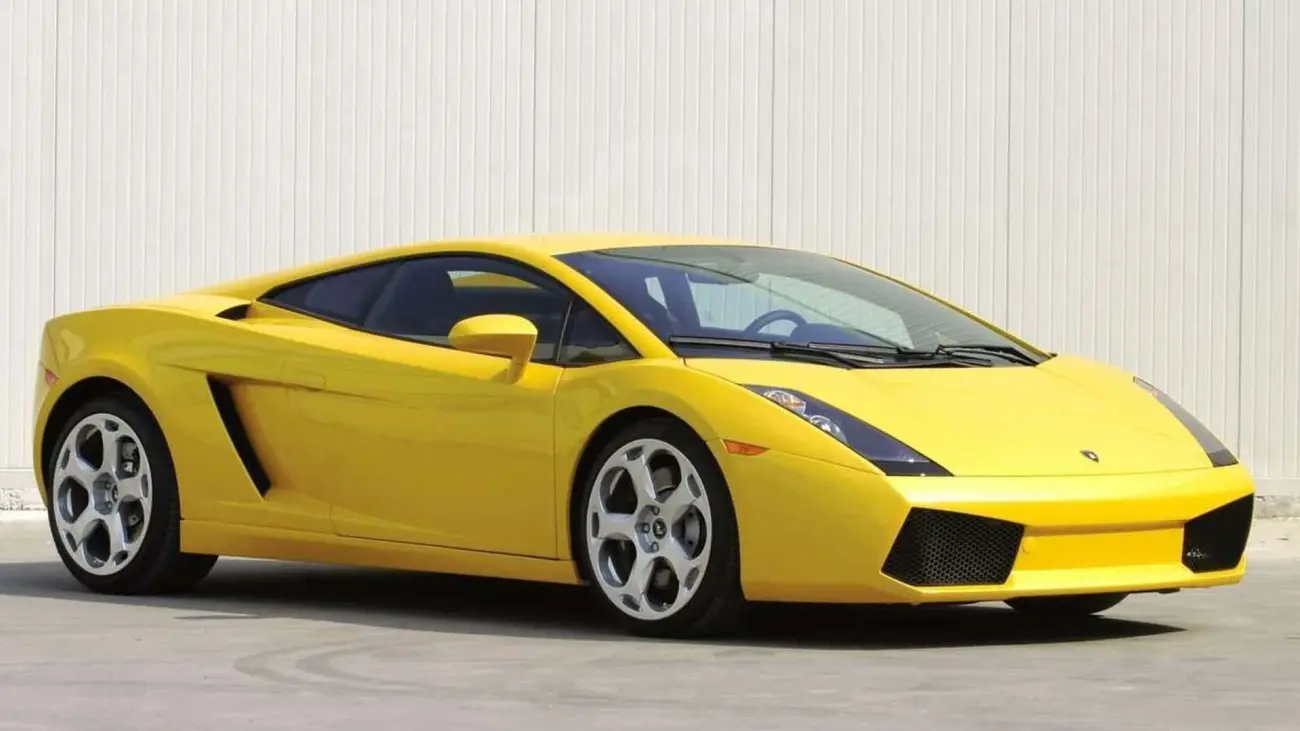
Its success dramatically increased sales and introduced thousands of new customers to the brand.
Design
The Gallardo maintained Lamborghini's unmistakable styling language while offering slightly smaller dimensions than the flagship Murciélago.
Its clean lines, low profile, sharp bodywork, and balanced proportions made it one of the most attractive sports cars of its generation.
Engine
Unlike Lamborghini's traditional V12 models, the Gallardo introduced a new naturally aspirated V10 engine.
Specifications varied throughout production but generally included:
-
5.0-liter or 5.2-liter V10
-
Between 500 and 570 horsepower
-
Rear-wheel drive or all-wheel drive
-
Manual or automated E-Gear transmission
The V10 delivered a distinctive high-revving soundtrack that became one of Lamborghini's defining characteristics.
Performance
Depending on the version, the Gallardo accelerated from 0 to 100 km/h in approximately four seconds while achieving top speeds above 320 km/h.
Special editions such as the Superleggera, LP550-2 Valentino Balboni, and LP570-4 Performante further enhanced performance through reduced weight and improved aerodynamics.
Commercial Success
The Gallardo became Lamborghini's best-selling vehicle at the time.
More than 14,000 units were produced, exceeding the combined production of every previous Lamborghini model.
Its commercial success provided the financial foundation for Lamborghini's continued expansion during the following decade.
Special Limited Editions
During the Audi era, Lamborghini also demonstrated its engineering creativity through several remarkable limited-production vehicles.
Reventón (2007)
Inspired by modern fighter aircraft, the Reventón featured carbon-fiber body panels, aviation-inspired instrumentation, and highly exclusive production.
Only 20 coupes were originally built for customers.
Sesto Elemento (2010)
Constructed almost entirely from carbon fiber, the Sesto Elemento weighed less than one metric ton.
Its naturally aspirated V10, combined with an ultra-lightweight chassis, produced extraordinary acceleration and demonstrated Lamborghini's expertise in advanced composite materials.
These exclusive models reinforced Lamborghini's reputation as a manufacturer willing to push engineering and design beyond conventional limits.
By the beginning of the 2010s, Lamborghini had transformed from a financially unstable niche manufacturer into one of the world's fastest-growing luxury performance brands.
The stage was now set for an entirely new generation of V12 and V10 supercars that would further redefine Lamborghini's future.
Lamborghini's Financial Crisis and Ownership Changes
Despite its impressive success during the 1960s and early 1970s, Lamborghini soon faced serious financial challenges. The global oil crisis of 1973 dramatically changed the automotive market. As fuel prices increased and economic uncertainty spread across Europe and North America, demand for high-performance V12 sports cars declined significantly.
Ferruccio Lamborghini realized that maintaining an independent supercar manufacturer had become increasingly difficult. At the same time, his agricultural machinery business was also struggling due to changing economic conditions. Facing mounting financial pressure, he decided to step away from the company he had founded.
In 1974, Ferruccio sold his remaining shares in Automobili Lamborghini and retired from the automotive industry. His departure marked the end of the company's founding era, but Lamborghini's story was far from over.
Years of Uncertainty
The years following Ferruccio's departure were turbulent. Lamborghini changed ownership several times as different investors attempted to restore profitability.
During the late 1970s and early 1980s, the company experienced financial instability that affected production volumes and new model development. Although legendary cars such as the Countach continued to capture the imagination of enthusiasts worldwide, the company's limited financial resources made long-term growth difficult.
In 1978, Lamborghini entered bankruptcy proceedings before eventually being acquired by Swiss entrepreneurs Jean-Claude Mimran and Patrick Mimran. Under their leadership, production facilities were modernized, quality improved, and the company began recovering from its financial troubles.
Later, in 1987, Lamborghini was purchased by the American company Chrysler Corporation. Chrysler invested heavily in engineering, manufacturing, and product development, helping Lamborghini modernize its operations while preserving its Italian identity.
The Diablo Era
One of the most important achievements during the Chrysler years was the introduction of the Lamborghini Diablo in 1990.
Designed to succeed the legendary Countach, the Diablo represented a significant technological leap. While retaining Lamborghini's dramatic styling and naturally aspirated V12 engine, it offered improved reliability, greater comfort, and significantly better aerodynamics.
Design
The Diablo featured low, aggressive bodywork with sharp lines and the iconic scissor doors that had become synonymous with Lamborghini's flagship models. Although the original design concept came from Marcello Gandini, Chrysler requested several refinements before production, resulting in a smoother and more aerodynamic appearance.
The wider stance, integrated bumpers, and improved airflow made the Diablo more stable at extremely high speeds while maintaining its unmistakable Lamborghini identity.
Engine and Performance
The original Diablo was powered by a naturally aspirated 5.7-liter V12 engine producing approximately 492 horsepower.
Performance figures were extraordinary for its era:
-
0-100 km/h (0-62 mph): approximately 4.5 seconds
-
Top speed: over 325 km/h (202 mph)
At launch, the Diablo became one of the fastest production cars in the world.
Over its production life, Lamborghini introduced several important variants, including the Diablo VT, which featured all-wheel drive, the lightweight Diablo SV, the track-focused Diablo GT, and the high-performance Diablo 6.0, which concluded the model's production in 2001.
The Diablo demonstrated that Lamborghini remained capable of producing world-class supercars despite years of financial instability.
Audi Acquisition: A New Beginning
A defining moment in Lamborghini's history arrived in 1998 when the Volkswagen Group acquired the company through its luxury brand, Audi.
The acquisition transformed Lamborghini from a small specialist manufacturer into a globally competitive luxury performance brand.
Audi introduced modern manufacturing processes, stricter quality control, advanced engineering resources, and significant financial investment. Rather than changing Lamborghini's character, Audi focused on improving build quality, reliability, and technological sophistication while preserving the brand's dramatic styling and emotional appeal.
This combination of Italian passion and German engineering excellence proved highly successful.
The improvements extended beyond manufacturing. Research and development accelerated, production capacity expanded, and Lamborghini gained access to advanced technologies that would have been difficult to develop independently.
Many enthusiasts consider the Audi era to be the point at which Lamborghini evolved from a niche supercar builder into a modern premium automotive manufacturer capable of competing consistently with the world's most prestigious performance brands.
Lamborghini Today: Innovation Without Compromise
Today, Lamborghini stands as one of the world's most recognizable and desirable luxury performance car manufacturers. While the company continues to honor the vision established by Ferruccio Lamborghini more than six decades ago, it has also embraced cutting-edge technology, advanced materials, and sustainable engineering.
Modern models such as the Huracán, Aventador, Revuelto, Temerario, and the Urus SUV have expanded Lamborghini's global presence without sacrificing the brand's unmistakable character. Naturally aspirated V10 and V12 engines, aggressive styling, lightweight carbon-fiber construction, and race-inspired engineering remain at the heart of the Lamborghini experience.
The company has also entered a new era of electrification. Rather than abandoning performance, Lamborghini has integrated hybrid technology to deliver even greater power, improved efficiency, and lower emissions. The Revuelto became the brand's first series-production plug-in hybrid V12 supercar, demonstrating that electrification can enhance rather than diminish the excitement expected from a Lamborghini.
Beyond its road cars, Lamborghini continues to invest heavily in research and development, advanced manufacturing techniques, carbon-fiber technologies, and digital innovation. Every new generation of Lamborghini is designed to push the limits of performance while meeting increasingly demanding environmental and safety regulations.
Lamborghini's Legacy in the Supercar World
Few automotive manufacturers have influenced the supercar segment as profoundly as Lamborghini. Throughout its history, the company has consistently challenged conventional design principles and engineering philosophies.
The Miura introduced the world to the modern mid-engine supercar. The Countach revolutionized automotive styling with its sharp wedge-shaped body and iconic scissor doors. The Diablo, Murciélago, Aventador, and Revuelto each pushed performance boundaries further while maintaining Lamborghini's unmistakable identity.
Unlike many manufacturers that prioritize subtle evolution, Lamborghini has always embraced boldness. Its cars are intentionally dramatic, visually striking, and emotionally engaging. This fearless approach has earned the company a loyal following among collectors, enthusiasts, and automotive historians alike.
Today, Lamborghini is not only a manufacturer of high-performance automobiles but also a global luxury brand associated with exclusivity, innovation, craftsmanship, and Italian design excellence.
Conclusion
The history of Lamborghini is far more than the story of a successful automobile manufacturer. It is the story of determination, ambition, and the courage to challenge an established industry leader.
What began in 1963 with Ferruccio Lamborghini's desire to build a better grand touring car than Ferrari has evolved into one of the most respected names in the automotive world. From the elegant 350 GT and groundbreaking Miura to the legendary Countach, Diablo, Murciélago, Aventador, and today's hybrid-powered Revuelto, every generation has contributed to Lamborghini's remarkable legacy.
Despite financial crises, ownership changes, and shifting market demands, Lamborghini has never abandoned its core philosophy of combining breathtaking design with extraordinary performance. Instead, it has continuously adapted, embracing new technologies while preserving the emotional appeal that defines the brand.
As the automotive industry transitions toward electrification and sustainable mobility, Lamborghini faces a new chapter filled with both challenges and opportunities. If history has proven anything, it is that the company thrives when pushing boundaries. Whether powered by naturally aspirated V12 engines, hybrid systems, or future electric technologies, Lamborghini's commitment to innovation, performance, and unmistakable Italian character ensures that its legend will continue inspiring automotive enthusiasts for generations to come.