TR
TR EN
EN

Porsche History: The Pursuit of High Performance and Engineering Excellence
For more than nine decades, Porsche has represented precision engineering, exceptional driving dynamics, and timeless design. Unlike many luxury car manufacturers that have constantly reinvented themselves, Porsche has built its reputation by refining a clear philosophy: creating sports cars that deliver an emotional connection between the driver and the machine.
From a small engineering consultancy founded in Germany to one of the world's most respected performance car manufacturers, Porsche's journey is filled with groundbreaking innovations, motorsport victories, and legendary automobiles. Today, the brand continues to shape the future of performance with hybrid and electric technologies while remaining faithful to its heritage.
The Beginning of Porsche (1931)
A Vision Created by Ferdinand Porsche
Porsche was founded in 1931 by Austrian engineer Ferdinand Porsche in Stuttgart, Germany. Rather than manufacturing automobiles immediately, the company initially operated as an engineering and design consultancy for other automotive manufacturers.
Ferdinand Porsche had already earned an impressive reputation before founding his own company. He worked on numerous vehicle development projects and became known for designing advanced powertrains and innovative engineering solutions.
One of his most influential achievements came in the 1930s when he played a major role in developing the Volkswagen Type 1, later known worldwide as the Volkswagen Beetle. Although this project was not a Porsche vehicle, it demonstrated Ferdinand Porsche's ability to design reliable, affordable, and technically advanced automobiles.
During these early years, Porsche established a culture focused on engineering excellence rather than mass production—a philosophy that continues to define the company today.
The Birth of the Porsche Brand
Ferry Porsche Builds the First Sports Car
Following World War II, Ferdinand Porsche's son, Ferry Porsche, believed the perfect sports car simply did not exist.
His famous statement,
"I couldn't find the sports car of my dreams, so I built it myself."
became one of the defining moments in automotive history.
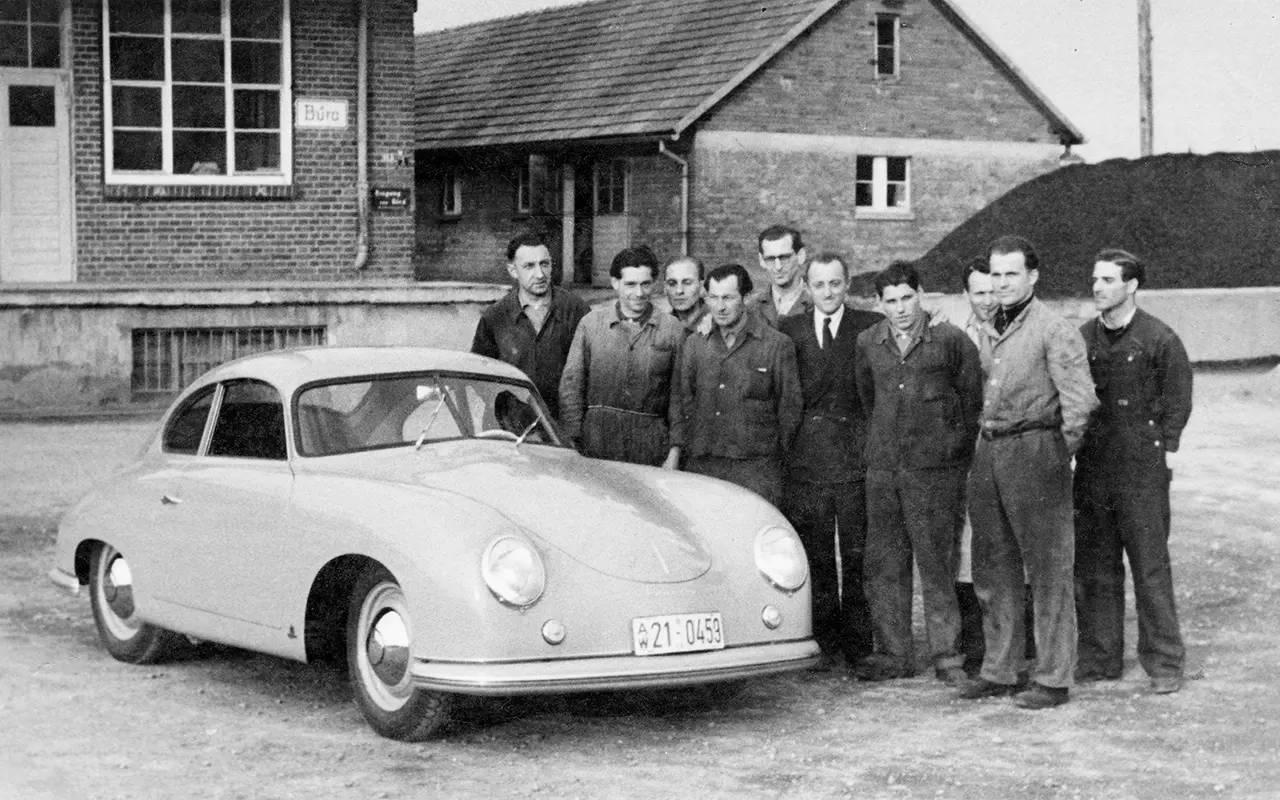
In 1948, Porsche introduced its first production sports car: the Porsche 356.
Porsche 356 (1948–1965)
The Car That Started Everything
The Porsche 356 was lightweight, compact, beautifully balanced, and surprisingly quick for its time. Early versions borrowed several mechanical components from Volkswagen, but Porsche engineers significantly modified almost every aspect to improve handling and performance.
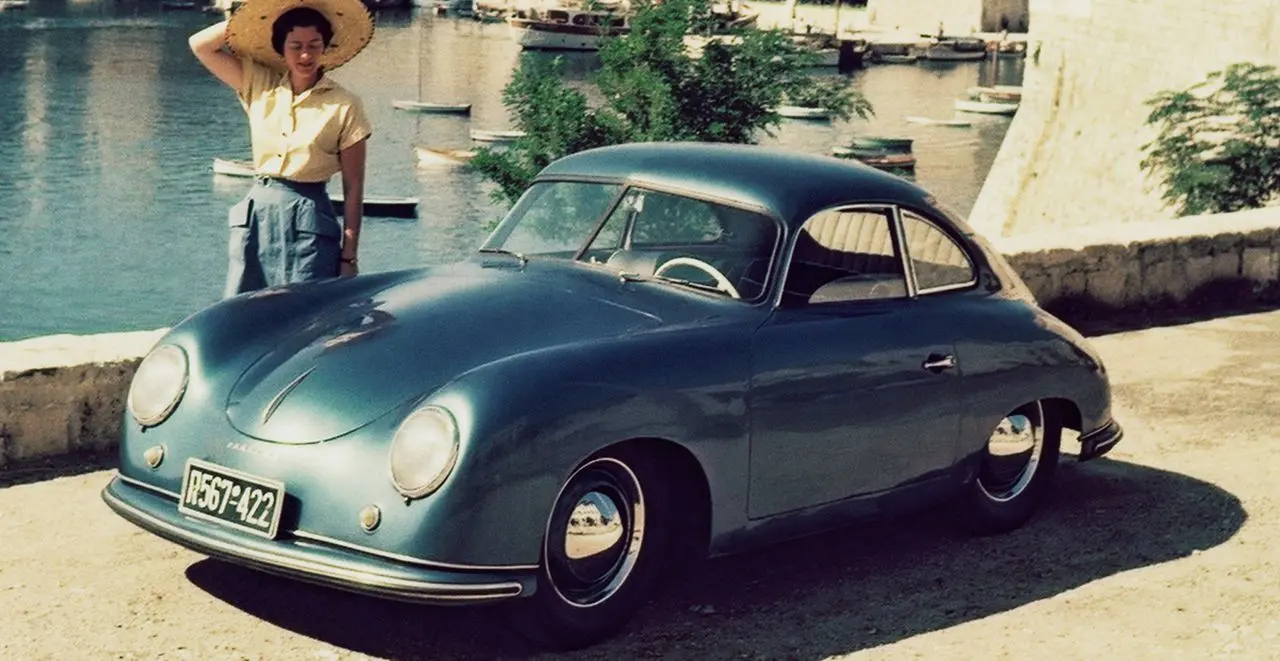
The result was a sports car that immediately stood apart from ordinary vehicles.
Its rear-mounted air-cooled flat-four engine, aerodynamic body, and lightweight construction created a driving experience unlike anything else available in the late 1940s.
The Porsche philosophy of "less weight equals more performance" was born with the 356.
Design
The 356 introduced styling elements that would define Porsche for generations:
-
Rounded front fenders
-
Sloping roofline
-
Compact proportions
-
Low driving position
-
Smooth aerodynamic curves
Although simple by modern standards, its design remains one of the most recognizable classic sports cars ever built.
Interior
Inside, the cabin focused entirely on the driver.
Large analog gauges, excellent visibility, supportive seating, and minimal distractions reflected Porsche's performance-first philosophy.
Luxury was secondary to driving enjoyment.
Engine Options
Throughout its production, the 356 received continuous mechanical improvements.
Engine sizes ranged from:
-
1.1-liter Flat-4
-
1.3-liter Flat-4
-
1.5-liter Flat-4
-
1.6-liter Flat-4
-
2.0-liter Flat-4 (Carrera models)
Power outputs gradually increased from approximately 40 horsepower to more than 130 horsepower in the high-performance Carrera versions.
Major Variants
The Porsche 356 evolved through several important generations:
356 "Pre-A" (1948–1955)
The original model established Porsche's reputation for lightweight performance.
356 A (1955–1959)
Improved suspension, revised bodywork, and more powerful engines enhanced both comfort and handling.
356 B (1959–1963)
Styling updates, improved visibility, and stronger braking systems modernized the car.
356 C (1964–1965)
The final generation introduced four-wheel disc brakes and numerous reliability improvements before production ended.
More than 76,000 Porsche 356s were produced, making it one of the most successful European sports cars of its era.
Porsche 911 (1964–Present)
The World's Most Iconic Sports Car
Few automobiles have achieved the legendary status of the Porsche 911.
Introduced in 1964, the 911 replaced the 356 while maintaining Porsche's rear-engine philosophy. Although larger and more powerful than its predecessor, it preserved the lightweight balance and unmistakable silhouette that became synonymous with the brand.
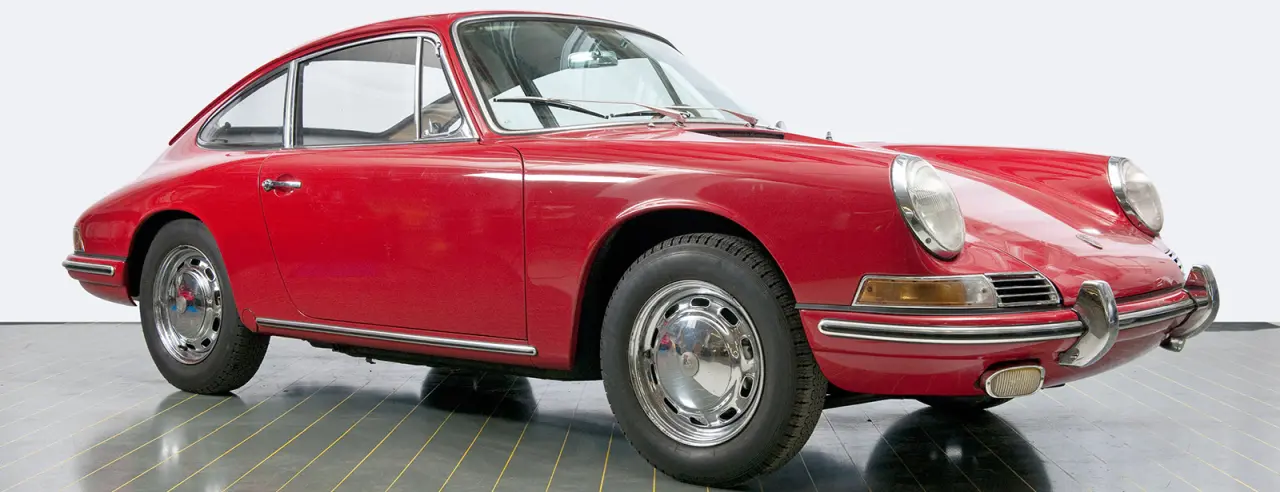
Over six decades later, the Porsche 911 remains in continuous production—one of the longest-running sports car nameplates in automotive history.
Timeless Design
Unlike many sports cars that undergo complete redesigns every decade, the Porsche 911 has evolved gradually.
Its signature characteristics include:
-
Round headlights
-
Sloping roofline
-
Rear-mounted flat-six engine
-
Wide rear fenders
-
Short front overhang
-
Driver-focused cockpit
Each generation modernized the styling without abandoning its unmistakable identity.
Engineering Philosophy
The rear-engine layout presents engineering challenges but also provides exceptional traction and unique driving characteristics.
Over decades, Porsche continuously refined suspension geometry, chassis stiffness, weight distribution, steering precision, and aerodynamics to make the 911 one of the world's finest handling sports cars.
Powertrain Evolution
The first 911 featured a 2.0-liter naturally aspirated air-cooled flat-six engine producing around 130 horsepower.
Modern 911 models now produce between approximately 385 horsepower and well over 650 horsepower, depending on the variant.
Turbocharging, direct fuel injection, active aerodynamics, rear-wheel steering, adaptive suspension, and advanced electronic systems have transformed the 911 into one of the most technologically advanced sports cars available.
The Evolution of the 911
Original 911 (1964–1989)
The classic air-cooled era established Porsche's reputation for driver engagement.
964 (1989–1994)
Nearly 85 percent of the car was redesigned despite its familiar appearance.
It introduced:
-
ABS brakes
-
Power steering
-
Optional all-wheel drive
-
Improved aerodynamics
993 (1994–1998)
Widely considered the pinnacle of air-cooled Porsche engineering.
It featured an all-new rear suspension and significantly improved refinement.
The 993 became the final air-cooled 911.
996 (1998–2004)
Perhaps the most controversial generation, the 996 introduced water cooling for the first time.
Although criticized initially, it dramatically improved performance, emissions, and reliability while expanding Porsche's customer base.
997 (2004–2012)
The 997 returned to traditional styling cues while incorporating modern technology.
Many enthusiasts consider it one of the best-balanced generations ever built.
991 (2011–2019)
Built on an entirely new platform, the 991 became larger, lighter, and more technologically advanced.
992 (2019–Present)
The current generation combines classic Porsche styling with digital technology, active safety systems, turbocharged engines, and exceptional everyday usability.
Porsche 914 (1969–1976)
The Affordable Mid-Engine Porsche
Developed jointly by Porsche and Volkswagen, the 914 offered a completely different approach to sports car design.
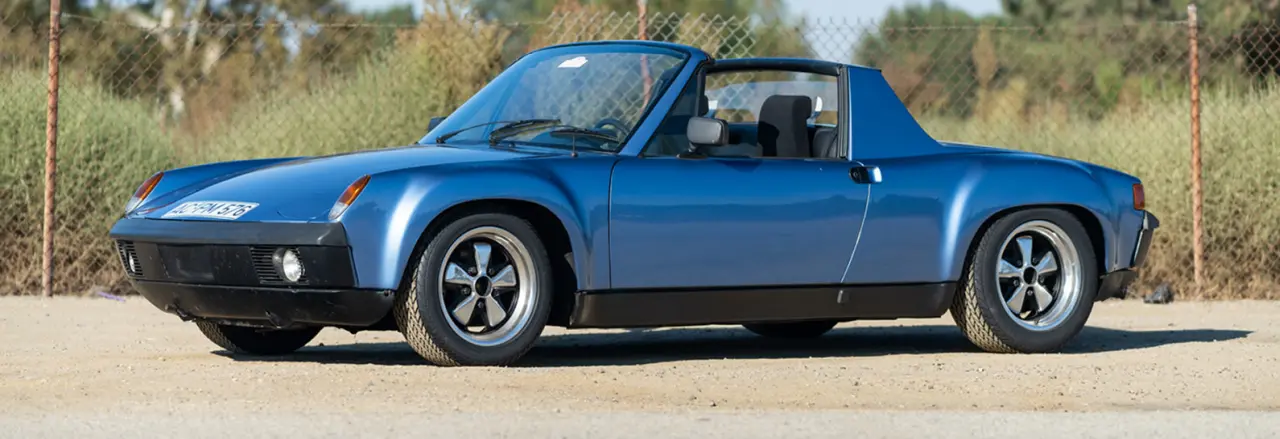
Instead of a rear-engine layout, the 914 adopted a mid-engine configuration, providing nearly ideal weight distribution and remarkable handling.
Its removable Targa roof became one of the car's defining features.
Initially powered by Volkswagen flat-four engines, higher-performance versions received Porsche-developed 2.0-liter engines that significantly improved performance.
Although controversial when new, the 914 is now appreciated for its unique engineering and balanced driving characteristics.
Porsche 928 (1978–1995)
A Luxury Grand Tourer
The Porsche 928 represented one of the company's boldest engineering projects.
Originally intended to replace the 911, it instead became a highly respected grand touring car with its own identity.
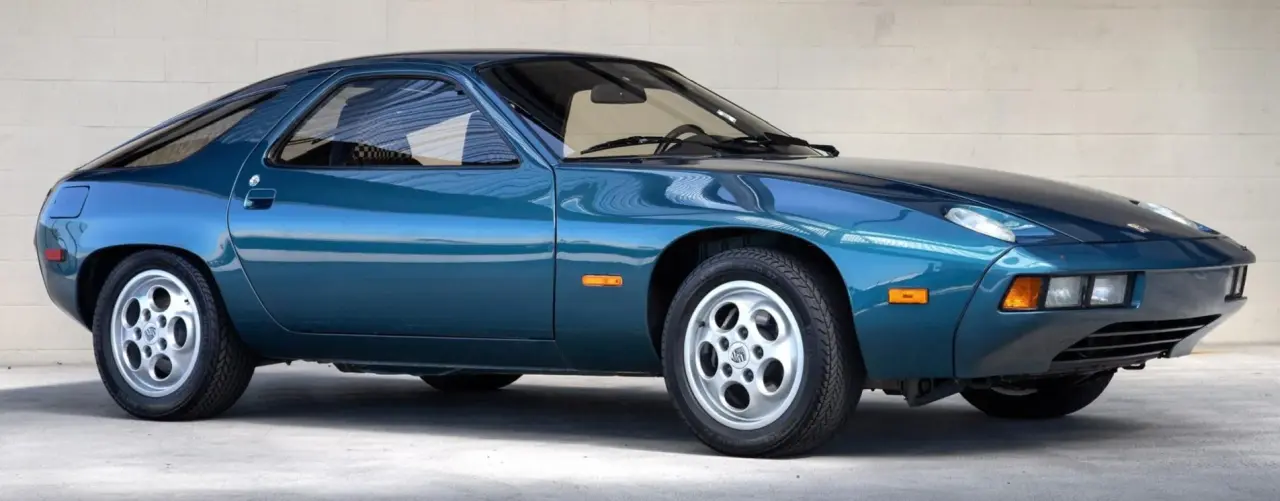
Unlike traditional Porsche sports cars, the 928 featured:
-
Front-mounted V8 engine
-
Rear-wheel drive
-
Near-perfect weight distribution
-
Luxury-focused interior
-
Exceptional long-distance comfort
Its innovative Weissach rear axle improved high-speed stability, while aluminum body panels helped reduce weight.
The 928 demonstrated Porsche's ability to build high-performance luxury automobiles without sacrificing driving dynamics.
Porsche 959 (1986–1988)
The World's Most Advanced Supercar
Few production cars have influenced automotive engineering like the Porsche 959.
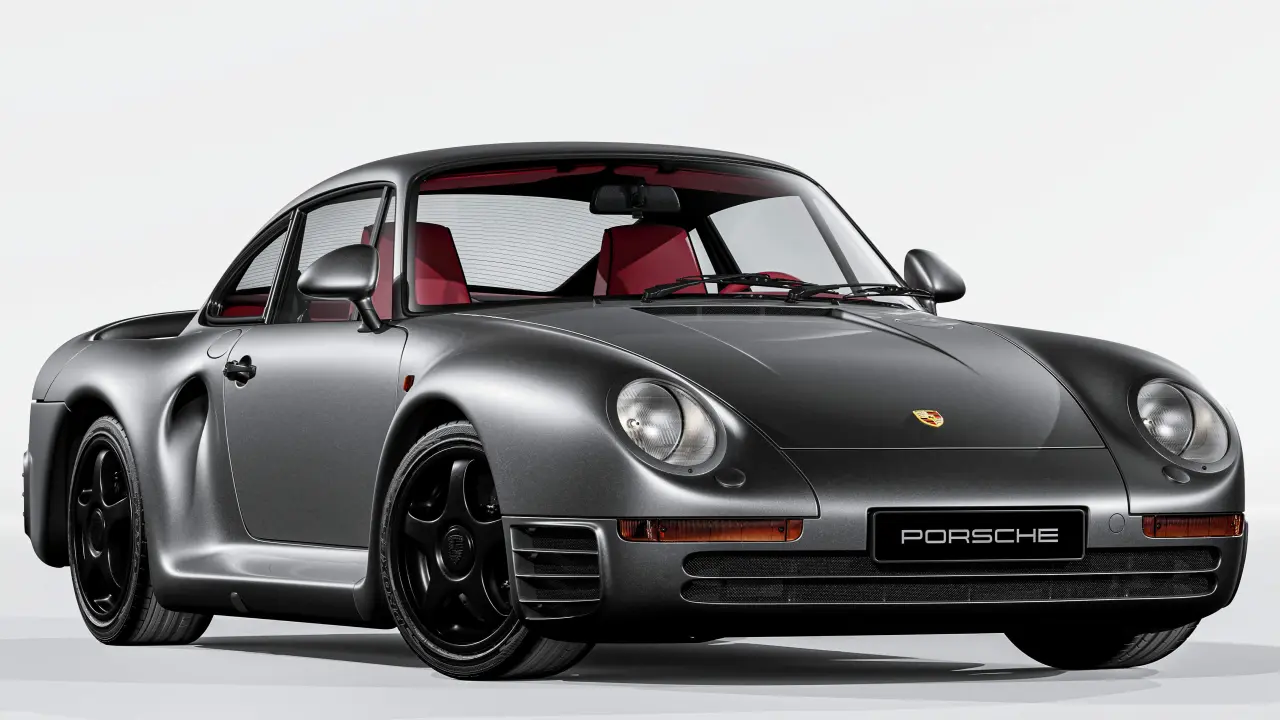
Originally developed for Group B rally competition, it became one of the most technologically advanced road cars ever built.
Its innovations included:
-
Sequential twin turbochargers
-
Intelligent all-wheel drive
-
Adjustable ride height
-
Electronic suspension management
-
Kevlar and aluminum construction
-
Tire pressure monitoring
Powered by a twin-turbocharged 2.85-liter flat-six producing approximately 450 horsepower, the 959 reached over 315 km/h (196 mph), making it one of the fastest production cars in the world.
Only a few hundred examples were produced, making it one of Porsche's rarest collector vehicles.
Motorsport Success
Winning Through Engineering
Motorsport has always been central to Porsche's identity.
Rather than viewing racing as marketing, Porsche has long used competition as a testing ground for new technologies.
Over the decades, Porsche has achieved remarkable success in endurance racing.
Its victories at the 24 Hours of Le Mans have become legendary, with models including the 917, 936, 956, 962, 919 Hybrid, and 963 demonstrating the company's engineering excellence across multiple eras.
Technologies developed for racing—including turbocharging, advanced aerodynamics, hybrid systems, lightweight materials, and high-performance braking—have frequently found their way into production vehicles.
Porsche Expands Beyond Sports Cars
Boxster
Introduced in 1996, the Boxster revitalized Porsche during a financially challenging period.
Its affordable pricing and mid-engine layout attracted a new generation of enthusiasts while preserving Porsche's reputation for outstanding handling.
Cayenne
The launch of the Cayenne in 2002 surprised many enthusiasts.
However, the luxury SUV became an enormous commercial success and generated the financial resources needed to continue developing sports cars such as the 911.
Today, the Cayenne remains one of Porsche's best-selling models.
Cayman
Introduced as a coupe counterpart to the Boxster, the Cayman quickly established itself as one of the finest handling sports cars available thanks to its perfectly balanced mid-engine architecture.
Macan
The compact luxury SUV expanded Porsche's customer base even further while maintaining the driving dynamics expected from the brand.
Entering the Electric Era
Porsche Taycan
In 2019, Porsche entered the fully electric vehicle market with the Taycan.
Rather than simply producing an electric luxury sedan, Porsche focused on delivering genuine sports car performance.
The Taycan introduced:
-
800-volt electrical architecture
-
Extremely fast charging capability
-
Two-speed rear transmission
-
Outstanding acceleration
-
Precision chassis control
-
Repeatable high-performance driving
The Taycan demonstrated that electrification and driving excitement could successfully coexist.
Porsche Today
Today, Porsche produces an extensive lineup that includes:
-
911
-
718 Boxster
-
718 Cayman
-
Panamera
-
Macan
-
Cayenne
-
Taycan
Alongside internal combustion engines, plug-in hybrids, and fully electric vehicles, Porsche continues investing heavily in synthetic fuels, battery technology, and sustainable manufacturing.
Despite changing market demands, the company remains committed to building vehicles that prioritize precision, performance, and driver involvement.
Looking Toward the Future
Porsche's future combines tradition with innovation.
The company continues expanding its electric vehicle portfolio while preserving the driving character that has defined the brand for generations. Research into eFuels, next-generation batteries, lightweight materials, artificial intelligence, and advanced driver assistance systems demonstrates Porsche's commitment to remaining at the forefront of automotive technology.
Rather than abandoning its heritage, Porsche is adapting it for a new era.
Conclusion
From a small engineering consultancy established in Stuttgart in 1931 to one of the world's most prestigious performance car manufacturers, Porsche has consistently pursued engineering perfection.
Legendary models such as the 356, 911, 914, 928, and 959 helped define entire generations of sports cars, while newer vehicles like the Taycan prove that innovation remains central to the company's identity.
Few manufacturers have balanced heritage and progress as successfully as Porsche. Whether powered by an air-cooled flat-four, a naturally aspirated flat-six, a turbocharged V8, or a fully electric powertrain, every Porsche shares the same objective: delivering an unforgettable driving experience through uncompromising engineering excellence.