TR
TR EN
EN

Devrim Car: The Story of a Dream That Never Reached Mass Production
The Devrim Car is one of the most significant symbols in the history of Turkey's automotive industry. Built entirely by Turkish engineers in 1961, it represented the country's first serious attempt to design and manufacture a domestically developed automobile. Although the project never entered mass production, the Devrim Car remains an enduring symbol of engineering ambition, innovation, and national industrial development.
The Beginning of the Project
The idea behind the Devrim Car was initiated by President Cemal Gürsel, who believed that Turkey should develop its own passenger car as part of the country's industrial modernization.
In 1961, the responsibility for the project was assigned to Eskişehir Railway Factory, today known as TÜLOMSAŞ (Turkish Locomotive and Engine Industry Corporation). The project was officially named "Devrim", meaning "Revolution," reflecting the ambition to revolutionize Turkish industry.
Rather than importing a complete vehicle, the objective was to design and build an automobile almost entirely with domestic engineering capabilities.
Design and Development
President Cemal Gürsel gave Turkish engineers an extraordinary challenge:
Design and build a completely Turkish automobile in time for the Republic Day celebrations on 29 October 1961.
At the time, Turkey had virtually no passenger car manufacturing infrastructure.
A team of 24 engineers and hundreds of technicians accepted the challenge.
Working under extremely demanding conditions, they completed the project in only 130 days.
During this remarkably short period they designed and built four prototype vehicles:
-
One painted black
-
Three painted cream
Considering the technological limitations of the era, completing four operational prototypes in just over four months remains one of the most remarkable engineering achievements in Turkish industrial history.
Engineering Challenges
The project faced numerous obstacles.
The compressed schedule left almost no time for extensive testing.
Engineers increased the engine's compression ratio to improve performance, which meant the engine required high-octane gasoline—fuel that was only available in Ankara at the time.
Many systems were still undergoing final adjustments as the vehicles prepared for the official ceremony.
Despite these difficulties, the engineering team succeeded in producing fully functional prototype automobiles.
Republic Day Demonstration
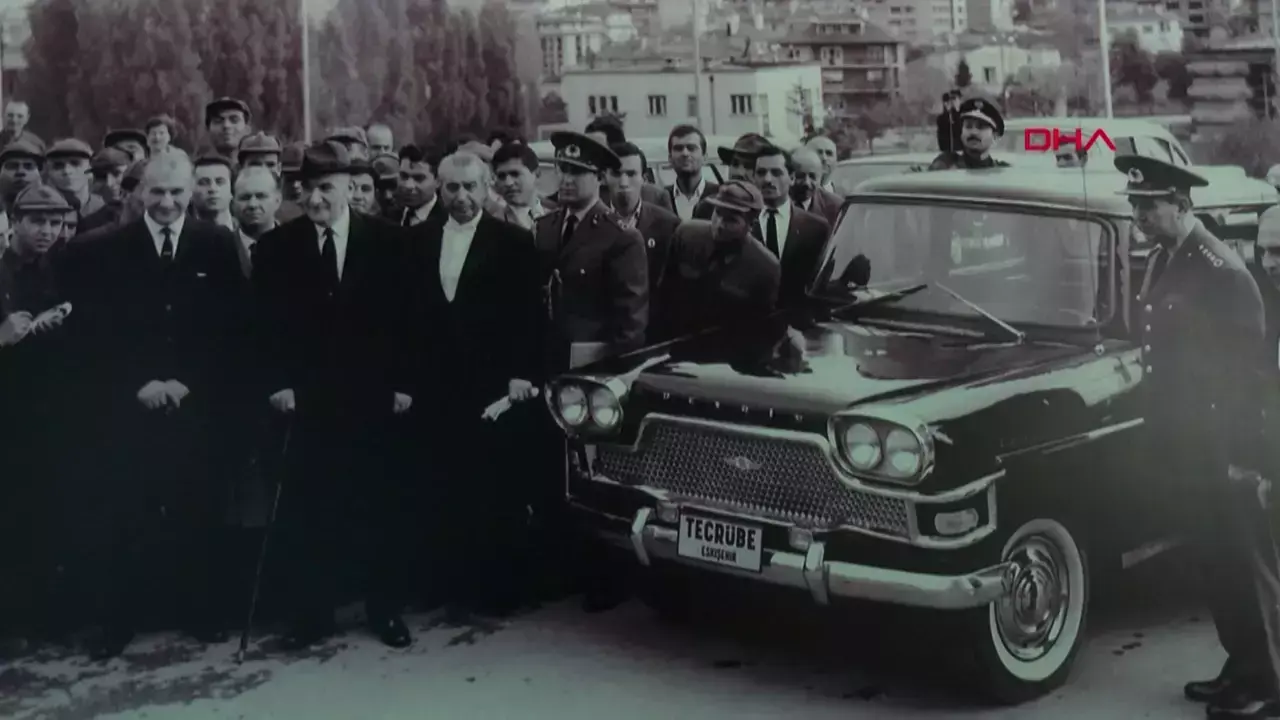
On 29 October 1961, the Devrim Cars were transported from Eskişehir to Ankara to participate in the Republic Day celebrations.
Because of railway transportation safety regulations, the fuel tanks were almost completely emptied before loading the cars onto the train.
After arriving in Ankara, the cream-colored prototype received sufficient fuel before the ceremony.
The black prototype, however, was not refueled adequately.
President Cemal Gürsel first entered the black Devrim.
After traveling only a short distance, the engine stopped because the fuel tank was nearly empty.
Gürsel reportedly remarked:
"You built a car with a Western mind, but forgot to put fuel in it with an Eastern mind."
He then transferred to one of the cream-colored Devrim cars, which successfully completed the ceremonial drive to Anıtkabir without mechanical problems.
Media Reaction
Despite the successful performance of the other prototypes, newspapers focused almost entirely on the stalled black vehicle.
The following day's headlines famously declared:
"Devrim went only 100 meters."
The incident quickly became a national talking point.
For many years, the project was unfairly remembered primarily for this single event rather than for the extraordinary engineering accomplishment behind it.
Why the Project Ended
Although the prototypes demonstrated that Turkey was capable of designing and building an automobile, the project did not continue into mass production.
Several factors contributed:
-
Limited industrial infrastructure
-
Lack of financial investment
-
Political changes
-
Absence of long-term manufacturing planning
-
No established automotive supply chain
As a result, the Devrim project remained a prototype initiative.
Technical Specifications
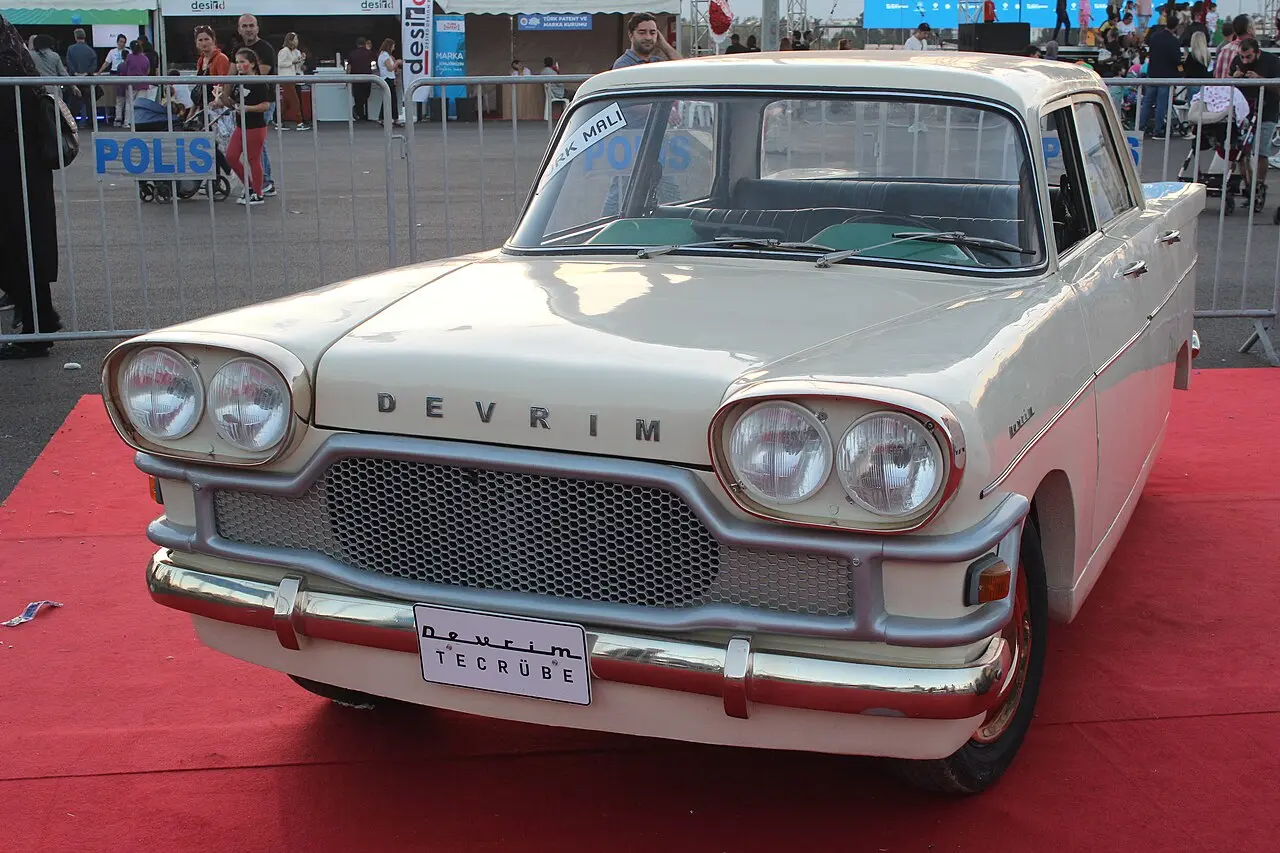
Although several versions were built, the Devrim prototypes generally featured:
| Specification | Details |
|---|---|
| Production Year | 1961 |
| Vehicle Type | Four-door sedan |
| Engine | Approximately 1.6-liter gasoline engine |
| Drive Layout | Rear-wheel drive |
| Transmission | Manual |
| Seating Capacity | Five passengers |
| Body | Steel construction |
| Number Produced | Four prototypes |
Cultural and Historical Significance
Although the project never entered production, the Devrim Car fundamentally changed public perception of Turkish engineering.
It demonstrated that Turkish engineers could:
-
Design an automobile from scratch
-
Manufacture major mechanical components
-
Assemble a complete working vehicle
-
Complete an ambitious national engineering project within an extremely limited timeframe
Over the years, Devrim evolved from being viewed as a failed experiment into a symbol of determination and technical capability.
Today it is regarded as one of the most important milestones in Turkey's industrial history.
Legacy and Influence
The lessons learned from the Devrim project influenced future developments in Turkey's automotive sector.
In later decades, Turkey became one of Europe's major automotive manufacturing hubs through partnerships with international manufacturers.
The project also inspired future domestic initiatives, including:
-
Anadol (1966) — Turkey's first mass-produced passenger car
-
Tofaş manufacturing projects
-
Oyak Renault production
-
Toyota Turkey
-
Hyundai Assan
-
Honda Turkey (former production)
-
TOGG, Turkey's first mass-produced domestic electric vehicle
Although these projects differed greatly from Devrim in terms of industrial scale, they all benefited from the pioneering spirit demonstrated by the 1961 prototype.
The Devrim Car Today
One of the original Devrim prototypes has been carefully preserved and is displayed at the TÜLOMSAŞ Museum in Eskişehir, where visitors can see one of Turkey's most iconic engineering achievements.
The vehicle continues to attract automotive enthusiasts, historians, engineering students, and visitors interested in Turkey's industrial heritage.
More than six decades later, the Devrim Car remains a powerful reminder of what can be achieved through determination, technical expertise, and national ambition.
Conclusion
The Devrim Car was far more than a prototype automobile.
It represented Turkey's first genuine effort to create a domestically engineered passenger car and demonstrated that local engineers possessed the knowledge and capability to undertake such an ambitious project.
Although it never reached commercial production, Devrim laid the psychological and technological foundations for Turkey's future automotive industry. Today, it is remembered not for stopping after a short distance during its first public appearance, but for proving that Turkish engineering could dream—and build—at a time when many believed it was impossible.