TR
TR EN
EN

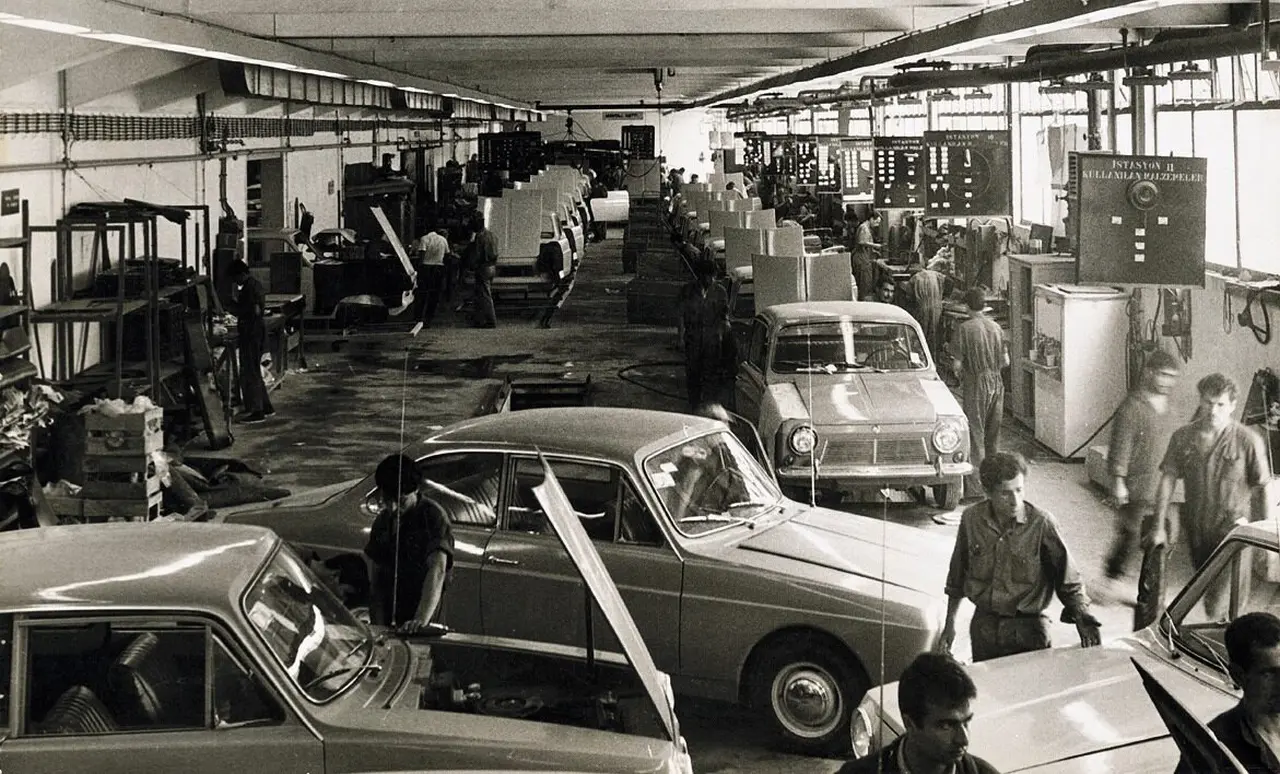
Anadol: Turkey's First Mass-Produced Automobile
Anadol is one of the most significant milestones in the history of the Turkish automotive industry. As the first automobile brand to be mass-produced in Türkiye, Anadol combined innovative engineering, modern design, and advanced manufacturing techniques for its era. Although often regarded as a purely domestic automobile, the story behind Anadol is actually a remarkable combination of Turkish entrepreneurship, international cooperation, and British automotive design.
History and Design Development
Although Anadol is widely recognized as Turkey's first domestically manufactured automobile, its body design was based on the Reliant FW5, a prototype developed by the British company Reliant. The vehicle's styling was created by renowned designer Tom Karen of Ogle Design, one of Britain's most respected automotive design studios.
Production was made possible through a licensing agreement between Otosan (now Ford Otosan) and Reliant. The vehicle was assembled in Türkiye using a steel chassis, engines, transmissions, and many mechanical components supplied by Ford Motor Company, while the lightweight fiberglass body was manufactured locally.
This combination of British engineering and Turkish manufacturing allowed Anadol to become Turkey's first successful mass-produced passenger car.
Anadol and the Devrim Project
The comparison between Devrim and Anadol often creates confusion.
Devrim, developed in 1961, holds the distinction of being Turkey's first domestically engineered automobile prototype. However, only a handful of prototype vehicles were produced, and the project never entered commercial production.
Anadol, on the other hand, became the first automobile to enter full-scale mass production in Türkiye. Manufactured continuously for nearly two decades, it played a pioneering role in establishing Turkey's modern automotive industry.
For this reason, while Devrim represents Turkey's first indigenous automobile project, Anadol remains the country's first commercially successful production car.
The Nobel 200 Debate: Was It Turkey's First Mass-Produced Car?
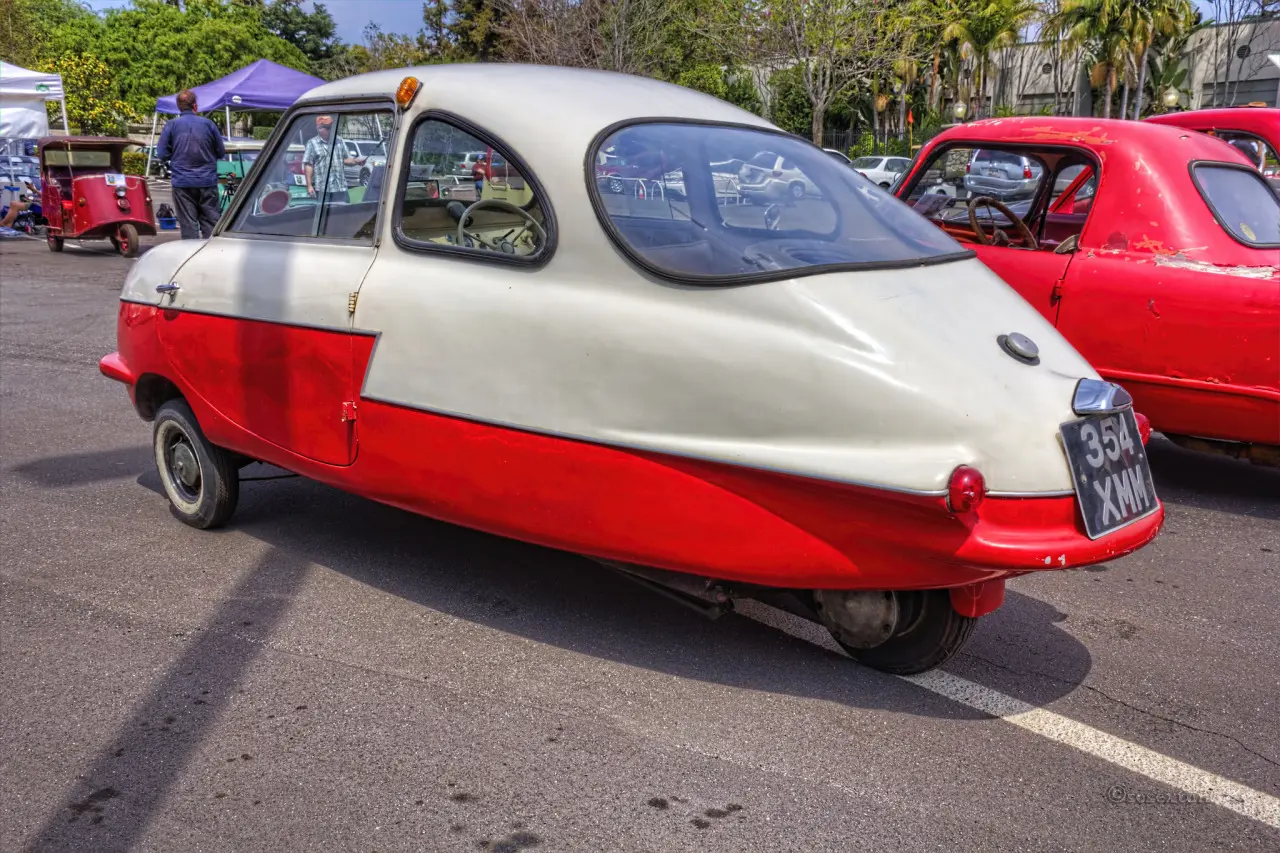
Some automotive historians argue that the Nobel 200 deserves recognition as Turkey's first mass-produced automobile.
The Nobel 200 was assembled in Türkiye between 1958 and 1961 under license. However, it was not a uniquely Turkish vehicle. The Nobel was produced under license in several countries and marketed under different brand names around the world.
Although the Nobel represented an important early step for Turkey's automotive manufacturing industry, Anadol became the country's first automobile developed specifically for long-term domestic production and established a genuine national automotive brand.
The Beginning of Turkish Automobile Manufacturing: The Koç–Ford Partnership
The foundations of Turkey's automotive industry date back to 1928, when Vehbi Koç established Otokoç.
In 1946, Otokoç became the official representative of Ford Motor Company in Türkiye. By 1954, discussions had already begun regarding domestic automobile production in cooperation with Ford.
These efforts eventually led to the establishment of Otosan in 1959, initially producing Ford trucks under license. As manufacturing capabilities expanded, the vision of building a passenger car in Türkiye gradually became achievable.
A major turning point came in 1963, when executives from Koç Holding and Ford examined a fiberglass-bodied Israeli vehicle at the Izmir International Fair. They quickly realized that fiberglass body construction offered enormous advantages over traditional pressed-steel production.
Unlike steel body panels, fiberglass required significantly lower tooling costs and allowed production without investing in expensive metal stamping presses. This discovery became one of the key reasons why Anadol adopted a fiberglass body.
Production and Launch
Production of Anadol officially began in December 1966.
The vehicle was publicly introduced on January 1, 1967, but commercial sales could not begin until February 28, 1967, after all legal approvals and vehicle registration procedures had been completed.
Anadol featured a lightweight body manufactured from fiberglass-reinforced polyester, while power came from Ford's reliable 1.2-litre Kent engine, originally used in the Ford Cortina.
The name Anadol was derived from Anadolu (Anatolia), symbolizing the country's identity and industrial ambitions.
Its emblem featured the famous Hittite deer, reflecting Turkey's ancient cultural heritage and emphasizing the brand's national identity.
Production Years and Model Range
Passenger car production continued until 1984, with approximately 87,000 vehicles manufactured.
Throughout its production life, Anadol evolved considerably. Beginning with the original A1, the lineup expanded to include family sedans, station wagons, sports cars, utility vehicles, and pickup trucks. New engines, updated styling, and improved interiors kept the range competitive throughout the 1970s and early 1980s.
Although passenger car production ended in 1984 and Ford Taunus manufacturing began under Ford license, Anadol's light commercial vehicles—including the Otosan 500 and Otosan 600D pickups—continued production until 1991.
Today, Ford Otosan remains one of Europe's largest commercial vehicle manufacturers, exporting vehicles from Türkiye to markets around the world.
Misconceptions About the Fiberglass Body
One of the most persistent myths surrounding Anadol concerns its fiberglass body.
At the time, rumors circulated claiming that the vehicle was so fragile that "cows, goats, and donkeys could eat it." These stories became part of Turkish automotive folklore despite having no technical basis.
In reality, fiberglass-reinforced plastic was already widely used by manufacturers such as Chevrolet (Corvette), Lotus, Reliant, and several specialist sports car companies. The material offered several advantages:
-
Lower production costs
-
Reduced vehicle weight
-
Resistance to corrosion
-
Easier repair of body panels
-
Greater flexibility in low-volume manufacturing
The criticism was therefore largely the result of public misunderstanding rather than any genuine engineering weakness.
Anadol A1 (1966–1975)
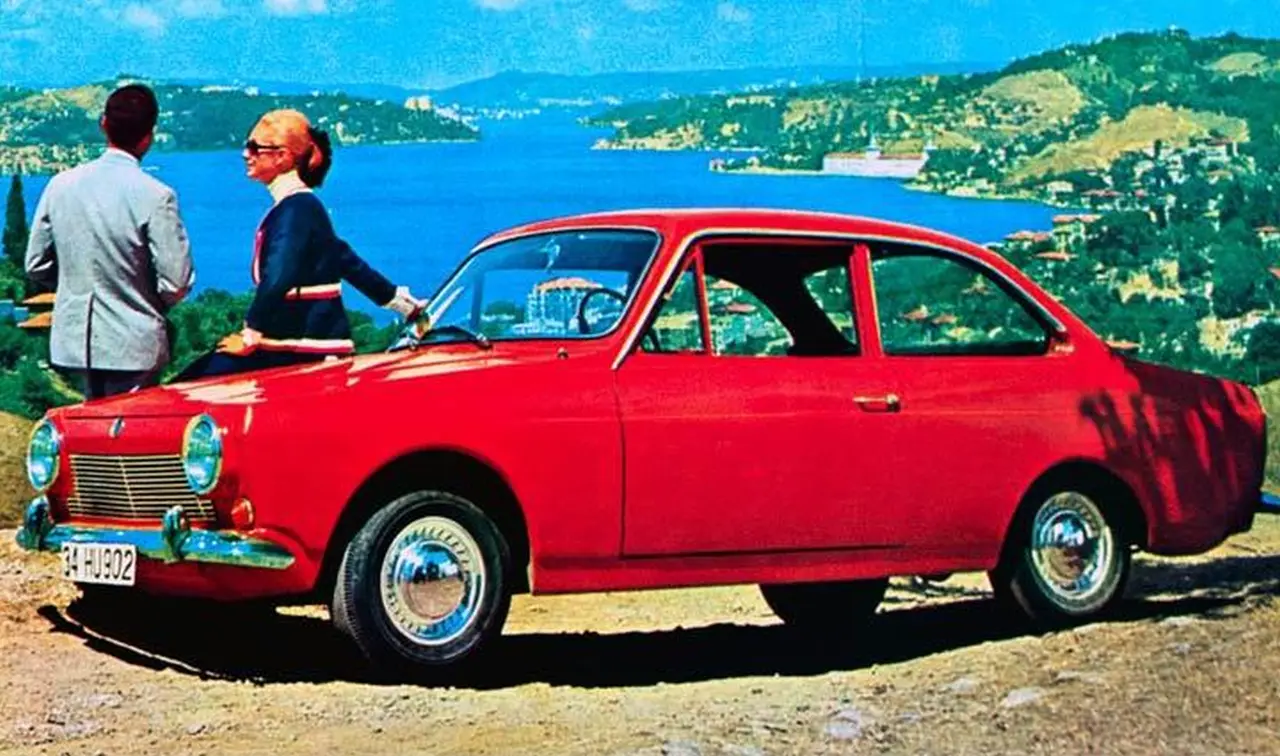
The Anadol A1 marked the beginning of a new era in Turkish automotive history. Produced by Otosan Otomobil Sanayi A.Ş., it became the first model of the Anadol brand and the first passenger car to be mass-produced in Türkiye. Production began in December 1966, while official sales started on February 28, 1967. The A1 represented a major step toward establishing a domestic automotive industry capable of manufacturing passenger vehicles on a commercial scale.
Design and Engineering
The Anadol A1 was based on the Reliant FW5 project, with its body designed by Tom Karen of the renowned British design house Ogle Design.
The first production models were powered by Ford's reliable 1.2-litre Kent inline-four engine. In 1968, this engine was replaced by the more powerful 1.3-litre Ford Crossflow (Kent) engine, improving both performance and drivability.
One of the A1's most distinctive engineering features was its fiberglass-reinforced polyester body. At a time when steel body production required expensive stamping equipment, fiberglass offered a lightweight, corrosion-resistant, and cost-effective alternative for low-volume manufacturing.
The car featured:
-
Independent front suspension with coil springs
-
Live rear axle with leaf springs
-
Rear-wheel drive (RWD)
-
Four-speed fully synchronized manual transmission
With approximately 63 horsepower, the A1 provided respectable performance for family motoring during the late 1960s.
Front disc brakes combined with rear drum brakes offered reliable stopping power, while rack-and-pinion steering provided relatively precise handling for its class.
Continuous Improvements
Rather than remaining unchanged, the Anadol A1 underwent several updates throughout its production life.
1969 Update
Interior ergonomics were improved with:
-
A redesigned dashboard
-
Revised steering wheel
-
Better instrument layout
1971 Update
The cabin became noticeably more refined through:
-
Vinyl-covered roof lining
-
Improved upholstery
-
Enhanced interior trim
1972 Mk II
The most visible redesign arrived in 1972.
Changes included:
-
Rectangular headlights replacing round units
-
New front grille
-
Redesigned bumpers
-
Updated gear selector housing
-
Modernized exterior styling
These revisions became known as the Mk II version, which remained in production until 1975.
Motorsport Success
The Anadol A1 was far more than an everyday family car.
It also became Turkey's first successful rally car.
In 1968, the Anadol Rally Team, driven by Renç Koçibey and Demir Bükey, won the Trakya Rally, demonstrating that the lightweight fiberglass-bodied car could compete successfully in motorsport.
Another historic achievement came when Turkish driver İskender Aruoba completed an extraordinary 30,000-kilometre Europe–Africa–Asia Rally in an Anadol A1 during 1968, proving the vehicle's durability over extremely demanding conditions.
These achievements significantly enhanced Anadol's reputation both at home and abroad.
Production Numbers
Production officially began on 19 December 1966, with sales starting on 28 February 1967.
Between 1967 and 1975, a total of 19,724 Anadol A1s were produced.
Throughout the late 1960s and early 1970s, the model became one of Türkiye's most recognizable passenger cars, helping thousands of families experience affordable automobile ownership.
Although later Anadol models introduced more modern styling and engineering, the A1 remains the vehicle that launched Turkey's first successful mass-produced automobile brand.
Technical Specifications
| Specification | Details |
|---|---|
| Engine | 1,298 cc Ford Crossflow inline-four |
| Power | 63 hp @ 5,700 rpm |
| Torque | 8.7 kg·m @ 3,000 rpm |
| Transmission | 4-speed synchronized manual |
| Drive Layout | Rear-wheel drive (RWD) |
| Fuel Consumption | Approximately 7.5 L/100 km (highway) |
| Steering | Rack and pinion |
| Front Brakes | Disc |
| Rear Brakes | Drum |
| Brake System | Single-circuit hydraulic |
| Kerb Weight | Approximately 920 kg |
Legacy of the A1
The Anadol A1 was more than simply the first model of a new automobile brand. It became a symbol of Turkey's industrial ambitions and demonstrated that domestic automobile production was commercially viable.
Its success laid the foundation for every subsequent Anadol model and played a vital role in the development of the Turkish automotive industry. Today, well-preserved A1 examples remain highly sought after by collectors and classic car enthusiasts, representing one of the most iconic vehicles ever produced in Türkiye.
Anadol A2 SL (1970–1981): Turkey's First Four-Door Sedan
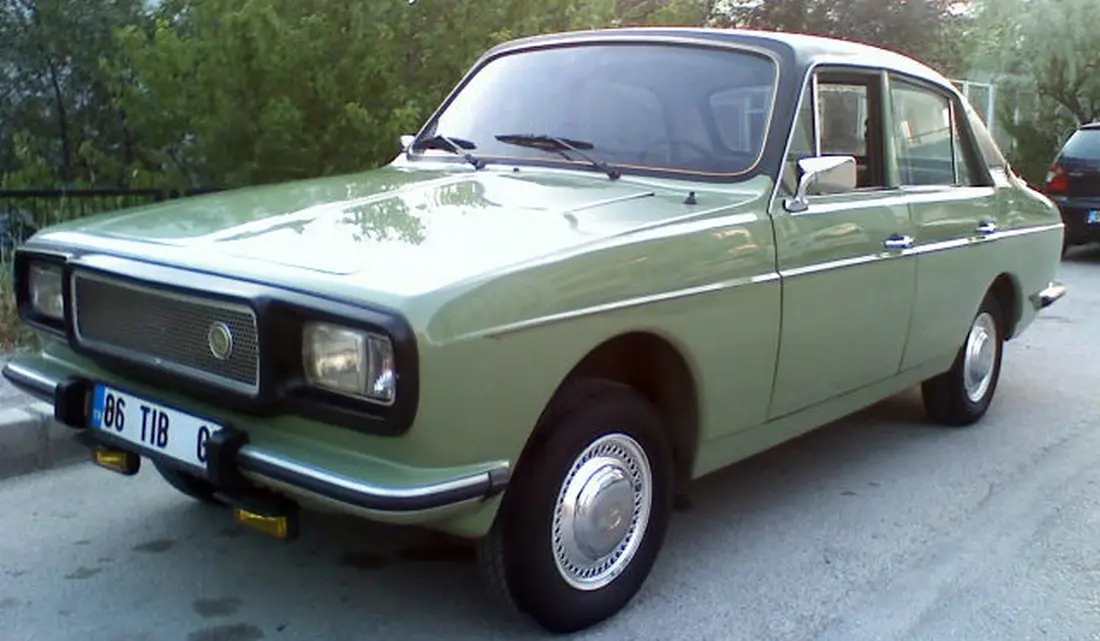
Introduced in 1970, the Anadol A2 expanded the Anadol range by becoming Turkey's first four-door passenger car. It also earned international recognition as the world's first four-door sedan with a full fiberglass body, making it a remarkable achievement in automotive engineering.
Designed as a practical family vehicle, the A2 combined the lightweight construction of the A1 with increased interior space and improved comfort, allowing Anadol to appeal to a much broader market.
Design and Engineering
Development of the A2 began in 1969, with production commencing the following year.
Mechanically, the car shared much of its engineering with the A1 but featured an entirely new four-door sedan body, making it considerably more practical for families.
Power came from Ford's proven 1.3-litre Kent inline-four engine, delivering reliable performance and straightforward maintenance.
Like the A1, the A2 featured:
-
Fiberglass body construction
-
Rear-wheel drive
-
Four-speed synchronized manual transmission
-
Independent front suspension
-
Live rear axle
-
Front disc brakes
-
Rear drum brakes
Its lightweight body contributed to respectable fuel economy while reducing production costs compared with traditional steel-bodied vehicles.
Mk II Development
In 1972, the A2 received a significant facelift similar to the updated A1.
Changes included:
-
New front grille
-
Rectangular headlights
-
Revised bumpers
-
Modernized exterior styling
This updated version became known as the A2 Mk II.
The A2 SL
A major redesign arrived in 1976 with the introduction of the A2 SL.
The SL featured:
-
Completely redesigned dashboard
-
New instrument cluster
-
Improved center console
-
More comfortable interior
-
Updated rear lights
-
Modern rectangular headlamps
-
Refined trim and upholstery
These improvements transformed the A2 into a much more contemporary family sedan while maintaining the simplicity and reliability that made the model popular.
Safety Innovations
The Anadol A2 also became the first Turkish-built automobile to undergo crash testing.
This represented a significant milestone for the domestic automotive industry, reflecting Anadol's increasing emphasis on vehicle safety and engineering development.
Commercial Success
The A2 became the best-selling Anadol model ever produced.
Production figures include:
-
20,267 units (1970–1975)
-
15,401 A2 SL units (1976–1981)
Total production reached 35,668 vehicles, making the A2 the most commercially successful model in the Anadol lineup.
Its spacious interior, practicality, affordability, and low operating costs made it one of the most popular family cars in Türkiye during the 1970s.
Technical Specifications
| Specification | Details |
|---|---|
| Engine | 1,300 cc Ford inline-four |
| Power | 63 hp |
| Transmission | 4-speed synchronized manual |
| Drive Layout | Rear-wheel drive |
| Body Style | Four-door fiberglass sedan |
| Steering | Rack and pinion |
| Front Brakes | Disc |
| Rear Brakes | Drum |
| Fuel Consumption | Approximately 7.5 L/100 km (highway) |
| Kerb Weight | Approximately 920 kg |
End of Production
Production of the A2 concluded in 1981, when it was replaced by the more modern Anadol A8-16.
Although newer models followed, the A2 remains the most successful passenger car ever produced under the Anadol name. Its combination of practicality, innovation, and commercial success secured its place as one of the defining vehicles in Turkish automotive history.
Anadol A4 STC-16 (1973–1975): Turkey's First Sports Car
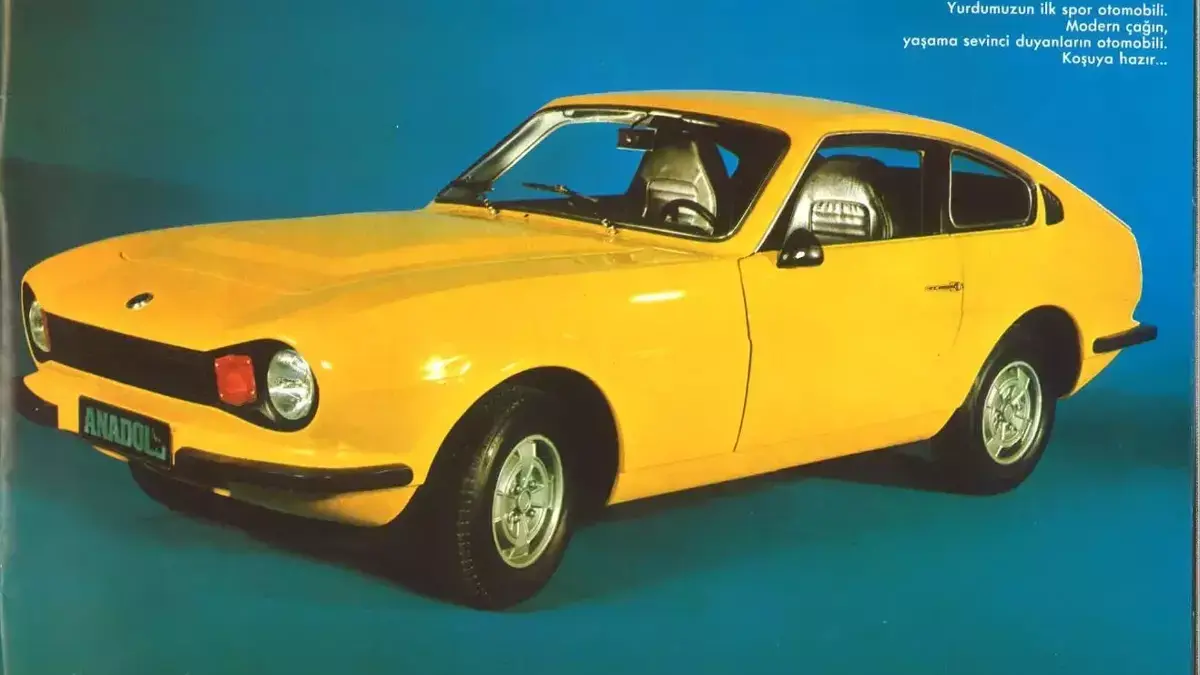
The Anadol A4 STC-16 holds a special place in Turkish automotive history as Turkey's first mass-produced sports car. Developed as a prototype in 1972 and manufactured between 1973 and 1975, the STC-16 was also the first production automobile designed in Turkey. Its styling was created by Eralp Noyan, who drew inspiration from many of the world's most admired sports cars of the era.
Design and Engineering
The STC-16 featured an aggressive and modern sports car design. Its styling reflected influences from vehicles such as the Datsun 240Z, Saab Sonett, Aston Martin, Ginetta, and Marcos. Noyan also incorporated aerodynamic inspiration from the legendary Supermarine Spitfire fighter aircraft, giving the car distinctive flowing lines and a dynamic appearance.
Built on a modified Anadol chassis with upgraded suspension, the STC-16 was powered by the 1.6-liter Ford Mexico engine. It also utilized transmissions derived from high-performance British Ford models, including the Ford Cortina and Ford Capri, making it one of Turkey's most advanced performance cars of its time.
Performance Specifications
Performance was one of the STC-16's strongest characteristics.
Technical Specifications
-
Engine: 1,599 cc inline-four
-
Power: 68 PS (50 kW)
-
Top Speed: 174 km/h (108 mph)
-
0–100 km/h: Approximately 15–17 seconds
-
Transmission: 4-speed manual
-
Front Suspension: Independent double wishbone
-
Rear Suspension: Live rear axle
-
Brakes: Front disc, rear drum
Its power-to-weight ratio of approximately 72.8 bhp per ton provided respectable performance by the standards of the early 1970s.
Production and Market Reception
Only 176 examples of the STC-16 were produced between 1973 and 1975. Most cars were finished in the iconic Alanya Yellow, although white versions featuring red and blue racing stripes were also manufactured.
Unfortunately, the model entered the market during the 1973 global oil crisis, when rising fuel prices and production costs significantly reduced demand for sports cars. Because of its relatively high purchase price compared to other Anadol models, the STC-16 appealed primarily to rally drivers and dedicated automotive enthusiasts.
Rally Heritage
The STC-16 became a successful competition car thanks to extensively modified racing versions equipped with lighter chassis components and upgraded engines.
The car competed in numerous Turkish rally events with well-known drivers including:
-
Renç Koçibey
-
Demir Bükey
-
İskender Aruoba
These racing successes established the STC-16 as one of the most respected performance cars ever produced in Turkey.
Dimensions
-
Length: 3,980 mm
-
Width: 1,640 mm
-
Height: 1,280 mm
-
Wheelbase: 2,280 mm
-
Weight: 920 kg
-
Fuel Tank Capacity: 39 liters
-
Ground Clearance: 162 mm
-
Steering: Rack and Pinion (3.34 turns)
-
Turning Circle: 9 meters
Although its production life was short, the STC-16 remains one of the most collectible Turkish automobiles ever built. Its distinctive styling, motorsport achievements, and rarity have made it a highly desirable classic among collectors.
Anadol A5 SV-1600 (1973–1982): Turkey's First Fiberglass Five-Door Station Wagon
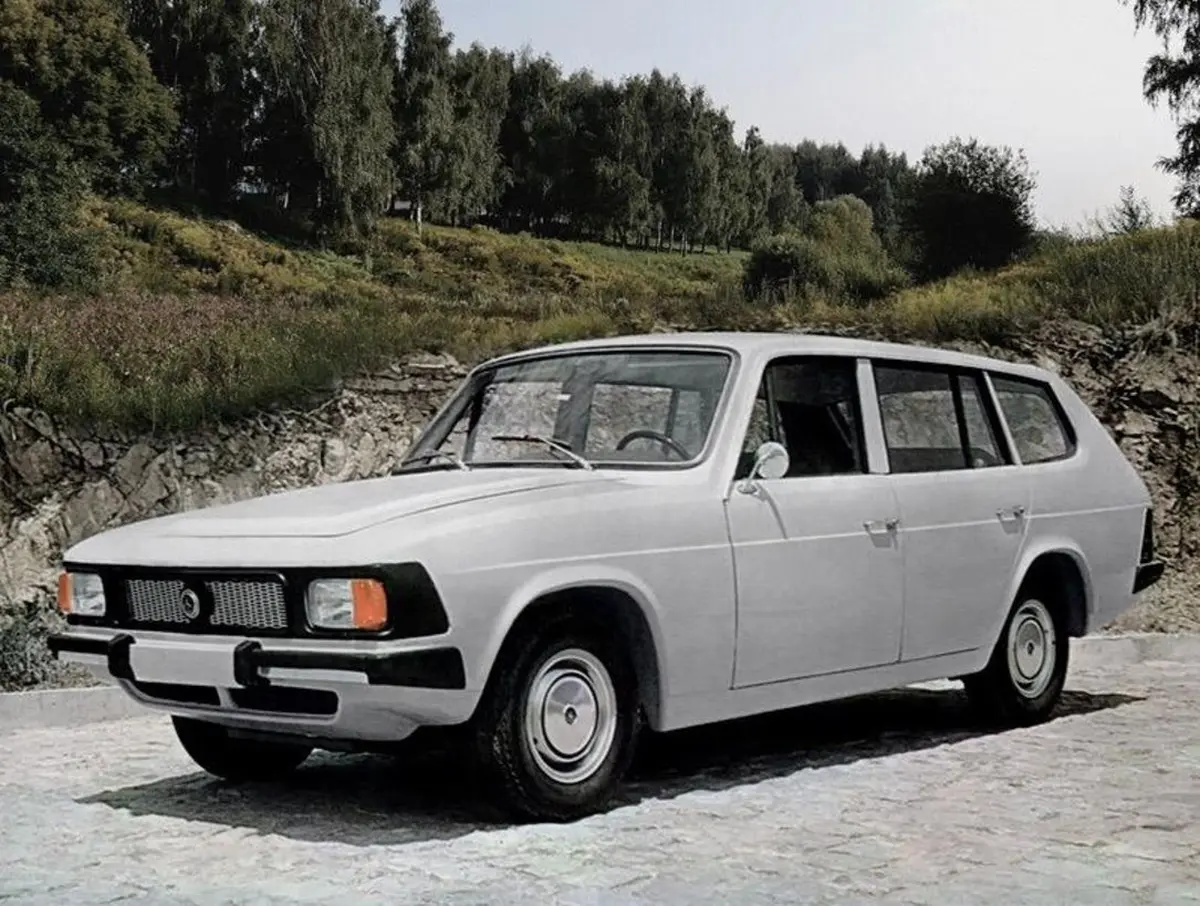
Introduced in 1973, the Anadol A5 SV-1600 became one of the most innovative vehicles in Turkish automotive history. It is widely recognized as the world's first mass-produced five-door station wagon with a fiberglass body.
Its overall design was inspired by the Reliant Scimitar Sports Station Coupé, while incorporating styling cues associated with renowned Italian design houses such as Bertone and Pininfarina.
Design
The SV-1600 featured elegant station wagon proportions that were considered highly modern for its era.
Notable design features included:
-
Large rear cargo area
-
Removable rear seats for increased luggage capacity
-
Newly designed front spoiler
-
Clean single-color body finish on early models
Beginning in 1976, luxury versions introduced:
-
Two-tone paint schemes
-
Updated interior trim
-
Redesigned dashboard
-
Improved mirrors and exterior details
-
Higher-quality cabin materials
These refinements significantly improved comfort while giving the vehicle a more premium appearance.
Engine and Performance
The SV-1600 was powered by Ford's proven 1.6-liter Kent OHV engine.
Specifications
-
Engine: 1,600 cc Ford Kent OHV
-
Configuration: Inline 4-cylinder
-
Five main bearings
-
Rear-wheel drive
Its dependable mechanical components and practical body design made it popular among both families and commercial users.
Production
Production continued from 1973 until 1982, with a total of 6,499 vehicles manufactured.
Today, the SV-1600 is regarded as one of Anadol's most innovative achievements, combining practicality, lightweight fiberglass construction, and distinctive styling.
Anadol A6 "Böcek" (1975–1977): A Vehicle Ahead of Its Time
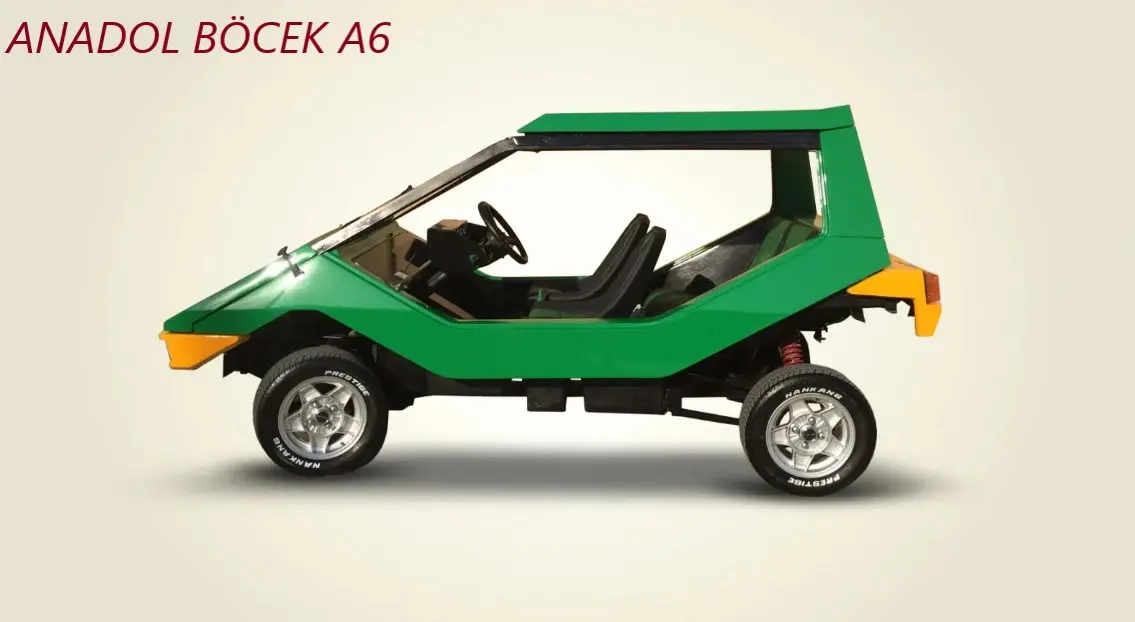
The Anadol A6 Böcek ("Beetle") was one of the most unconventional vehicles ever produced in Turkey. Introduced in 1975, it was designed by Jan Nahum, an engineer from Otosan's Research and Development Department.
Jan Nahum would later become a senior executive at companies including Otokar, Tofaş, and FIAT Italy, while his family played an important role throughout Anadol's development.
Unique Design Philosophy
Originally conceived for military applications, the Böcek was later adapted for civilian use.
Although inspired by Volkswagen-style beach buggies, it featured a completely original design characterized by:
-
Open-top body
-
Doorless construction
-
Windshield aligned with the hood
-
Distinctive angular styling
Many automotive historians consider the Böcek to be one of the earliest Turkish vehicles whose concept anticipated today's compact recreational SUVs.
The futuristic dashboard and center console were also considered remarkably advanced for the mid-1970s.
Engine
The Böcek used Ford's reliable 1,298 cc engine, producing 63 horsepower.
Combined with its lightweight construction, the vehicle offered lively performance despite its modest power output.
Additional distinctive features included:
-
Pop-art inspired asymmetrical styling
-
Two taillights on one side and three on the other
-
Five-panel rear-view mirror integrated above the windshield
Different Versions
Several variants were developed for different purposes, including:
-
Military version
-
Off-road version
-
Tractor/towing version
-
TRT television production vehicle
-
Gullwing-door demonstration model
Unfortunately, the economic downturn and oil crisis of the mid-1970s limited market demand.
Only 203 units were produced between 1975 and 1977.
Today, the Böcek is considered one of the rarest and most collectible vehicles ever manufactured in Turkey.
Anadol A8 / 16 and Saloon 16 (1981–1984): Modern Styling with Limited Production
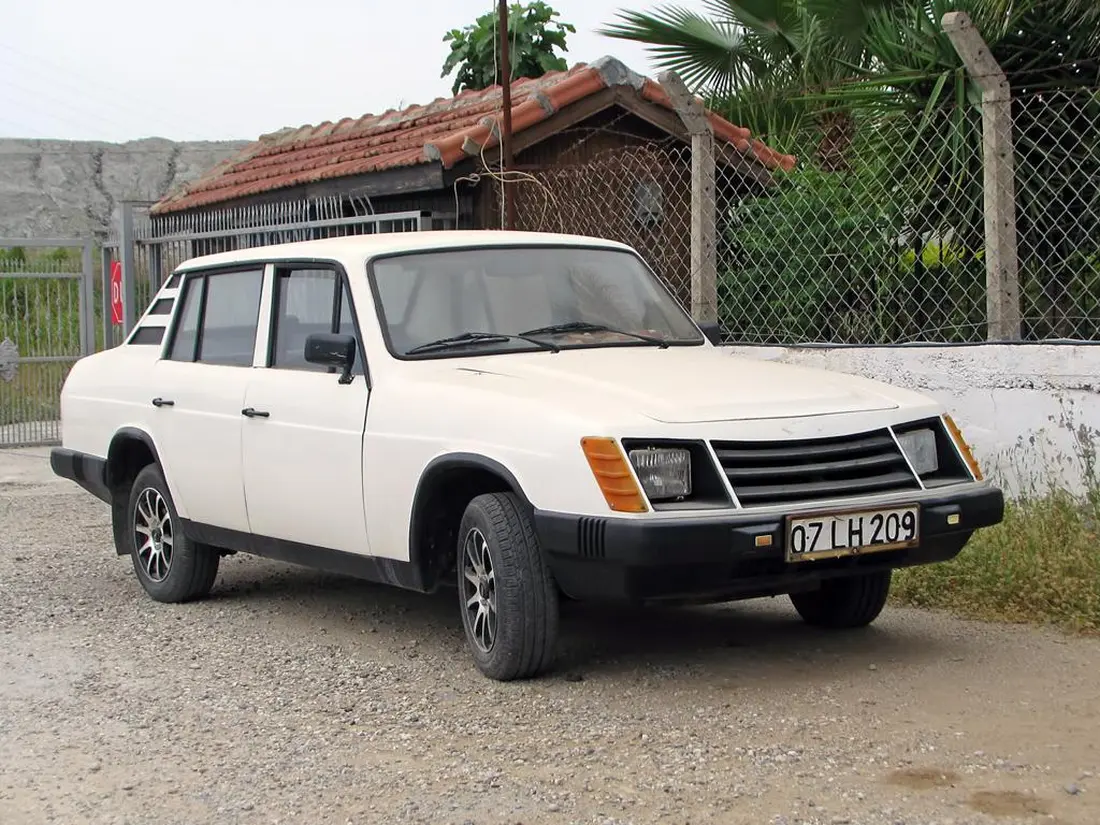
Introduced in 1981, the Anadol A8-16 represented the company's final attempt to modernize its passenger car lineup.
Its design incorporated styling elements reminiscent of contemporary SAAB and Volvo models, including:
-
Sloping front end
-
Large rectangular headlights
-
Tall rear body design
Because of its distinctive front profile, the model earned the nickname "Baltaburun" (Axe Nose) among Turkish motorists.
Design Evolution
Although its exterior appeared modern, several older components carried over from previous Anadol models, including doors and window frames originally developed for the SV-1600.
Some buyers felt these shared components made the car appear less cohesive than expected.
Engines
Early A8-16 models (1981–1982) featured Ford's newer 1.6-liter Pinto E-Max engine.
To reduce production costs, the later Saloon 16 models (1983–1984) reverted to the older 1.6-liter Ford Kent OHV engine.
Despite these updates, production remained limited.
Only 1,013 vehicles were built, making the A8-16 one of the rarest Anadol passenger cars today.
Anadol Pickup / P2 / Otosan 500 & Otosan 600D (1971–1991): Turkey's Light Commercial Legend
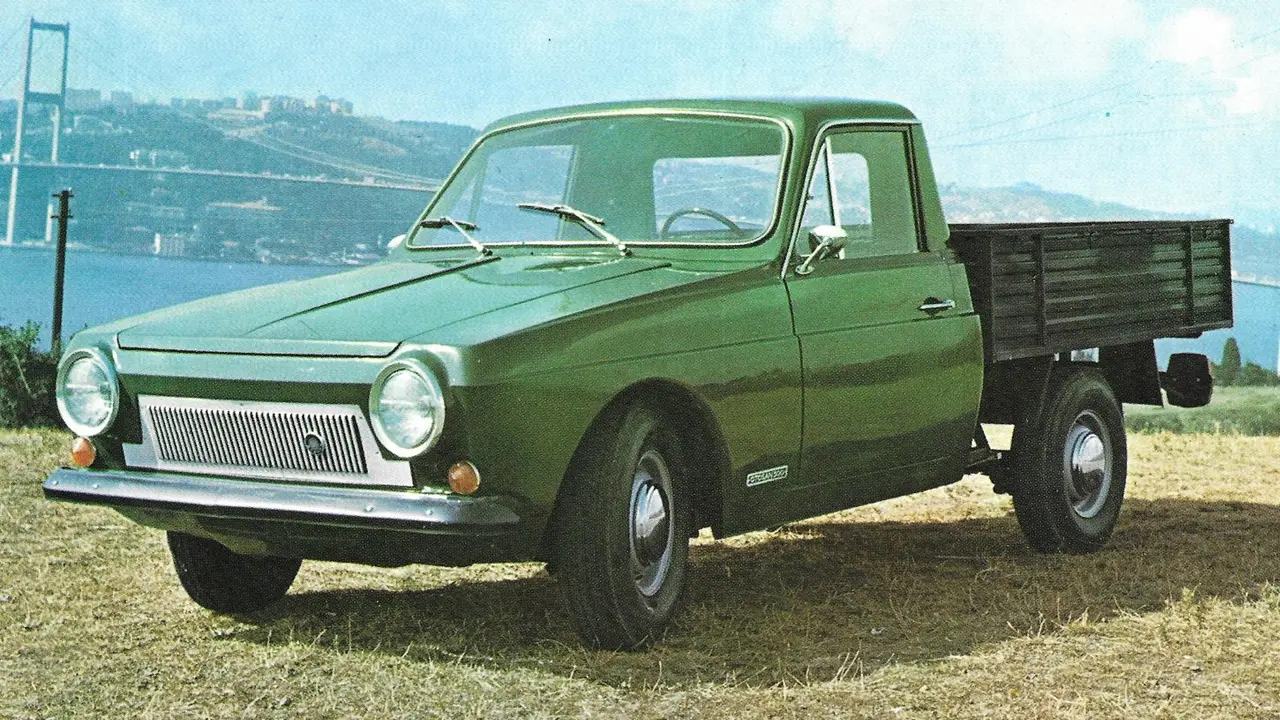
Production of the Anadol pickup truck began in 1971 after Otosan engineers recognized the growing demand for a compact commercial vehicle for small businesses.
The first prototype was created by modifying an Anadol A1 for transporting factory materials.
Development
Early prototypes featured one-piece fiberglass cargo bodies.
However, these proved impractical, leading engineers to adopt a more durable combination of:
-
Fiberglass passenger cabin
-
Steel cargo bed
The resulting production model entered the market as the Otosan 500, powered by a 1.3-liter gasoline engine.
Evolution
Throughout the 1980s, several powertrain options became available, including:
-
1.3-liter gasoline engine
-
1.2-liter Erk diesel engine
-
1.6-liter Ford OHC gasoline engine with Weber carburetor
Interior improvements included:
-
Modernized dashboard
-
Plastic trim components
-
Improved cabin ergonomics
From 1983 onward, the Otosan 600D introduced a 1.9-liter Erk diesel engine along with a redesigned front end.
Production
Between 1971 and 1991, a total of 36,892 pickup trucks were produced.
These vehicles served:
-
Small businesses
-
Government agencies such as PTT
-
Tradespeople across Turkey
Many remain in daily use, demonstrating their durability and practical design.
Anadol Today: A Beloved Classic
Although passenger car production ended in 1984, Anadol continues to enjoy a loyal following among classic car enthusiasts and collectors.
Well-preserved examples have become increasingly valuable, while restored vehicles regularly appear at classic automobile events throughout Turkey.
Modified pickup conversions can still be found in rural areas, and a small number of Anadol-derived vehicles even survive in countries such as New Zealand, reflecting the model's international connections.
Conclusion: A Symbol of Turkey's Automotive Industry
Anadol represents far more than simply Turkey's first mass-produced automobile. It symbolizes the beginning of the country's modern automotive manufacturing industry and demonstrates how international engineering partnerships, local innovation, and industrial ambition combined to create a vehicle that became part of Turkey's national identity.
From the pioneering A1 to the sporting STC-16, the practical SV-1600, the unconventional Böcek, and the dependable Otosan pickups, every Anadol model contributed to the development of Turkey's automotive sector.
Today, Anadol remains an enduring symbol of Turkish engineering heritage and continues to be celebrated by collectors, historians, and classic car enthusiasts both in Turkey and around the world.