TR
TR EN
EN

Is Volvo Really the World's Safest Car? A Look at the Brand's Legendary Reputation
For decades, Volvo has been synonymous with safety, durability, and reliability. Ask almost anyone to name the safest car brand, and Volvo is likely to be one of the first names mentioned. The Swedish automaker has built its identity around protecting drivers and passengers, introducing numerous innovations that have shaped the modern automotive industry.
But is Volvo really the world's safest car? Or is its reputation simply the result of decades of successful marketing? In this article, we'll explore Volvo's history, groundbreaking safety innovations, real-world crash performance, and whether the brand still deserves its legendary status.
How Volvo Built Its Reputation for Safety
Volvo was founded in 1927 in Gothenburg, Sweden, with a simple philosophy: cars should be built to withstand the harsh Scandinavian climate and keep occupants safe.
Unlike many manufacturers that focused primarily on performance or luxury, Volvo prioritized durability and accident protection from the very beginning.
This philosophy became the company's defining characteristic and remains at the core of every Volvo model today.
The Three-Point Seat Belt That Changed the World
Perhaps Volvo's greatest contribution to automotive safety came in 1959.
Engineer Nils Bohlin developed the modern three-point seat belt, a design that securely restrains both the upper and lower body during a collision.
Instead of keeping the invention exclusive, Volvo made the patent available to other manufacturers free of charge.
Today, the three-point seat belt is estimated to have saved millions of lives worldwide and is considered one of the most important automotive safety inventions ever created.
Volvo's Major Safety Innovations
Volvo has introduced numerous technologies that later became industry standards.
Some of the company's most important innovations include:
Three-point seat belt (1959)
The first practical seat belt design suitable for everyday use.
Rear-facing child safety seats (1972)
Inspired by astronauts' seating positions during launch, Volvo introduced one of the world's first rear-facing child seats.
Side Impact Protection System (SIPS)
Introduced in the early 1990s, SIPS distributes crash forces throughout the vehicle structure to better protect occupants during side collisions.
Side curtain airbags
Volvo was among the first manufacturers to equip production vehicles with inflatable curtain airbags that protect passengers' heads during side impacts and rollovers.
Whiplash Protection System (WHIPS)
Designed to reduce neck injuries during rear-end collisions by allowing controlled movement of the seat and head restraint.
City Safety
This advanced collision avoidance system can automatically apply the brakes if the driver fails to react to an obstacle, helping prevent or reduce the severity of low-speed collisions.
Built Around Crash Protection
Volvo vehicles are engineered with exceptionally strong passenger safety cages surrounded by carefully designed crumple zones.
During a collision, these crumple zones absorb impact energy while directing forces away from the passenger compartment.
High-strength steel, boron steel, and reinforced structural components help maintain cabin integrity during severe crashes.
This engineering philosophy has consistently resulted in excellent crash-test performance across multiple generations of Volvo vehicles.
Crash Test Performance
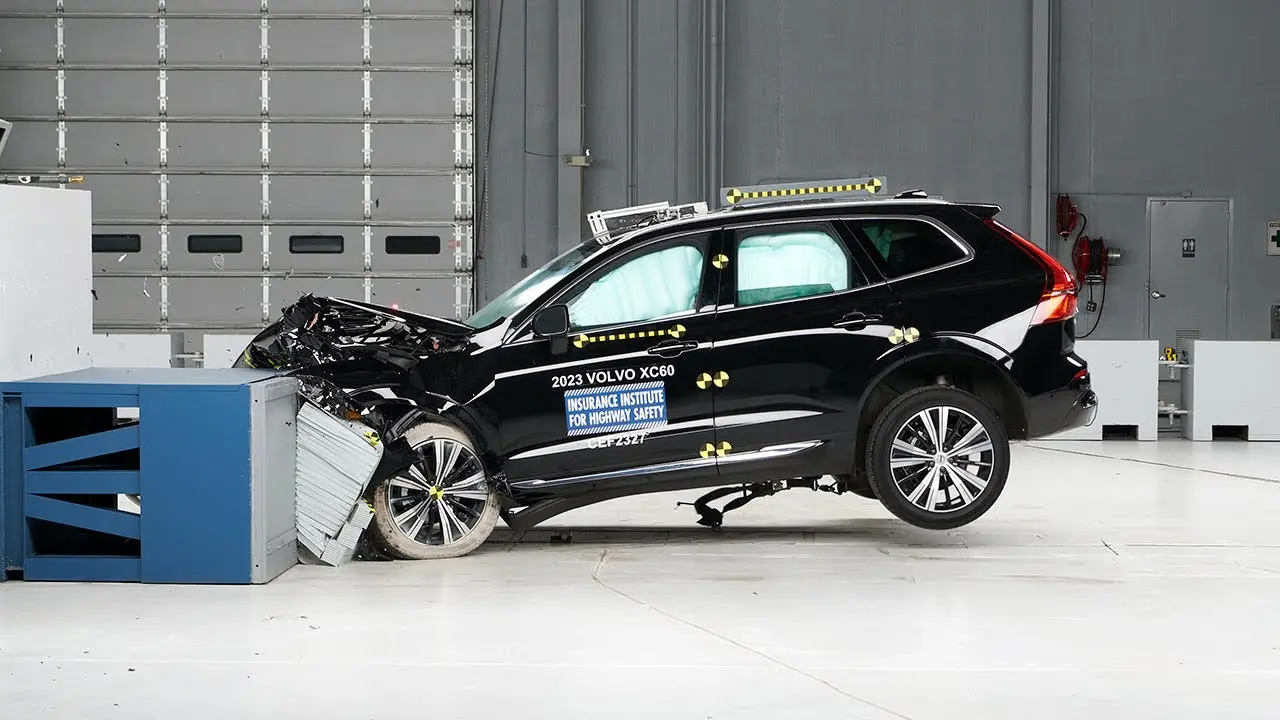
Modern Volvo models regularly achieve top ratings in independent crash tests conducted by organizations such as:
-
Euro NCAP
-
IIHS (Insurance Institute for Highway Safety)
-
NHTSA (National Highway Traffic Safety Administration)
Many recent Volvo models have received maximum five-star safety ratings along with awards for advanced crash avoidance systems and occupant protection.
While many competing manufacturers now achieve similar ratings, Volvo has maintained remarkable consistency across its product lineup.
Advanced Driver Assistance Technologies
Today's Volvo vehicles combine passive safety with sophisticated active safety systems.
Common technologies include:
-
Automatic Emergency Braking
-
Adaptive Cruise Control
-
Blind Spot Information System (BLIS)
-
Lane Keeping Aid
-
Cross Traffic Alert
-
Driver Alert Control
-
Road Sign Information
-
Pilot Assist semi-autonomous driving
These systems are designed to help drivers avoid accidents before they occur rather than simply protecting occupants after a collision.
Volvo's Vision: Zero Fatalities
One of Volvo's most ambitious initiatives is its long-term safety vision.
The company publicly announced its goal that no one should be seriously injured or killed in a new Volvo vehicle under normal driving conditions.
This vision has guided decades of research into vehicle design, driver behavior, autonomous technology, and collision prevention.
Rather than focusing only on meeting regulatory standards, Volvo continually studies real-world accidents to improve future vehicle safety.
Are Volvo Cars Also Durable?
Safety is only one part of Volvo's reputation.
Many Volvo models have earned recognition for exceptional durability and longevity.
Classic models such as the Volvo 240, 740, 850, and early XC70 have become famous for regularly exceeding 300,000 to 500,000 kilometers, with some examples surpassing one million kilometers when properly maintained.
This reputation for reliability has helped strengthen Volvo's image as a vehicle built to last.
Is Volvo Still the Safest Brand Today?
Today's automotive industry is far more competitive than it was decades ago.
Manufacturers such as Mercedes-Benz, BMW, Subaru, Toyota, Honda, Audi, and Tesla now offer vehicles with outstanding crash-test ratings and advanced safety technology.
As a result, Volvo no longer has an exclusive advantage in safety.
However, many experts still consider Volvo one of the industry's safety leaders because protecting occupants remains central to the company's engineering philosophy rather than simply a marketing feature.
Common Misconceptions About Volvo Safety
One common misconception is that Volvo vehicles are "indestructible."
No automobile can eliminate the laws of physics.
Even the safest vehicle cannot fully protect occupants in every possible accident, especially during extremely high-speed impacts or severe collisions.
Safety also depends on:
-
Driver behavior
-
Seat belt usage
-
Vehicle maintenance
-
Tire condition
-
Road conditions
-
Weather
-
Proper child restraint systems
Volvo provides excellent protection, but responsible driving remains essential.
Why Many Families Choose Volvo
Families frequently choose Volvo vehicles because they combine several desirable characteristics:
-
Outstanding crash protection
-
Spacious interiors
-
Advanced child safety features
-
Excellent visibility
-
Comfortable long-distance driving
-
Durable construction
-
Modern driver assistance systems
These qualities make Volvo particularly popular among parents and safety-conscious drivers.
Conclusion
So, is Volvo the world's safest car?
There is no single brand that can objectively claim to build the safest vehicle in every category or every model year. However, Volvo has unquestionably played a leading role in automotive safety for nearly a century.
From inventing the three-point seat belt to pioneering numerous crash protection systems and advanced driver assistance technologies, Volvo has consistently placed occupant safety above almost every other design priority.
Today, many manufacturers produce exceptionally safe vehicles, but Volvo remains one of the industry's most trusted names for drivers who prioritize protection, reliability, and engineering excellence. Whether you're buying a compact SUV, a luxury sedan, or a family wagon, Volvo continues to represent one of the strongest commitments to automotive safety in the world.