TR
TR EN
EN

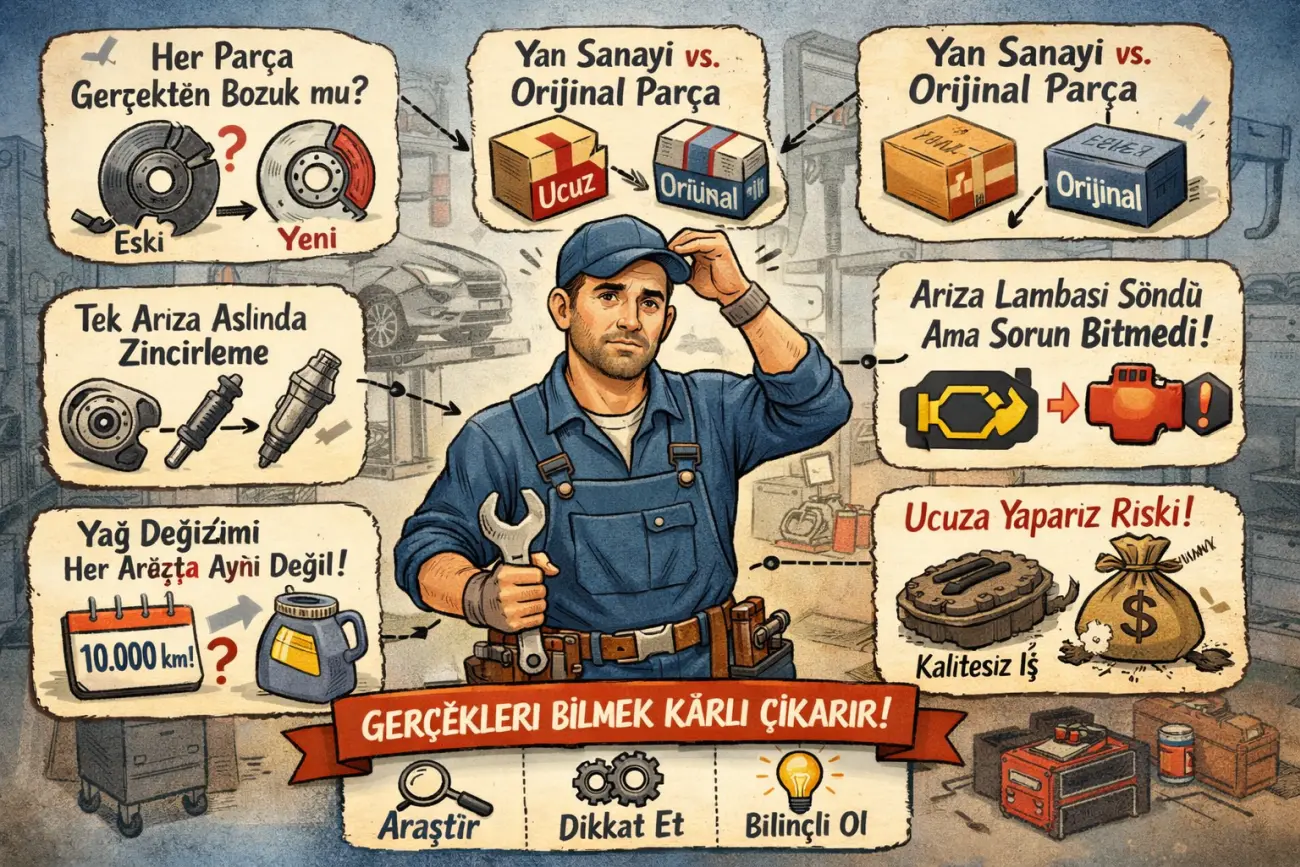
Vehicle Maintenance Truths Mechanics Rarely Talk About
When you take your car to a repair shop, you'll often hear phrases like, "We'll take care of it." While most mechanics are honest professionals, there are some important aspects of vehicle maintenance that are rarely explained in detail. Whether it's because of time constraints, assumptions about customer knowledge, or the complexity of modern vehicles, these overlooked facts can significantly affect both your car's lifespan and your maintenance costs.
Understanding these realities doesn't mean you should distrust every repair shop. Instead, it helps you make informed decisions, ask better questions, and avoid unnecessary expenses.
Not Every Recommended Replacement Is Actually Necessary
One of the most common misunderstandings in vehicle maintenance is the belief that every suggested replacement is urgent.
Sometimes a mechanic may recommend replacing a component because it shows early signs of wear or might fail in the future. While preventive maintenance is often beneficial, it doesn't always mean the part has reached the end of its service life.
Examples include:
-
Brake pads that still have sufficient material remaining
-
Batteries with acceptable performance
-
Suspension components showing minor wear
-
Belts that have small cosmetic cracks but remain serviceable
Before approving expensive repairs, ask:
-
Is the part actually faulty?
-
Is replacement urgent or preventive?
-
Can it safely be monitored until the next service?
Understanding the difference can help you prioritize repairs wisely.
Aftermarket Parts Are Not Always Bad—But They're Not All Equal
Many drivers assume there are only two choices:
-
Genuine Original Equipment (OE) parts
-
Cheap aftermarket parts
In reality, the aftermarket industry offers products ranging from poor quality to components that match or even exceed original specifications.
High-quality aftermarket brands often manufacture parts for vehicle manufacturers themselves.
However, quality varies greatly depending on the component.
Generally, aftermarket parts can be suitable for:
-
Air filters
-
Cabin filters
-
Brake pads from reputable manufacturers
-
Suspension components from trusted brands
For critical systems, genuine or premium-quality parts are usually the safest choice, including:
-
Airbags
-
Electronic control modules
-
Timing components
-
Certain transmission parts
-
Safety sensors
Choosing the right part depends on quality—not simply whether it's original or aftermarket.
The Visible Problem Isn't Always the Real Problem
Many vehicle failures are symptoms rather than root causes.
For example:
A failed turbocharger may actually result from poor engine lubrication.
Repeated injector problems could indicate contaminated fuel or a failing fuel pump.
Transmission issues may stem from neglected fluid changes rather than internal component failure.
Replacing only the damaged part without identifying why it failed often leads to recurring problems.
A proper diagnosis should always focus on the underlying cause, not just the visible symptom.
Oil Change Intervals Aren't the Same for Every Driver
Many people still believe engine oil should always be changed every fixed number of miles or kilometers.
In reality, oil life depends heavily on driving conditions.
Oil deteriorates more quickly if you frequently:
-
Drive in stop-and-go city traffic
-
Make short trips where the engine never fully warms up
-
Tow heavy loads
-
Drive in very hot or dusty environments
-
Spend long periods idling
Meanwhile, vehicles driven mostly on highways under steady conditions often experience slower oil degradation.
Following the manufacturer's maintenance schedule while considering your driving habits provides much better protection than relying on a universal interval.
Clearing a Warning Light Doesn't Fix the Problem
Modern vehicles store diagnostic trouble codes whenever a fault is detected.
Sometimes the warning light disappears because:
-
The code was manually erased
-
The battery was disconnected
-
The fault became temporarily inactive
However, the underlying issue may still exist.
Simply turning off the warning light is not the same as repairing the problem.
If the root cause isn't corrected, the warning usually returns—and the damage may continue in the meantime.
The Cheapest Repair Can Become the Most Expensive
Saving money is important, but choosing the lowest repair estimate isn't always the best decision.
Very inexpensive repairs may involve:
-
Low-quality replacement parts
-
Temporary fixes instead of permanent repairs
-
Skipping important procedures
-
Reusing worn components that should be replaced
Although the initial invoice looks attractive, repeated failures often make these repairs more expensive over time.
Long-lasting repairs generally provide better value than the lowest upfront price.
Unusual Noises Should Never Be Ignored
Drivers sometimes hear statements like:
"They all make that noise."
While some vehicles naturally produce harmless sounds, new or changing noises should never be dismissed without investigation.
Sounds that deserve attention include:
-
Knocking
-
Grinding
-
Clicking
-
Whining
-
Metallic rattling
-
Squealing
Many major mechanical failures begin with small noises that appear long before complete breakdown occurs.
Early diagnosis often prevents much larger repair bills.
Preventive Maintenance Is Usually Cheaper Than Repairs
Routine maintenance may seem expensive until compared with major repairs.
Regular servicing helps extend the life of:
-
The engine
-
Transmission
-
Cooling system
-
Suspension
-
Braking system
-
Electrical components
Replacing fluids, filters, belts, and other wear items at recommended intervals costs far less than replacing damaged major components.
Preventive maintenance should always be viewed as an investment rather than an expense.
A Diagnostic Scan Doesn't Tell the Whole Story
Modern diagnostic scanners are valuable tools, but they don't identify every problem automatically.
A fault code usually indicates:
-
Which system detected an abnormal condition
-
Which sensor reported unusual data
It doesn't always identify the exact failed component.
Experienced technicians combine diagnostic codes with:
-
Visual inspections
-
Mechanical testing
-
Road tests
-
Pressure measurements
-
Electrical testing
Replacing parts based solely on fault codes can result in unnecessary repairs.
Maintenance Records Matter More Than Many Drivers Realize
Keeping records of services and repairs offers several benefits.
A documented maintenance history:
-
Helps technicians diagnose recurring issues
-
Shows that maintenance has been performed correctly
-
Increases resale value
-
Builds buyer confidence
Even simple records of oil changes, brake work, and fluid replacements can make a significant difference when selling your vehicle.
Ask Questions Before Approving Repairs
A trustworthy repair shop should be willing to explain:
-
What failed
-
Why it failed
-
Whether replacement is urgent
-
Which repair options are available
-
Whether genuine or aftermarket parts are recommended
Understanding the repair allows you to make informed decisions instead of simply approving every recommendation.
Conclusion
Modern vehicles are more reliable than ever, but they are also more complex. Knowing a few maintenance truths can help you avoid unnecessary repairs, recognize genuine problems earlier, and make smarter decisions about your vehicle.
Not every recommended replacement is essential, not every inexpensive part is poor quality, and not every warning light disappears because the issue has been fixed.
The most valuable tool any vehicle owner can have isn't a wrench—it's knowledge. An informed driver is far less likely to overspend, overlook serious problems, or be caught off guard by costly repairs.