TR
TR EN
EN

What Is BMW ISTA? BMW Diagnostic Software
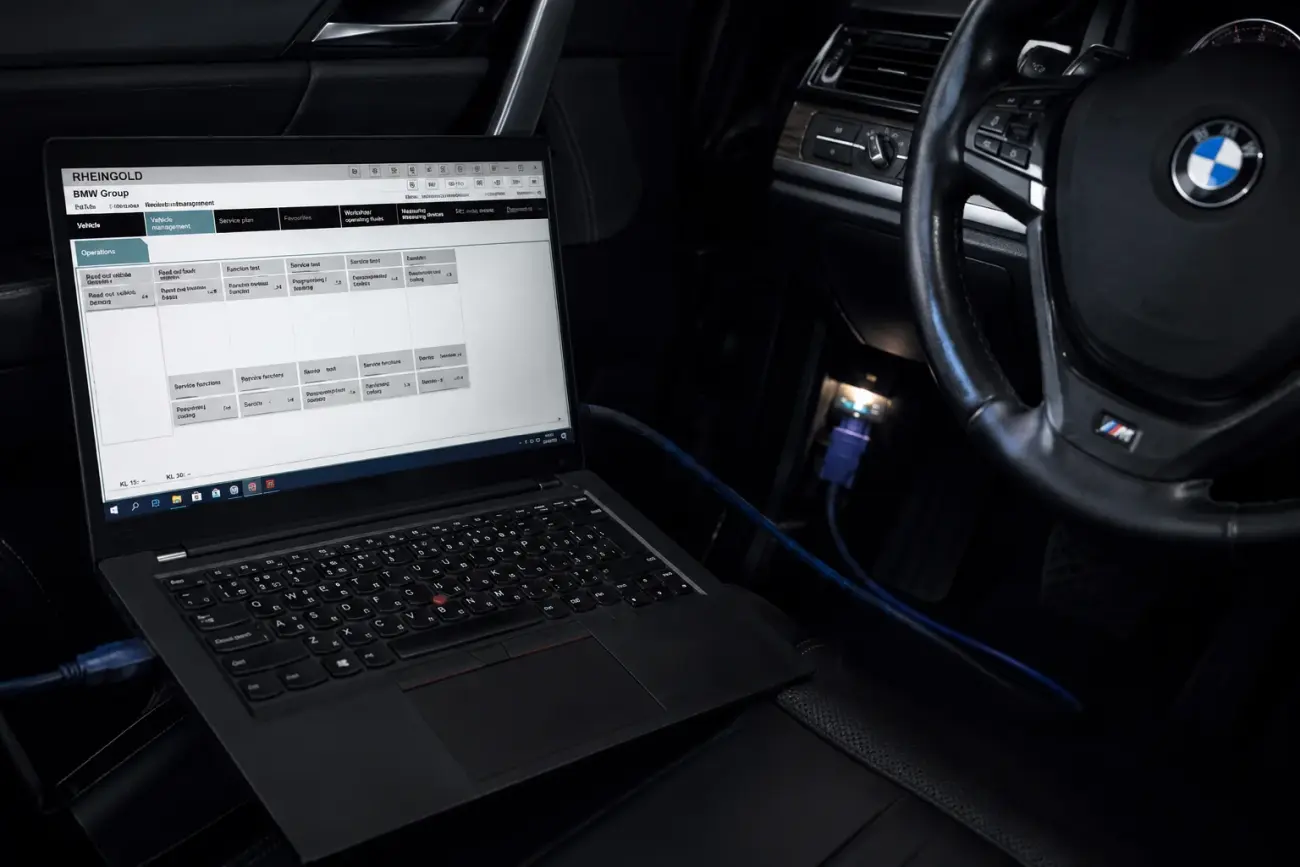
BMW ISTA is manufacturer-specific professional diagnostic software used for fault diagnosis, testing, maintenance, and various service procedures on BMW and MINI vehicles. Unlike a basic OBD scanner, ISTA can communicate with many electronic control units throughout the vehicle and provide access to more detailed fault information, live data, and manufacturer-specific diagnostic procedures.
Modern BMW vehicles contain numerous electronic control units responsible for the engine, transmission, ABS/DSC, airbags, body electronics, climate control, steering, parking systems, and driver assistance systems. Because these systems communicate with one another, a basic OBD scan may not always be enough to diagnose complex electronic faults.
The main purpose of BMW ISTA is to provide technicians with more comprehensive information about the vehicle's electronic systems and help them investigate faults systematically.
What Is BMW ISTA Used For?
BMW ISTA is used to diagnose the electronic systems of BMW vehicles at a manufacturer-specific level.
When a vehicle is connected to the system, its electronic control units can be scanned and current or stored fault codes can be identified. The technician can then investigate the relevant fault using the diagnostic procedures provided by the system.
For this reason, ISTA should not be considered simply a program that displays fault codes.
When a fault is detected, the system may guide the technician toward appropriate checks, measurements, or test procedures. This makes it possible to investigate not only which system has reported a fault but also what may have caused the problem.
Which Systems Can Be Diagnosed With BMW ISTA?
The systems accessible through ISTA depend on the BMW model, production year, electronic architecture, and equipment installed in the vehicle.
The engine management system can provide information about sensors, actuators, fuel delivery, air management, ignition, emissions, and other engine-related functions.
The transmission control unit can be examined for electronic transmission faults and operating parameters.
ABS and DSC systems can also be diagnosed, including wheel-speed sensors, electronically controlled braking functions, steering-angle information, and stability-control related faults.
Depending on the vehicle, ISTA can also communicate with systems such as airbags, climate control, body electronics, electronic parking brakes, steering systems, parking sensors, lighting systems, and driver assistance systems.
Is ISTA Only Used to Read Fault Codes?
No.
One of the major advantages of ISTA is that it can take the diagnostic process beyond simply reading a fault code.
For example, when a sensor-related fault is stored, the technician can examine the sensor's actual operating values before replacing the component.
Similarly, certain actuators can be tested to determine whether they are being correctly controlled by the relevant control unit.
This approach is particularly important when diagnosing electronic systems because a stored fault does not always mean that the component itself has physically failed.
The actual cause may be a wiring problem, connector issue, power-supply fault, poor ground connection, communication problem, or another electronic control unit.
What Is a BMW ISTA Test Plan?
One of the useful features of BMW ISTA is its use of diagnostic test plans.
When a fault is detected, the system may provide a series of diagnostic steps designed to investigate the problem.
Depending on the fault, the test plan may require certain measurements, component checks, or functional tests.
This allows the technician to follow a structured diagnostic process instead of replacing parts based solely on the fault code.
However, interpreting the results of these tests still requires technical knowledge and experience.
Diagnosing Faults With Live Data
Many modern BMW faults cannot be accurately diagnosed by looking at stored fault codes alone.
ISTA can provide access to live operating values from supported control units.
For example, sensor signals, actuator states, and various system parameters can be monitored while the engine or vehicle is operating.
This can help determine whether a problem occurs continuously or only under certain operating conditions.
Live data can be particularly useful when the vehicle has a stored fault but the driver does not experience an obvious symptom.
Can BMW ISTA Perform Actuator Tests?
Yes, supported systems can be tested through ISTA.
An actuator test allows the technician to determine how a component responds when the relevant control unit sends it a command.
Depending on the vehicle and system, electric motors, valves, fans, relays, and other electronically controlled components may be tested.
However, the result of an actuator test should not automatically be considered a final diagnosis.
If an actuator does not operate, the actuator itself may be defective, but the problem could also be related to its power supply, ground connection, wiring, or the output circuit of the control unit.
Can BMW ISTA Program an ECU?
BMW electronic control units can be subject to certain software, programming, coding, and service procedures. The exact functions available depend on the ISTA version, vehicle model, control unit, and software architecture.
It is important to understand that ECU programming and clearing fault codes are not the same operation.
Clearing a fault code does not change the software inside a control unit.
During a programming or software-update procedure, appropriate software data may be installed or updated in the control unit.
Communication between the vehicle and diagnostic computer must remain stable during this process.
Is BMW ISTA Coding the Same as Programming?
No.
Coding and programming are different procedures.
Coding generally involves configuring specific functions or settings of a vehicle or control unit according to the vehicle's equipment and configuration.
Programming refers to installing or updating software in the control unit.
ECU cloning is another separate process.
Transferring certain data from one ECU to another should not automatically be considered the same as normal BMW coding or programming.
For this reason, when a workshop says that it will "install software" on an ECU, it is important to understand exactly what procedure will be performed.
Why Is ISTA Important When Replacing an ECU?
When an electronic control unit is replaced in a BMW, physically installing the new component may not always be enough.
The replacement control unit may need to be configured, coded, programmed, or commissioned so that it can work correctly with the vehicle.
Modern BMW vehicles contain numerous electronic modules that communicate with one another, so replacing one module may also require consideration of its communication and configuration with other systems.
For this reason, ECU replacement is not always as simple as removing the old unit and installing the new one.
Can BMW ISTA Automatically Find a Fault?
ISTA is a sophisticated diagnostic system, but it does not automatically identify the exact physical cause of every fault.
The software can provide valuable information and diagnostic procedures, but the results still need to be interpreted correctly.
For example, a sensor fault may be caused by a defective sensor. However, the same fault could also result from an open circuit, short circuit, excessive resistance, low supply voltage, or poor ground connection.
Similarly, a communication fault does not necessarily mean that the control unit reporting the fault is defective.
The information provided by ISTA should therefore be treated as the starting point for the diagnostic process.
Are Electrical Measurements Still Necessary With BMW ISTA?
Yes.
Using manufacturer-specific diagnostic software does not eliminate the need for traditional electrical testing.
For example, if a control unit reports an incorrect signal from a sensor, the technician may need to check the sensor's supply voltage, ground, signal circuit, connector, and wiring before replacing the sensor.
A multimeter or oscilloscope may also be required to determine whether the electrical signal is actually being generated correctly.
Professional BMW diagnosis therefore often combines software-based diagnostics with physical and electrical measurements.
Why Is Battery Voltage Important During BMW ISTA Programming?
Stable battery voltage is particularly important during programming, software updates, and certain electronic service procedures.
If the battery voltage drops significantly or communication between the vehicle and diagnostic computer is interrupted during programming, software-related problems can occur in the control unit.
For this reason, professional workshops use suitable power-support equipment when necessary and make sure the vehicle's electrical system remains stable during programming.
The electrical requirements of a normal fault-code scan are not the same as those of an ECU programming procedure.
Does BMW ISTA Diagnose Every BMW in Exactly the Same Way?
No.
BMW's electronic architecture has changed considerably over the years.
An older BMW and a newer BMW do not necessarily use the same control units, communication systems, or electronic architecture.
Newer models may contain advanced driver assistance systems, radar and camera systems, more electronic control units, hybrid or electric powertrains, and more sophisticated communication networks.
As a result, the functions available through ISTA can vary from one BMW model to another.
BMW ISTA vs. a Generic OBD Scanner
A generic OBD scanner is very useful for reading and clearing basic diagnostic trouble codes.
However, on a BMW with numerous electronic control units, a generic OBD device may provide only limited access to the vehicle's systems.
ISTA is specifically designed around BMW's electronic architecture and therefore provides much broader diagnostic capabilities.
The difference becomes especially important when diagnosing systems such as ABS, airbags, transmissions, body electronics, driver assistance systems, and other vehicle modules.
Checking a basic engine warning light and performing a complete electronic diagnosis are two very different levels of diagnostic work.
Can BMW ISTA Fix a Fault by Itself?
No.
ISTA is primarily a diagnostic platform.
For example, if ISTA identifies a fault in an electronic control unit, the technician should not automatically replace that module.
The operating conditions under which the fault occurred, live data, electrical connections, wiring, and communication with other control units should be investigated first.
Avoiding unnecessary replacement of expensive electronic components is important both for reducing repair costs and for achieving an accurate diagnosis.
Why Is BMW ISTA Important?
As BMW vehicles have become increasingly dependent on complex electronic systems, manufacturer-specific diagnostic software has become more important.
BMW ISTA provides professional technicians with access to fault-code information, live data, diagnostic test plans, actuator tests, and supported service procedures.
However, having sophisticated diagnostic software alone does not guarantee a correct diagnosis.
A fault code often indicates only which system has detected an abnormal condition. Finding the actual cause requires the information from ISTA to be combined with electrical measurements, physical inspection, live-data analysis, and the symptoms experienced by the vehicle.
For this reason, BMW ISTA is one of the most important tools for professional BMW diagnostics, but it provides the best results when used by a technician who understands both the software and the vehicle's electronic systems.