TR
TR EN
EN

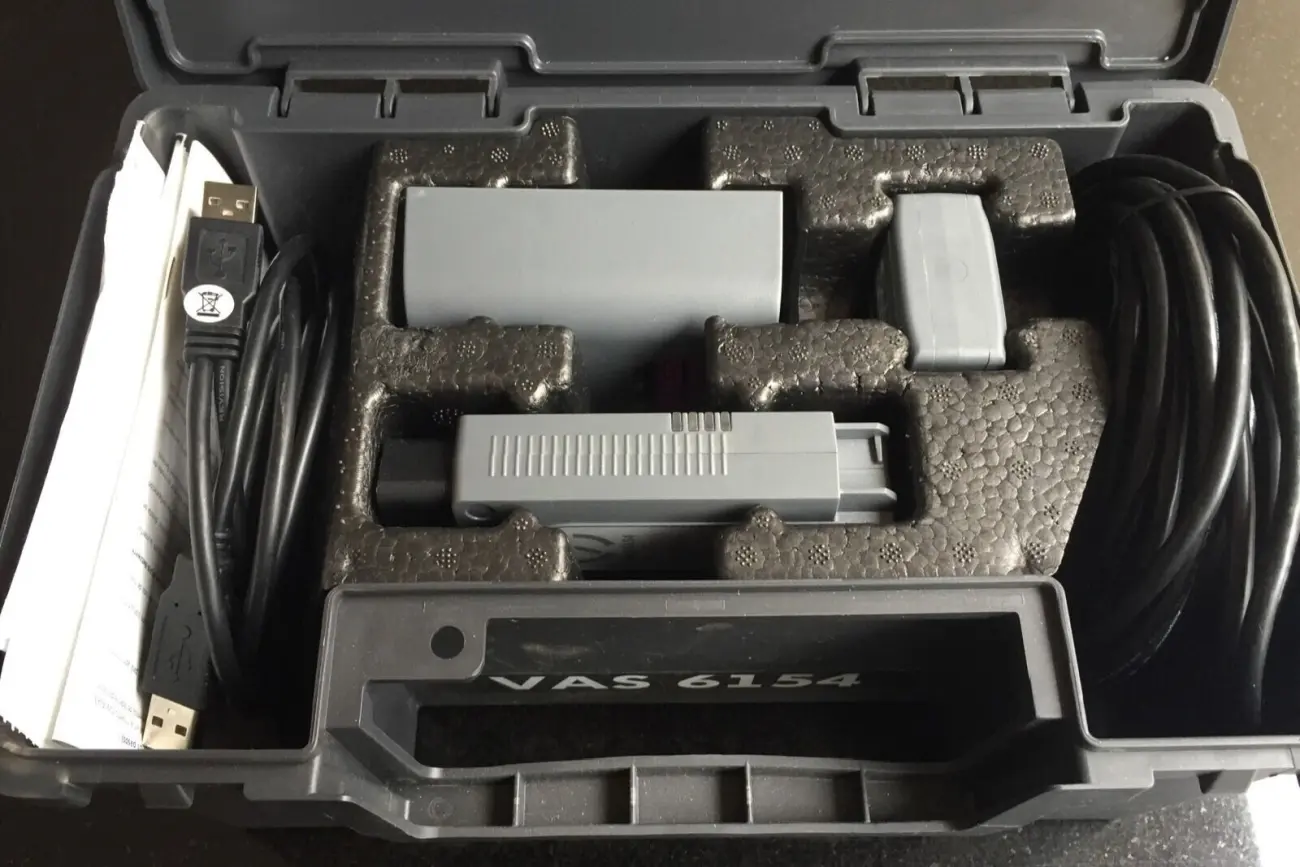
What Is Volkswagen ODIS? Volkswagen Diagnostic Software
Volkswagen ODIS is manufacturer-specific professional diagnostic software used for fault diagnosis, testing, coding, adaptation, programming, and various service procedures on Volkswagen Group vehicles. The name ODIS comes from “Offboard Diagnostic Information System.”
ODIS plays an important role in diagnosing the electronic systems used in Volkswagen Group vehicles, including Volkswagen, Audi, SEAT, and Škoda. Compared with a standard OBD-II scanner, ODIS provides access to much more comprehensive manufacturer-specific diagnostic functions.
Modern Volkswagen Group vehicles contain numerous electronic control units responsible for the engine, transmission, ABS, airbags, body electronics, climate control, parking systems, driver assistance systems, and infotainment. ODIS can communicate with these control units and help technicians investigate faults in greater detail.
What Is Volkswagen ODIS Used For?
The primary purpose of ODIS is to provide manufacturer-level diagnosis of electronic systems in Volkswagen Group vehicles.
When a vehicle is connected to the diagnostic system, its control units can be scanned and stored fault codes can be identified. The technician can then investigate the relevant system and determine which diagnostic procedures should be performed.
ODIS should therefore not be considered simply a program that reads fault codes.
Depending on the vehicle and system, it can provide additional information about the fault, operating conditions, live data, component tests, and recommended diagnostic procedures.
Which Volkswagen Group Vehicles Can Be Diagnosed With ODIS?
ODIS is a manufacturer-level diagnostic platform used across different brands within the Volkswagen Group.
Depending on the software environment and vehicle support, it can be used with Volkswagen, Audi, SEAT, and Škoda vehicles.
However, not every ODIS installation provides exactly the same functions for every vehicle.
The model year, control units, electronic architecture, software version, and available diagnostic access can all affect which functions are supported.
Which Systems Can Be Checked With ODIS?
Modern Volkswagen Group vehicles contain a large number of electronic control units.
The engine control unit can provide access to engine sensors, fuel systems, air management, ignition, emissions systems, and various actuators.
The transmission control unit can be used to investigate electronically controlled transmissions, including automatic and dual-clutch transmission systems where supported.
ABS and electronic stability-control systems can also be diagnosed, including wheel-speed sensors, braking electronics, stability-control functions, and related components.
Depending on the vehicle, ODIS can also communicate with airbags, climate control, body electronics, electronic parking brakes, steering systems, parking sensors, lighting systems, instrument clusters, infotainment systems, and driver assistance systems.
Is ODIS Only Used to Read Fault Codes?
No.
One of the main advantages of ODIS is that it can take the diagnostic process beyond simply reading a fault code.
For example, when a sensor-related fault is stored, the technician can examine the sensor's actual operating values before replacing the component.
The control unit's input signal can be evaluated and, when necessary, the relevant electrical circuit can also be tested.
This approach can reduce unnecessary parts replacement.
A fault code stored by a control unit does not always mean that the component named in the fault description is definitely defective.
What Is an ODIS Test Plan?
One of the important features of ODIS is its use of diagnostic test plans.
When a fault code or system problem is detected, the software may provide a series of diagnostic steps for investigating the problem.
These steps may include checking live values, performing electrical measurements, testing components, or activating specific functions.
This allows technicians to follow a structured diagnostic process instead of replacing components based only on the fault code.
However, interpreting the results of the test plan still requires technical knowledge and experience.
Can ODIS Monitor Live Data?
Yes.
On supported control units, ODIS can display various live operating values.
Sensor signals, temperatures, pressures, switching states, actuator information, and other parameters can be monitored while the vehicle is operating.
This can be particularly useful when a fault occurs only under certain conditions.
For example, if a vehicle operates normally at idle but produces a fault under heavy load, monitoring the relevant parameters during operation may help identify the cause.
Can ODIS Perform Actuator Tests?
Supported systems can be tested through ODIS using actuator and function tests.
These tests allow technicians to evaluate how a component responds when the control unit sends an electronic command.
Depending on the vehicle and system, components such as fans, valves, relays, electric motors, and other electronically controlled devices may be tested.
However, an actuator failing a test does not automatically mean that the component itself is defective.
Its power supply, ground connection, wiring, connectors, and the output circuit of the control unit should also be checked.
Can ODIS Program an ECU?
ODIS can be used for certain software updates, control-unit programming, coding, adaptation, and commissioning procedures on supported Volkswagen Group vehicles.
The exact functions available depend on the vehicle model, control unit, software version, and ODIS environment being used.
It is important to understand that ECU programming and clearing fault codes are completely different operations.
Clearing a fault code does not change the software inside a control unit.
During programming or a software update, appropriate software data may be installed or the existing software may be updated.
These procedures are considerably more sensitive than simply clearing a diagnostic trouble code.
Are Coding and Programming the Same With ODIS?
No.
Coding, programming, adaptation, and ECU cloning are different procedures.
Coding generally involves configuring specific functions or settings of a vehicle or control unit according to the vehicle's equipment and configuration.
Programming refers to installing or updating software in a control unit.
Adaptation may involve allowing a particular system or component to be recognized by the vehicle or relearning certain operating parameters.
ECU cloning involves transferring certain data from one control unit to another.
Therefore, if a workshop says that it will "install software" on an ECU, that statement does not necessarily explain exactly what technical procedure will be performed.
Why Is ODIS Important When Replacing an ECU?
When an electronic control unit is replaced in a Volkswagen Group vehicle, physically installing the new component may not always be enough.
The replacement control unit may need to be configured, coded, programmed, or commissioned so that it can work correctly with the vehicle.
Modern vehicles contain numerous electronic modules that communicate with one another. Integrating a replacement module correctly into the vehicle's electronic architecture is therefore important.
An ECU replacement should not simply be considered a mechanical component replacement.
What Are ODIS Service and ODIS Engineering?
The ODIS environment can be associated with different software and usage purposes.
ODIS Service is the professional diagnostic environment primarily associated with vehicle servicing and fault diagnosis.
ODIS Engineering is a different environment associated with more advanced engineering and development-related operations.
These environments do not have exactly the same purpose.
The software, access level, and permissions required for diagnostic, coding, and programming operations can depend on the vehicle and the specific procedure being performed.
Why Is ODIS Online Important?
For some Volkswagen Group service procedures, having diagnostic software installed on a computer may not be enough.
Certain manufacturer-specific online functions, authorization procedures, security access, software data, or control-unit operations may require an online connection and the appropriate access rights.
Modern vehicles have increasingly strict security controls, particularly for systems related to theft protection and other security-critical electronic modules.
Therefore, simply having ODIS installed does not mean that every manufacturer-level function can be performed without additional authorization or online access.
Why Is Battery Voltage Important When Using ODIS?
Stable vehicle voltage is particularly important during programming and software-update procedures.
If battery voltage drops significantly or communication between the vehicle and diagnostic computer is interrupted during a programming operation, problems can occur with the control unit's software.
For this reason, professional workshops use suitable power-support equipment during programming procedures.
The electrical requirements and risks of a normal fault-code scan are not the same as those of ECU programming.
Can ODIS Automatically Fix a Fault?
No.
ODIS is an advanced diagnostic platform, but it cannot physically repair a defective component.
For example, if a sensor-related fault is detected, replacing the sensor should not necessarily be the first step.
The sensor's supply voltage, ground connection, signal circuit, connector, and live operating values should be checked.
Likewise, if a communication fault is detected in a control unit, the CAN network, power supply, ground connections, and other modules should be investigated before replacing the control unit.
The purpose of diagnostic software is to help identify the cause of a fault, not to encourage random parts replacement.
Are Electrical Measurements Still Necessary With ODIS?
Yes.
Using manufacturer-specific diagnostic software does not eliminate the need for traditional diagnostic tools such as a multimeter, oscilloscope, and wiring diagrams.
For example, if ODIS indicates that a sensor is producing an incorrect signal, the sensor's power supply, ground, signal circuit, and wiring continuity can be checked before the sensor is replaced.
When necessary, an oscilloscope can also be used to examine the actual waveform of a sensor or communication signal.
This combination of software-based diagnostics and physical measurements is particularly valuable when dealing with intermittent electronic faults.
Does ODIS Work the Same Way on Every Volkswagen?
No.
The electronic architecture of Volkswagen Group vehicles has changed considerably over the years.
An older Volkswagen and a newer Volkswagen may use different control units, communication systems, and electronic architectures.
Newer vehicles may contain more control units, advanced driver assistance systems, radar and camera systems, hybrid or electric powertrains, and more complex communication networks.
As a result, the functions available through ODIS can vary between vehicles.
ODIS vs. a Generic OBD Scanner
A generic OBD scanner is very useful for reading basic diagnostic trouble codes, particularly those related to the engine and emissions systems.
However, Volkswagen Group vehicles contain many electronic control units, and a generic OBD scanner may provide only limited access to these systems.
ODIS is specifically designed around the electronic architecture of Volkswagen Group vehicles and therefore provides much more comprehensive diagnostic capabilities.
This becomes particularly important when diagnosing ABS, airbags, DSG transmissions, body electronics, parking systems, driver assistance systems, and other electronic modules.
Why Is ODIS Important for Professional Diagnostics?
The electronic systems used in Volkswagen Group vehicles are becoming increasingly complex. As a result, a generic OBD scanner may not be sufficient for diagnosing many electronic faults.
ODIS provides technicians with extensive diagnostic capabilities, including fault-code reading, live-data analysis, diagnostic test plans, actuator tests, coding, adaptation, and supported programming procedures.
However, having ODIS alone does not guarantee a correct diagnosis.
A fault code often indicates only which system has detected an abnormal condition. Finding the actual cause requires the fault code to be evaluated together with live data, electrical measurements, wiring condition, physical inspection, and the symptoms experienced by the vehicle.
For this reason, ODIS is one of the most important tools for professional Volkswagen Group diagnostics, but the best results come from combining the software with a systematic diagnostic process and a technician who understands the vehicle's electronic systems.