TR
TR EN
EN

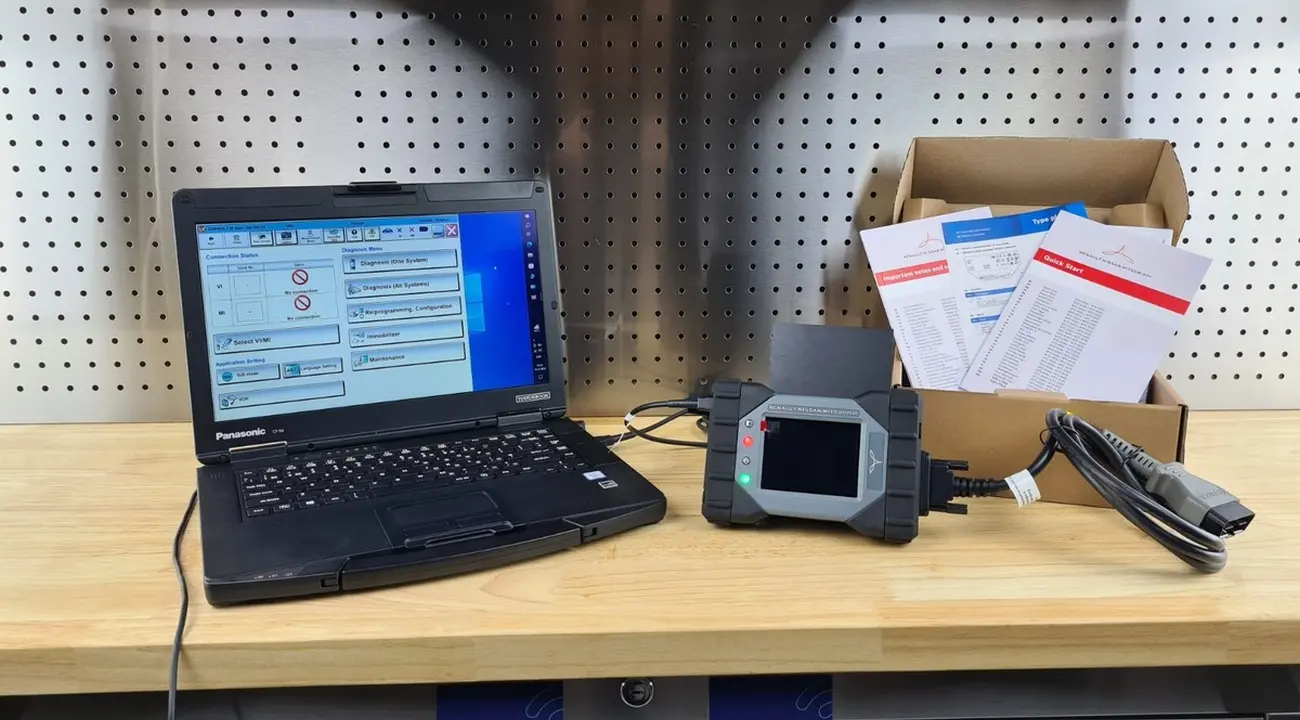
What Is Nissan CONSULT? Fault Diagnosis in Nissan Vehicles
Diagnosing a modern Nissan vehicle often requires more than connecting a generic OBD-II scanner and reading the check engine code. Today's Nissan vehicles use numerous electronic control units to manage the engine, transmission, braking system, airbags, climate control, body electronics, steering, and driver-assistance functions.
Nissan CONSULT is Nissan's manufacturer-specific diagnostic system designed to communicate with the electronic systems of Nissan vehicles. Depending on the vehicle, model year, control unit, and available service functions, CONSULT can be used to read diagnostic trouble codes, monitor live data, perform active tests, identify control modules, and carry out certain learning, calibration, configuration, and programming procedures.
This makes CONSULT particularly useful when a generic diagnostic scanner does not provide enough information to determine the source of an electronic or communication-related problem.
What Is Nissan CONSULT Used For?
The main purpose of Nissan CONSULT is to communicate with the vehicle's electronic control modules and provide technicians with detailed diagnostic information.
Depending on the vehicle, CONSULT may provide access to systems such as:
-
Engine management
-
Automatic, manual, and CVT transmissions
-
ABS and electronic stability control
-
SRS airbag systems
-
Electric power steering
-
Climate control
-
Body control modules
-
Instrument clusters
-
Keyless entry and immobilizer systems
-
Parking assistance systems
-
Camera and radar systems
-
Driver-assistance systems
-
Hybrid and electric vehicle systems
The exact functions available are not identical across all Nissan vehicles. Model year, engine, transmission, market, equipment level, and control-module architecture can all affect what can be accessed.
Reading and Clearing Nissan Fault Codes
One of the fundamental functions of CONSULT is reading diagnostic trouble codes stored in the vehicle's control modules.
However, professional diagnosis involves much more than simply identifying a code.
A Nissan vehicle may store faults in multiple control units. An engine problem may be recorded by the engine control module, while an ABS problem will generally involve the ABS control system. Problems involving airbags, transmission, body electronics, or other systems can likewise be stored in their respective modules.
This means scanning only the engine system may not provide a complete picture of the vehicle.
CONSULT can help identify which modules have stored faults and provide information that can be used to determine whether a problem is active, intermittent, or previously recorded.
Clearing a fault code does not repair the underlying problem. If the cause remains, the code may return when the same operating conditions occur again.
Why Live Data Matters in Nissan Diagnostics
A fault code provides an important clue, but live data can reveal what the vehicle is actually seeing while it operates.
Depending on the Nissan model and system being examined, CONSULT may display information such as:
-
Engine speed
-
Coolant temperature
-
Accelerator pedal position
-
Throttle position
-
Intake air measurements
-
Fuel-system parameters
-
Oxygen or air-fuel sensor data
-
Vehicle speed
-
Transmission parameters
-
Wheel-speed information
-
Brake-switch status
-
Steering angle
-
Battery and charging-related information
Live data is particularly useful when the fault does not occur continuously.
For example, a vehicle may operate normally at idle but enter a reduced-power mode during sudden acceleration. Monitoring accelerator pedal position, throttle position, engine parameters, and other relevant data during the event can help determine whether the problem originates from the throttle system, pedal sensors, wiring, power supply, or another part of the control system.
Active Tests With Nissan CONSULT
Another important feature of a manufacturer-level diagnostic system is the ability to perform active tests.
During an active test, CONSULT can command a supported component or actuator to operate. The technician can then observe whether the component responds correctly.
Depending on the vehicle, active tests may be available for components such as:
-
Cooling fans
-
Relays
-
Solenoids
-
Electronic valves
-
Certain motors
-
Fuel-system components
-
Other electronically controlled actuators
For example, if a cooling fan does not appear to operate normally, an appropriate active test can command the fan to run.
If the fan does not respond, the technician can investigate the motor, fuse, relay, wiring, power supply, and ground connection.
If it operates normally during the active test, attention can then move toward the conditions under which the ECU normally commands the fan to operate.
This makes active testing a valuable way of narrowing down the source of a fault.
Diagnosing Throttle and Accelerator Pedal Problems
Electronic throttle systems are widely used in modern Nissan vehicles. Instead of a traditional mechanical cable directly controlling the throttle plate, the accelerator pedal sensors send electronic signals to the engine control system.
The ECU then determines the appropriate throttle opening.
A problem in this system can cause symptoms such as:
-
Poor throttle response
-
Delayed acceleration
-
Reduced engine power
-
Warning lights
-
Limp or fail-safe mode
-
Limited throttle operation
-
Faults that appear during sudden acceleration
CONSULT can be useful for comparing accelerator pedal position and throttle position data and examining related diagnostic information.
However, a throttle-related fault code does not automatically mean that the throttle body is defective.
Possible causes can include the throttle body, actuator motor, position sensors, accelerator pedal sensors, wiring, connectors, power supply, ground connections, or the engine control module.
A proper diagnosis therefore requires the available data to be combined with electrical and physical testing.
Nissan CVT Diagnosis
Nissan has used continuously variable transmissions, or CVTs, in many of its vehicles. These transmissions combine mechanical, hydraulic, and electronic control systems.
When a CVT-related problem occurs, the vehicle may experience:
-
Unusual engine-speed behavior
-
Delayed response
-
Reduced power
-
Transmission warning messages
-
Fail-safe operation
-
Abnormal transmission temperature
-
Irregular acceleration
CONSULT can communicate with the transmission control system on supported vehicles and provide access to fault codes and operating parameters.
However, a transmission fault code does not automatically prove that the transmission itself has suffered a mechanical failure.
Electrical connections, sensors, solenoids, hydraulic control, fluid-related issues, control modules, and mechanical components may all need to be considered.
ABS and Brake System Diagnosis
The ABS system relies on several components working together.
These can include wheel-speed sensors, wiring, the ABS control unit, hydraulic components, and other related systems.
When the ABS warning light comes on, CONSULT can be used on supported vehicles to retrieve the relevant diagnostic information.
Live wheel-speed data can also be useful. If one wheel reports a value that differs significantly from the others, the technician can investigate that sensor and its associated circuit.
But even if the fault code points to a particular wheel-speed sensor, replacing the sensor immediately may not be the correct solution.
The actual problem could be:
-
A damaged sensor
-
Sensor wiring
-
A connector problem
-
A power or ground issue
-
A damaged tone or magnetic ring
-
A wheel bearing or hub-related problem
-
The ABS control system
The diagnostic result should therefore be confirmed through physical inspection and appropriate electrical tests.
Diagnosing SRS and Airbag Faults
The SRS system is one of the most safety-critical electronic systems in a vehicle.
An illuminated airbag warning light can indicate a fault involving an airbag module, sensor, seat-belt pretensioner, wiring, connector, or another part of the restraint system.
CONSULT can help identify stored diagnostic information in the SRS system on supported vehicles.
Because airbag systems contain pyrotechnic components, diagnosis and repair should follow the manufacturer's procedures. Improper electrical testing or unauthorized modifications can create additional safety risks.
Can Nissan CONSULT Program an ECU?
Nissan CONSULT can support certain programming and service procedures, but several different operations should not be confused with one another.
ECU programming, software updating, configuration, coding, calibration, adaptation, and ECU cloning are different processes.
Programming or reprogramming generally involves installing or updating software or calibration information in a control module.
Configuration involves setting module parameters according to the vehicle's equipment or specification.
Learning and calibration procedures allow certain systems to establish reference values or recognize the operating characteristics of a component.
ECU cloning is different. It generally involves transferring relevant data from one control unit to another and may require specialized equipment and procedures.
The functions available through CONSULT depend on the Nissan model, model year, control unit, software, and service infrastructure.
ECU Replacement and Nissan CONSULT
Replacing an ECU or another electronic module does not necessarily mean the repair is finished as soon as the replacement part is installed.
The replacement module may need to be configured, initialized, calibrated, or matched to the vehicle.
Security-related systems can make this especially important. Immobilizer and key-related procedures may require the replacement control unit to be properly registered or synchronized with the vehicle.
On supported Nissan vehicles, CONSULT can assist with the required service procedures.
This is one of the situations where manufacturer-specific diagnostic equipment can be considerably more useful than a basic code reader.
Nissan CONSULT and Electric Vehicles
Electric and electrified Nissan vehicles introduce additional electronic systems that are not present in conventional gasoline-powered vehicles.
Depending on the vehicle, the system may include:
-
High-voltage battery
-
Battery management system
-
Electric motor
-
Inverter
-
Charging system
-
Power-control electronics
-
Dedicated control modules
A conventional engine-focused OBD-II scan may not provide enough information to diagnose problems in these systems.
CONSULT can provide access to supported electric and hybrid vehicle systems and can help technicians examine diagnostic information from the relevant control modules.
High-voltage systems require specialized safety procedures. Physical work on high-voltage components should only be performed by appropriately trained personnel using the required safety equipment.
Can CONSULT Find Electrical Problems?
CONSULT can provide extremely useful information when diagnosing electrical problems, but it does not eliminate the need for electrical measurements.
Suppose a sensor sends an incorrect signal to the ECU. CONSULT may display an abnormal value or store a related diagnostic trouble code.
The technician may then need to check:
-
Supply voltage
-
Reference voltage
-
Ground
-
Signal voltage
-
Wiring continuity
-
Short circuits
-
Connector condition
-
Power and ground connections
A digital multimeter, oscilloscope, wiring diagrams, and appropriate test equipment may be required.
CONSULT shows how the control system interprets the information it receives. Electrical testing helps determine why that information is incorrect.
Does a Nissan Fault Code Identify the Failed Component?
Not necessarily.
A diagnostic trouble code generally indicates that the control system has detected an abnormal condition. It does not always identify the physical component that must be replaced.
For example, a throttle-related code could be caused by:
-
Throttle body
-
Throttle actuator
-
Throttle position sensor
-
Accelerator pedal sensor
-
Wiring
-
Connector
-
Fuse or relay
-
Power supply
-
Ground connection
-
Engine control module
This is why replacing a component solely because its name appears in a fault-code description can lead to unnecessary repairs.
The correct approach is to use the code as a starting point and then verify the suspected cause.
Nissan CONSULT vs. a Generic OBD-II Scanner
A generic OBD-II scanner is useful for many everyday diagnostic tasks. It can read standard diagnostic trouble codes and provide basic engine information.
Nissan CONSULT is designed to provide a deeper level of access to Nissan's electronic systems.
Depending on the vehicle, CONSULT may communicate with multiple control modules and provide manufacturer-specific diagnostic information, advanced live data, active tests, and supported service functions.
A generic scanner may therefore be perfectly adequate for a simple check-engine-light problem, while CONSULT can be much more useful for diagnosing ABS, SRS, CVT, body electronics, immobilizer, electric vehicle, or complex communication faults.
The difference is primarily the level of vehicle-specific access and diagnostic functionality.
How Is a Nissan Vehicle Properly Diagnosed With CONSULT?
A systematic diagnostic process is more important than simply having access to professional software.
The process normally begins with identifying the customer's symptoms and scanning the relevant control modules.
The stored fault codes are then evaluated along with the conditions under which the problem occurred. Live data may be examined to see how the system behaves, and active tests can be performed where appropriate.
If an electrical or mechanical problem is suspected, physical testing follows.
After the repair, the vehicle should be checked again to confirm that the fault has actually been resolved rather than simply having its diagnostic code erased.
This approach reduces the risk of replacing expensive parts unnecessarily.
Why Nissan CONSULT Is Important
Nissan CONSULT should not be considered just another fault-code reader. Its main advantage is its ability to communicate with supported Nissan vehicle systems at a manufacturer-specific level.
Fault codes, live data, active tests, control-module information, and supported service procedures can be combined to provide a much clearer understanding of an electronic problem.
At the same time, CONSULT cannot physically repair a damaged wire, replace a failed sensor, or determine the mechanical condition of a component on its own.
The most accurate Nissan diagnosis comes from combining CONSULT's electronic information with electrical measurements, mechanical inspection, wiring information, and proper diagnostic reasoning.
As vehicle electronics become increasingly complex, the ability to understand what a control unit is reporting—and why it is reporting it—has become just as important as the diagnostic equipment itself.