TR
TR EN
EN

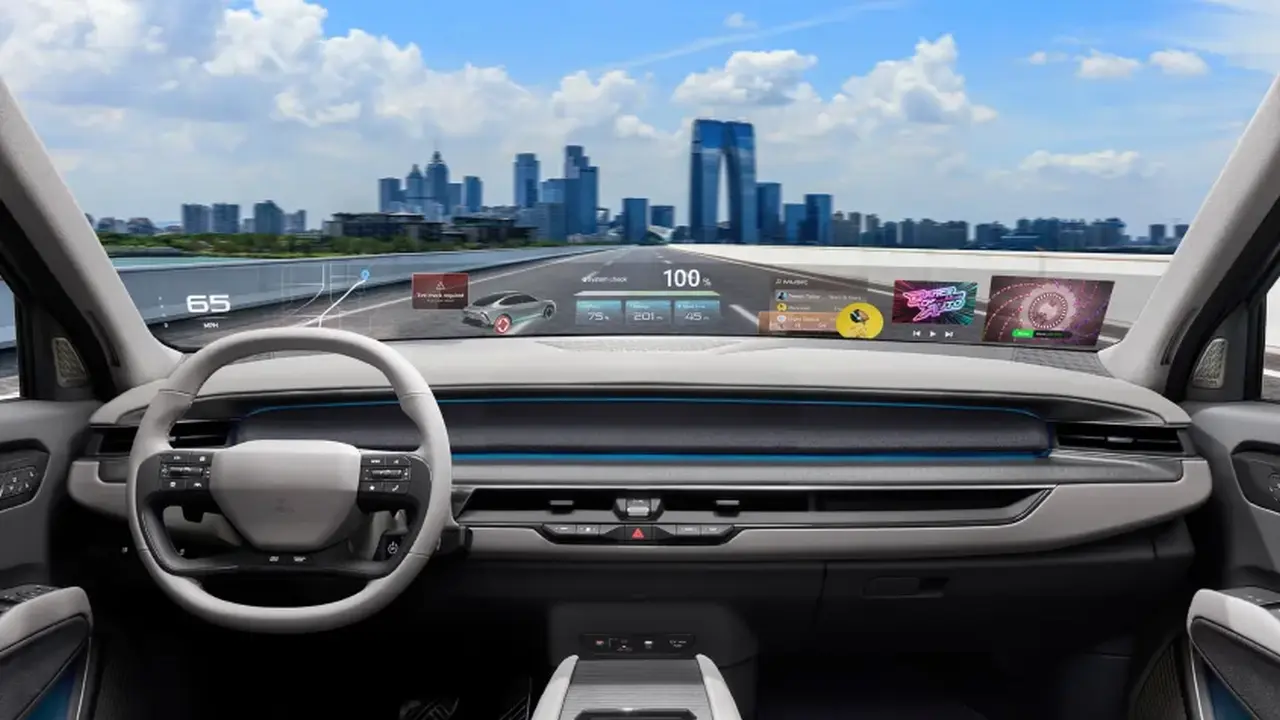
What Are Holographic Windshield? How Do They Work and What Are They Used For?
For many years, the windshield was considered one of the simplest parts of a vehicle. Its primary purpose was to protect the driver and passengers from wind, rain, dust, and other external conditions while providing a clear view of the road.
Today, that role is changing.
Head-up displays, advanced driver assistance systems, cameras, rain and light sensors, and various optical technologies have transformed the windshield into an important part of the vehicle's electronic and digital architecture.
One of the technologies being developed in this area is the holographic windshield.
The basic idea is to use the windshield not only as a transparent surface but also as an optical interface through which important information can be presented within the driver's field of view.
However, the term "holographic windshield" can be misleading. It does not necessarily mean that a three-dimensional image is physically floating in the air in front of the driver. Instead, the technology uses specialized optical structures to control and direct light so that the driver perceives digital information at a specific position in the field of view.
What Is a Holographic Windshield?
A holographic windshield is an advanced windshield technology that uses specialized optical layers or structures to control the direction of light and help display digital information to the driver.
Depending on the technology, these optical structures may be integrated into the windshield's laminated layers or incorporated into a specialized optical film.
Most of the light coming from the outside world still passes through the windshield normally. At the same time, specific portions of the light generated by a display system can be reflected or redirected toward the driver's eyes.
This makes it possible to turn the windshield into more than just a transparent protective surface.
It can become part of the vehicle's visual information system.
Where Does the Holographic Image Actually Appear?
One of the most interesting aspects of this technology is that the image does not necessarily appear directly on the physical surface of the windshield.
A driver may see a navigation arrow or speed indication and feel as though it is floating several meters ahead of the vehicle.
This is achieved through optical projection.
The system directs light toward the driver's eyes at carefully calculated angles. The human visual system then interprets the light as an image appearing at a particular distance.
For example, a navigation arrow could appear to be positioned farther ahead on the road instead of being displayed at the bottom of the windshield.
This can make the information feel more naturally integrated with the surrounding environment.
Are Holographic Windshields the Same as Head-Up Displays?
Not exactly.
The two technologies are closely related, but they are not identical.
A Head-Up Display (HUD) is a general system designed to present information within the driver's field of view.
A holographic windshield can be an optical component used to improve how that information is displayed.
A conventional HUD may project an image toward the windshield and use its surface or optical properties to reflect the image toward the driver's eyes.
More advanced holographic optical structures can provide more precise control over how light is reflected or redirected.
Therefore, not every HUD is holographic, and simply having a specialized windshield does not automatically mean that a vehicle has an advanced holographic HUD system.
How Does a Holographic Windshield Work?
The basic operating principle involves several systems working together.
First, the vehicle's electronic systems provide information that needs to be displayed.
This may include:
-
Vehicle speed
-
Navigation instructions
-
Traffic-sign information
-
Lane information
-
Collision warnings
-
Following-distance warnings
-
Driver-assistance alerts
This information is converted into a visual image.
A projector or other optical display system then sends the image toward the windshield.
The specialized optical layer in the windshield controls and redirects part of the light toward the driver's eyes.
The driver then sees the digital information together with the real-world environment.
The result can be a virtual image that appears to exist at a specific distance in front of the vehicle.
What Is Inside a Holographic Windshield?
Modern windshields are generally more complex than a single piece of glass.
A laminated windshield typically consists of two glass layers with a plastic interlayer between them.
This construction provides important safety characteristics and can also contribute to acoustic insulation.
For advanced HUD applications, additional optical characteristics can be incorporated into these layers or into specialized films.
The exact technology varies between manufacturers and systems.
Some applications can use specialized films, while more advanced systems may use micro- or nano-scale optical structures designed to control the direction of light.
The objective is to provide a clear, stable, and precisely positioned image for the driver.
Why Can't a Normal Windshield Be Used?
A conventional windshield is primarily designed to allow light from the outside world to pass through with minimal distortion.
A HUD system has different requirements.
When an image is projected onto or through a windshield, reflections from different glass surfaces can create unwanted optical effects.
One of the most common problems is a double image or "ghost image."
Instead of seeing one sharp digital image, the driver may see a second, slightly displaced image.
This can be distracting, especially when the vehicle is being driven at night.
For this reason, advanced HUD systems require windshields with carefully controlled optical properties.
What Causes Ghost Images?
A laminated windshield contains multiple optical interfaces.
Light can reflect from different surfaces within these layers. If the optical properties are not properly controlled, a projected HUD image can appear twice.
The windshield's thickness, refractive properties, surface geometry, and the angle at which the projected image reaches the glass all affect the result.
Specialized optical layers can help reduce these unwanted reflections.
This is one reason why a windshield designed specifically for a HUD system cannot always be replaced with an ordinary windshield.
What Information Can a Holographic Windshield Display?
The available information depends on the vehicle and the sophistication of the system.
Basic applications can display:
Vehicle speed
The current speed can be displayed within the driver's field of view.
Navigation
Turn directions, lane guidance, distances, and route information can be presented.
Traffic signs
A camera-based system may recognize certain traffic signs and display relevant information.
Driver warnings
Warnings related to lane departure, following distance, or potential collisions can be presented more prominently.
More advanced systems can combine these digital graphics with the real-world environment.
For example, instead of showing a navigation arrow in a fixed area at the bottom of the windshield, an advanced AR-HUD system may position the arrow so that it appears to point toward the actual road or intersection where the driver needs to turn.
The Relationship Between Holographic Windshields and Augmented Reality
Another important concept is Augmented Reality (AR).
AR systems are designed to combine digital information with the driver's view of the real world.
For example, an AR navigation system could display a digital arrow that appears to be positioned directly over the road where the vehicle needs to turn.
This is more advanced than a conventional HUD.
A traditional HUD might display navigation information in a predefined area of the windshield.
An AR-HUD attempts to associate the information with real-world objects and locations.
Holographic optical technologies can play an important role in making this type of precise visual positioning possible.
Advantages of Holographic Windshields
One of the main advantages of this technology is that it can reduce the need for the driver to look away from the road.
In a conventional vehicle, the driver may need to look down at the instrument cluster to check speed and toward the center display to follow navigation instructions.
A HUD can place some of this information directly within the driver's field of view.
Other potential advantages include:
-
Easier navigation guidance
-
Faster access to vehicle speed information
-
More visible driving warnings
-
Less need to look at the center display
-
Better integration between digital information and the real world
-
A more integrated digital driving experience
However, the actual benefit depends heavily on how the system is designed and how much information it displays.
Is Showing More Information Always Better?
Not necessarily.
This is one of the most important design challenges for HUD and holographic display systems.
If too much information is projected into the driver's field of view, the system can become distracting instead of helpful.
A well-designed HUD should prioritize information that is genuinely useful while driving.
Speed, navigation instructions, and important safety warnings can be highly relevant.
At the same time, displaying unnecessary notifications, menus, and graphics could clutter the driver's view.
Therefore, the success of a holographic windshield is not determined only by image quality.
The timing, location, and relevance of the information are equally important.
Does Sunlight Affect Holographic Displays?
Yes.
One of the major challenges for any windshield-based display is maintaining sufficient brightness and contrast under strong daylight.
Direct sunlight can make projected information more difficult to see.
The system therefore needs to generate an image that remains visible against different backgrounds and lighting conditions.
Night driving presents the opposite challenge.
If the projected image is too bright at night, it can become distracting or uncomfortable.
Advanced systems can therefore adjust brightness and contrast according to ambient lighting conditions.
Can Polarized Sunglasses Affect the Image?
They can.
Certain HUD systems may interact with polarized sunglasses because polarized lenses filter light according to its orientation.
Depending on the optical design of the HUD and the windshield, this can reduce the apparent brightness or visibility of the projected image.
For this reason, windshield-based display systems need to be designed with different viewing conditions in mind.
What Happens If a Holographic Windshield Is Replaced?
This is particularly important in modern vehicles.
If a vehicle equipped with a HUD suffers windshield damage, replacing the windshield with a standard glass panel may not produce the expected result.
A HUD-compatible windshield can have specific optical characteristics that are carefully matched to the projection system.
Using the wrong windshield can cause problems such as:
-
Double images
-
Blurry text
-
Incorrect image positioning
-
Reduced brightness
-
Distorted graphics
-
Poor alignment within the driver's field of view
Therefore, the correct windshield specification should be used when replacing the windshield of a vehicle equipped with a HUD or advanced optical display system.
Cameras Also Make the Windshield More Important
A modern windshield can contain more than just HUD-related optical technology.
Many vehicles use cameras mounted behind the windshield for advanced driver assistance systems.
Depending on the vehicle, these cameras can support functions such as:
-
Lane departure warning
-
Lane keeping assistance
-
Traffic-sign recognition
-
Automatic emergency braking
-
Forward collision warning
-
Adaptive cruise control-related functions
Because these cameras depend on a specific viewing angle, windshield replacement can also affect ADAS operation.
If a camera has been removed, its mounting position has changed, or the windshield has been replaced, calibration may be required according to the vehicle manufacturer's procedure.
This means the windshield has become an important part of both the vehicle's visual interface and its driver-assistance systems.
Do Holographic Windshields Make Cars Safer?
A windshield technology alone does not automatically make a vehicle safer.
However, a properly designed HUD can reduce the amount of time the driver needs to look away from the road to check certain information.
For example, a driver may be able to follow navigation instructions without repeatedly looking down at the center display.
Whether this produces a meaningful safety benefit depends on the design of the system, the information being displayed, and how the driver uses it.
A system that presents too much information can potentially create distraction rather than reduce it.
Where Are Holographic Windshields Heading?
As vehicles become increasingly digital, the windshield could become an even more important part of the vehicle's human-machine interface.
Future AR-HUD systems could potentially:
-
Place navigation instructions directly onto the road environment
-
Highlight traffic signs
-
Identify potential hazards
-
Provide visual lane-change guidance
-
Highlight pedestrians or cyclists
-
Display information from driver-assistance systems directly within the driver's field of view
As semi-autonomous and autonomous driving technologies continue to develop, communication between the vehicle and the driver will become increasingly important.
The windshield could become one of the primary surfaces through which this communication takes place.
Are Holographic Windshields Real Holograms?
This is an important distinction.
When people hear the term "holographic windshield," they may imagine a three-dimensional object physically floating in front of the vehicle.
That is generally not what automotive HUD systems are doing.
Instead, advanced optical systems manipulate light so that the driver perceives a virtual image at a particular location.
The term "holographic" therefore often refers to advanced optical methods for controlling and displaying light rather than a free-floating hologram in the traditional science-fiction sense.
Why Can Holographic Windshields Be Expensive?
The more precise the optical requirements become, the more complex windshield production can be.
A standard windshield and a windshield designed for an advanced HUD system do not necessarily have the same optical characteristics.
Specialized films, optical structures, tight manufacturing tolerances, image quality requirements, and compatibility with the vehicle's electronic systems can all increase production costs.
The windshield must also be compatible with cameras, sensors, HUD projection hardware, and other systems installed in the vehicle.
For this reason, windshield replacement on a modern vehicle can be considerably more complicated than simply removing one piece of glass and installing another.
Could the Windshield Become the Car's Next Digital Display?
In many ways, this transformation has already started.
Older vehicles placed most information in analog gauges directly in front of the driver.
Digital instrument clusters then became common.
Large central infotainment screens followed.
Now, information is increasingly being brought directly into the driver's field of view.
As holographic and AR-based HUD technologies continue to develop, the windshield could evolve from a passive transparent surface into an important digital communication interface between the vehicle and the driver.
The most important development, however, may not be the ability to display more information.
The real challenge will be displaying the right information, at the right time, in the right location, without distracting the driver.