TR
TR EN
EN

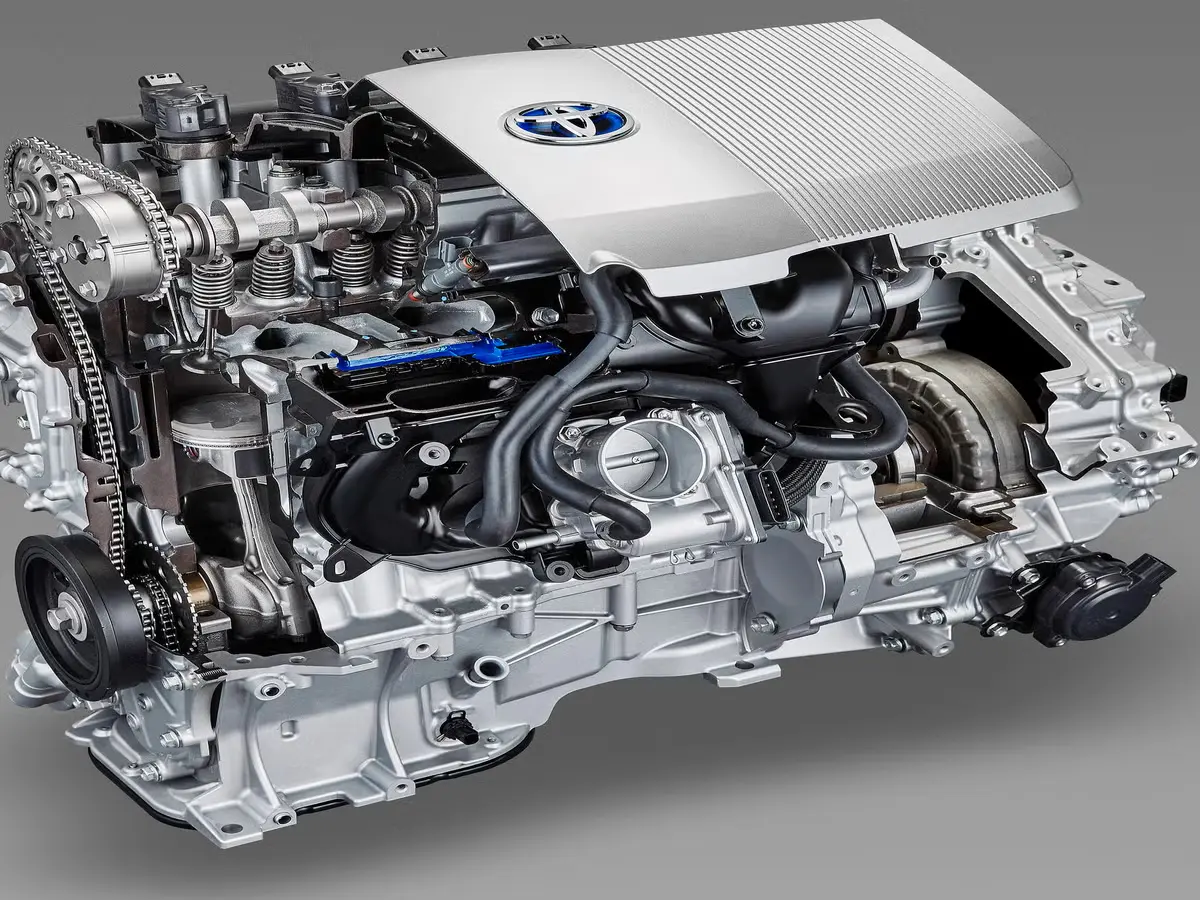
What Is an Atkinson Cycle Engine? How Does It Work and Why Is It Used?
When comparing internal combustion engines, engine displacement and cylinder count do not tell the whole story. Two engines with the same displacement can have very different fuel consumption and performance characteristics depending on how they operate.
One of the most important engine operating principles in modern hybrid vehicles is the Atkinson cycle.
The Atkinson cycle became particularly well known with the spread of hybrid vehicles such as the Toyota Prius. However, its purpose is not simply to produce more power. The main objective is to improve thermal efficiency and extract more useful mechanical work from the energy contained in the fuel.
So, what exactly is an Atkinson cycle engine, and how is it different from a conventional gasoline engine?
What Is the Atkinson Cycle?
The Atkinson cycle is a thermodynamic operating cycle used in internal combustion engines.
In its classical form, the Atkinson cycle is characterized by an expansion ratio that is greater than the compression ratio.
The main purpose is to allow the gases produced during combustion to perform useful work over a greater expansion range. This can reduce the amount of energy lost through the exhaust and improve thermal efficiency.
In modern automotive engines, however, the term Atkinson cycle engine generally refers to gasoline engines that achieve a similar effect through valve timing.
Instead of using a completely different mechanical engine architecture, the intake valve can remain open for a longer period, effectively reducing the compression ratio while maintaining a relatively high expansion ratio.
How Does an Atkinson Cycle Engine Work?
A four-stroke internal combustion engine has four basic operating stages:
Intake
The piston moves downward while air or an air-fuel mixture enters the cylinder.
Compression
The piston moves upward and compresses the contents of the cylinder.
Combustion and expansion
The spark plug ignites the mixture, creating high pressure that pushes the piston downward.
Exhaust
The piston moves upward again and pushes the burned gases out of the cylinder.
An automotive Atkinson cycle engine still follows these basic four strokes. The major difference is how the valve timing controls the effective compression and expansion processes.
Why Does the Intake Valve Close Late?
One of the most important characteristics of modern Atkinson-type engines is that the intake valve can remain open longer than it would in a conventional Otto-cycle engine.
As the piston begins moving upward during the compression stroke, the intake valve may remain open for a short period.
Some of the air that entered the cylinder can therefore move back toward the intake manifold.
As a result, although the piston has physically started its compression stroke, the effective compression of the trapped charge begins later.
This reduces the effective compression ratio.
The important point is that the physical geometry of the engine does not necessarily change. Valve timing changes the way the engine effectively compresses the intake charge.
Geometric Compression Ratio vs. Effective Compression Ratio
This distinction is essential for understanding the Atkinson cycle.
The geometric compression ratio is determined by the physical dimensions of the cylinder and the piston movement between bottom dead center and top dead center.
The effective compression ratio takes valve timing into account and describes how much of the intake charge is actually trapped and compressed.
A modern Atkinson engine can therefore have a relatively high geometric compression ratio while maintaining a lower effective compression ratio because the intake valve closes later.
This allows the engine to benefit from a high expansion ratio while controlling the effective compression process.
Why Is the Atkinson Cycle More Efficient?
The main advantage of the Atkinson cycle is its potential for higher thermal efficiency.
After combustion, the high-pressure gases can continue pushing the piston through a relatively large expansion process.
The objective is to convert a larger proportion of the energy released by combustion into useful mechanical work.
In other words, the engine is designed to make better use of the fuel's energy.
There is, however, a trade-off.
The engine may produce less specific power than an equivalent Otto-cycle engine.
For this reason, Atkinson-cycle operation is particularly attractive in applications where fuel efficiency is more important than maximum power output.
Why Are Atkinson Engines Common in Hybrid Vehicles?
Hybrid technology is one of the main reasons the Atkinson cycle has become so popular in the automotive industry.
A hybrid vehicle does not require its internal combustion engine to provide all of the vehicle's power under every driving condition.
The electric motor can provide additional torque, particularly during initial acceleration and low-speed operation.
This helps compensate for one of the main disadvantages of Atkinson-cycle operation.
An Atkinson engine can provide high efficiency, but its power output can be lower under certain conditions than that of a similarly sized Otto-cycle engine.
The electric motor can help fill this gap.
This makes the combination of an Atkinson-cycle gasoline engine and an electric motor particularly effective.
How Is the Work Shared in a Hybrid Vehicle?
In a hybrid system, the internal combustion engine and electric motor do not necessarily compete with each other.
Instead, they can be used where each is most efficient.
For example, the electric motor can provide strong torque when the vehicle starts moving.
At steady or moderate speeds, the Atkinson engine can operate closer to an efficient operating point.
During stronger acceleration, the electric motor can provide additional assistance.
As a result, the overall fuel consumption of a hybrid vehicle depends not only on the efficiency of the gasoline engine but also on how the engine, electric motor, battery, and control system work together.
Does an Atkinson Engine Use Less Fuel?
It can, but there is an important qualification.
Simply using the Atkinson cycle does not automatically mean that a vehicle will consume less fuel in every situation.
Fuel consumption is affected by many factors, including:
-
Vehicle weight
-
Aerodynamics
-
Transmission
-
Engine management
-
Tires
-
Driving style
-
Ambient temperature
-
Traffic conditions
-
Hybrid system strategy
The fundamental advantage of the Atkinson cycle is that it can use the energy contained in fuel more efficiently.
This advantage can become especially significant in hybrid vehicles, where the engine can be operated closer to its most efficient range.
What Is the Main Disadvantage of the Atkinson Cycle?
The main disadvantage is power density.
With similar displacement and technology, an Atkinson-cycle engine can produce less power under certain operating conditions than an equivalent Otto-cycle engine.
One reason is that keeping the intake valve open longer reduces the effective compression of the intake charge.
This can affect the engine's ability to produce strong power at certain engine speeds and loads.
In hybrid vehicles, however, the electric motor can compensate for much of this limitation by providing immediate torque.
What Is the Difference Between the Atkinson and Otto Cycles?
The main difference concerns how compression and expansion are managed.
In a conventional Otto-cycle engine, the compression and expansion processes are more closely matched from a geometric perspective.
The Atkinson approach aims to achieve a larger expansion ratio relative to the effective compression ratio.
Modern automotive engines commonly achieve this through variable valve timing.
By closing the intake valve later, the effective compression process can be reduced while the engine still benefits from a relatively long expansion stroke.
The primary objective is therefore thermal efficiency rather than maximum power output.
Is the Atkinson Cycle the Same as the Miller Cycle?
The two concepts are closely related and are often confused.
Both can use valve timing to create a difference between the effective compression ratio and the expansion ratio.
However, the terminology used by manufacturers can vary.
Modern engines described as using an "Atkinson-like" or "Miller-cycle" strategy can have very similar valve-timing characteristics.
The Miller cycle is also commonly associated with forced induction.
A turbocharger or supercharger can be used to compensate for some of the reduction in effective cylinder filling associated with delayed or early intake-valve closing.
For this reason, distinguishing modern Atkinson and Miller engines solely by one mechanical characteristic is not always straightforward.
Can an Atkinson Engine Be Turbocharged?
Yes.
An engine using an Atkinson-like operating strategy can be combined with turbocharging.
A turbocharger can increase the amount of air supplied to the engine, helping compensate for some of the reduction in cylinder filling associated with the valve timing strategy.
However, adding forced induction also makes the engine's thermal management, knock control, exhaust temperatures, and air-fuel management more complex.
Turbocharged Atkinson- or Miller-like engines therefore require sophisticated engine management systems.
Why Do Some Atkinson Engines Have a High Compression Ratio?
At first glance, this may seem contradictory.
If the effective compression ratio is reduced, why would a modern Atkinson engine have a high geometric compression ratio?
The reason is that the high geometric compression ratio can help the engine take greater advantage of the expansion process.
By keeping the intake valve open longer, the effective compression ratio can be reduced while the physical piston geometry still provides a relatively high expansion ratio.
With appropriate combustion and engine-control strategies, this can improve overall thermal efficiency.
Knock Control in Atkinson Engines
Knock is an important concern in gasoline engines, particularly when high geometric compression ratios are used.
The delayed closing of the intake valve in an Atkinson-type engine can reduce the effective compression of the intake charge, which can help make high geometric compression ratios more practical.
However, modern knock control involves much more than valve timing.
The engine control unit can continuously manage parameters such as:
-
Ignition timing
-
Fuel injection
-
Airflow
-
Engine temperature
-
Intake air temperature
-
Throttle position
-
Variable valve timing
All of these factors contribute to combustion control.
Why Is Variable Valve Timing Important?
Variable valve timing is one of the key technologies that makes modern Atkinson-type engines practical.
The engine does not need the same valve timing under every operating condition.
Different timing strategies may be used during:
-
Low-load operation
-
High-load operation
-
Cold starts
-
High engine speeds
-
Acceleration
The engine control system can adjust intake and exhaust valve timing according to operating conditions.
This allows the engine to balance efficiency and performance instead of being restricted to a single operating strategy.
How Does the Atkinson Cycle Affect the Throttle?
In a conventional gasoline engine, the throttle valve plays an important role in controlling engine load.
When the throttle is partially closed, the amount of air entering the engine is reduced. The piston continues moving during the intake stroke, however, which can create a significant vacuum in the intake manifold.
This can increase pumping losses.
Atkinson-type valve timing can change the way engine load and cylinder filling are controlled.
By allowing part of the intake charge to return toward the intake manifold during certain operating conditions, the engine can reduce some pumping losses.
This is one of the factors that can contribute to improved efficiency.
Does the Atkinson Cycle Reduce Engine Performance?
It can, depending on the design.
Because the primary objective of the Atkinson cycle is efficiency, an Atkinson-cycle engine can produce less power than a similarly sized Otto-cycle engine under certain conditions.
However, modern vehicles cannot always be evaluated based solely on the output of the internal combustion engine.
In a hybrid vehicle, the electric motor can compensate for the difference.
The performance experienced by the driver can therefore be significantly different from the output of the gasoline engine alone.
Why Is the Atkinson Cycle Closely Associated With Toyota Hybrids?
Toyota's hybrid systems played a major role in making Atkinson-cycle engines widely recognized in the automotive industry.
Toyota hybrid systems are designed to allow the internal combustion engine to operate efficiently while the electric motor provides assistance when necessary.
This operating philosophy works particularly well with the characteristics of the Atkinson cycle.
Instead of requiring the gasoline engine to produce maximum power under all conditions, the system can keep the engine closer to an efficient operating range and use the electric motor when additional power is required.
However, the Atkinson cycle is not exclusive to Toyota.
Other manufacturers also use Atkinson-like operating strategies in engines designed with fuel efficiency as a major priority.
Is the Atkinson Cycle Used Only in Hybrid Vehicles?
No.
Although the Atkinson cycle is particularly well suited to hybrid vehicles, it is not exclusive to hybrids.
The principle can be used in other applications where engine efficiency is important.
However, hybrid systems are especially well suited to Atkinson engines because the electric motor can compensate for some of the limitations associated with lower power density.
This makes the combination particularly effective.
Can You Feel the Difference Between an Atkinson Engine and a Conventional Gasoline Engine?
In some vehicles, yes.
An Atkinson-cycle engine can have a more efficiency-oriented character, particularly when it is operating without significant assistance from an electric motor.
Under strong acceleration, the engine may need to operate at higher RPM, and the engine sound can become more noticeable.
In a hybrid vehicle, however, the electric motor can provide immediate torque and make the overall power delivery feel smoother.
Therefore, the driving characteristics of a hybrid vehicle should not be judged solely by the behavior of its Atkinson-cycle gasoline engine.
Does an Atkinson Engine Require Different Maintenance?
The Atkinson cycle does not completely change the basic maintenance requirements of an engine.
Engine oil, coolant, spark plugs, air filters, fuel-system components, and other maintenance items still need to be inspected and serviced according to the manufacturer's specifications.
However, modern Atkinson engines often rely heavily on variable valve timing and sophisticated engine management systems.
The correct operation of these systems is therefore important.
A problem with variable valve timing, for example, can affect fuel consumption, idle quality, performance, and engine operation.
Hybrid vehicles also have additional components such as electric motors, high-voltage batteries, inverters, and hybrid control systems, making diagnosis more comprehensive.
What Happens When an Atkinson Engine Develops a Fault?
The Atkinson operating principle does not make the engine immune to conventional engine problems.
However, valve timing systems, sensors, and electronic engine management can play an important role in diagnosis.
Possible problems include:
-
Variable valve timing faults
-
Camshaft position sensor problems
-
Crankshaft position sensor problems
-
Throttle-body issues
-
Ignition problems
-
Fuel-injection problems
-
Air leaks
-
Low engine oil level or incorrect oil specification
-
Engine management system faults
In a hybrid vehicle, the electric motor and hybrid system components may also need to be included in the diagnostic process.
Will the Atkinson Cycle Become More Common?
Even as battery-electric vehicles become more widespread, internal combustion engines are still being used in hybrids, plug-in hybrids, and range-extender applications.
This makes improving the efficiency of internal combustion engines increasingly important in these vehicle categories.
Atkinson and similar high-efficiency operating strategies can therefore remain relevant.
The concept is particularly useful in hybrid systems because the gasoline engine does not always need to provide maximum power. Instead, it can operate closer to an efficient operating point while the electric motor supplies additional power when required.
The Basic Idea Behind the Atkinson Cycle
The Atkinson cycle can be summarized in one sentence:
Its goal is not simply to produce more power, but to extract as much useful mechanical work as possible from the energy contained in the fuel.
By changing intake-valve timing, the effective compression ratio can be reduced while the engine benefits from a relatively high expansion ratio.
This can improve thermal efficiency, although it may involve compromises in power output.
In hybrid vehicles, the electric motor can compensate for these compromises while preserving the efficiency advantage of the Atkinson cycle.
That is why Atkinson-cycle engines have become such an important engineering solution for hybrid vehicles where fuel efficiency is a major priority.