TR
TR EN
EN

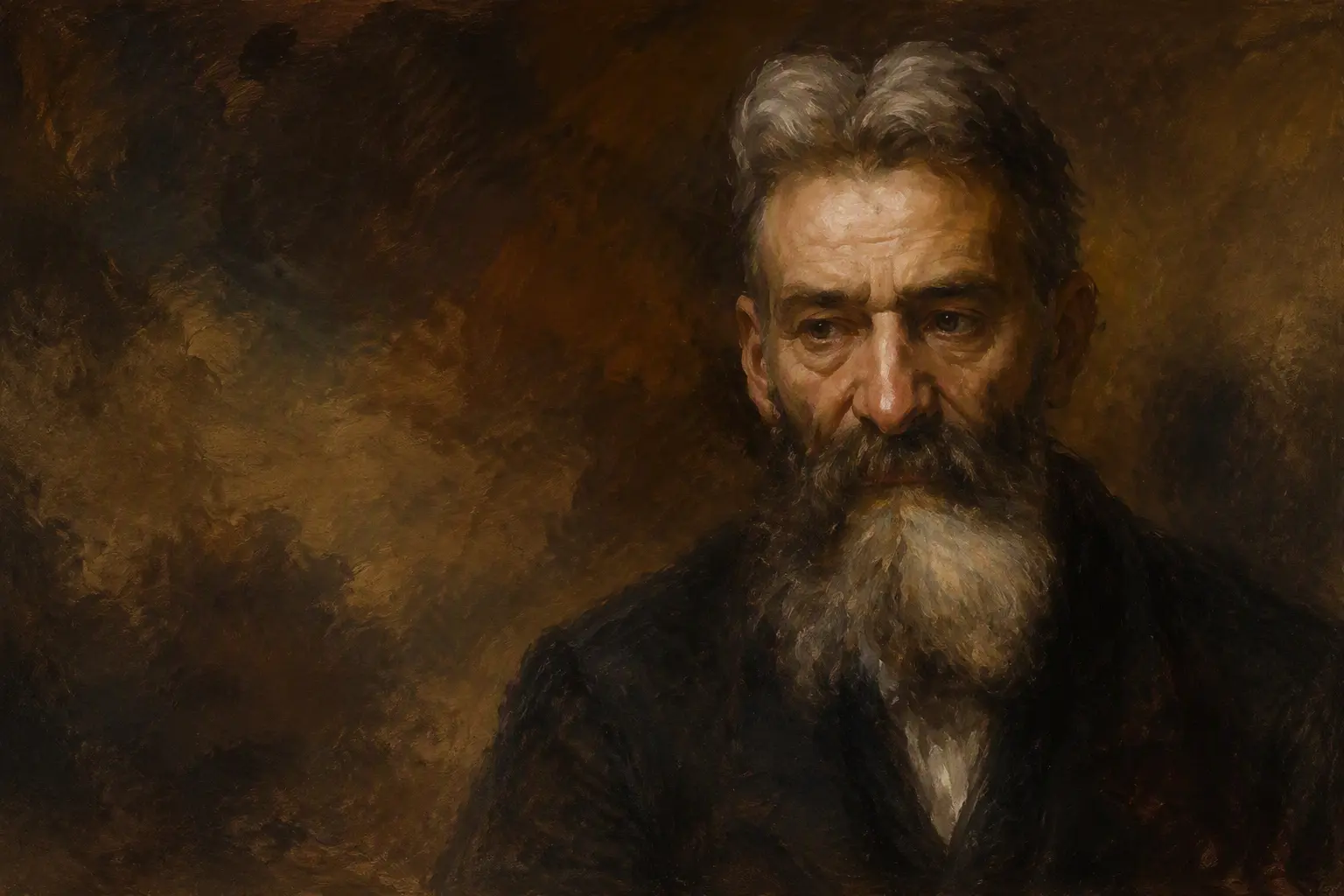
Who Was Pierre Joseph Ravel? (1832 - 1908)
Pierre Joseph Ravel was a Swiss-born engineer and inventor who worked on railways, engines, and early motor vehicles during the second half of the 19th century. Today, his name is most often mentioned because he was the father of the famous French composer Maurice Ravel.
However, Pierre-Joseph Ravel had an interesting career of his own.
He lived during a period when mechanical transportation was changing rapidly. Railways were spreading across Europe, steam engines were becoming increasingly important, and inventors were beginning to experiment with machines that could move without horses.
Ravel became involved in this technological transformation and eventually turned much of his attention toward engines and early automobiles.
His Childhood and Family
Pierre-Joseph Ravel was born on September 19, 1832, in Versoix, in the Swiss canton of Geneva.
His father, Aimé Ravel, had come to Versoix from Collonges-sous-Salève in France and worked there as a baker. Pierre-Joseph was one of five children born to Aimé Ravel and Caroline Grosfort.
The Ravel family had interests extending into both technical and artistic fields.
Pierre-Joseph's brother Édouard Ravel became a painter, while Pierre-Joseph developed an interest in engineering and mechanics.
Interestingly, Pierre-Joseph himself also had an interest in music. This detail would later become particularly significant because his son Maurice would become one of the most important composers of the 20th century.
Engineering and the Spanish Railway
After receiving engineering training, Pierre-Joseph Ravel became involved in railway construction.
During the middle of the 19th century, railways represented one of Europe's most important technological developments. Building a railway was a complex engineering task involving bridges, tunnels, gradients, difficult terrain, and the mechanical requirements of locomotives.
Ravel worked on major railway projects in Spain and was involved in the construction of the Madrid-Irun railway line.
His years in Spain were important for another reason as well.
There he met Marie Delouart, a woman of Basque origin who would later become his wife and the mother of Maurice Ravel.
The couple married in Paris on April 3, 1873.
Moving to Paris
Ravel moved to Paris during the 1860s.
At that time, Paris was one of Europe's major centers of science, engineering, and industrial development. Steam machinery, railway technology, and new forms of mechanical power were attracting enormous interest.
Ravel's attention increasingly turned toward engines and alternative forms of transportation.
In 1868, he obtained a patent for an oil-heated steam generator intended for use as a source of power.
This was an important indication of his interest in developing compact power systems that could potentially be used for transportation.
He later experimented with two-stroke engine designs as well.
Today, two-stroke engines are familiar from motorcycles, small engines, and various specialized applications. During Ravel's lifetime, however, internal combustion technology was still in its experimental stage.
Engineers were still trying to determine which fuels, combustion systems, and mechanical arrangements could produce reliable power.
Ravel was one of those early experimenters.
One of His Early Motor Vehicles
One of the most interesting parts of Pierre-Joseph Ravel's career was his attempt to apply his engine technology to a vehicle.
During the late 1860s, he reportedly operated an experimental motor vehicle around the Paris area.
It would have looked extremely primitive compared with a modern automobile. There was no established automotive industry, no standardized vehicle layout, and no universally accepted solution for steering, braking, cooling, fuel storage, or engine placement.
Inventors were essentially trying to discover what an automobile should be.
Ravel was part of this early experimental period.
According to the Versoix heritage organization, his vehicle was among the early attempts to use a petroleum-powered engine for road transportation.
What Happened to Ravel's Vehicle?
The story of Ravel's early vehicle has an unfortunate ending.
When the Franco-Prussian War began in 1870, Paris was surrounded and extensive defensive works were constructed.
Ravel's experimental vehicle was reportedly buried during these construction activities.
As a result, the vehicle did not survive.
The loss also caused Ravel a considerable financial setback.
This is one of the reasons why very little physical evidence of his early automobile experiments exists today.
Nevertheless, the loss did not end his interest in mechanical engineering.
He continued experimenting with engines and other mechanical systems.
His Experiments With Acetylene
After the war, Ravel continued looking for new ways of producing mechanical power.
Around 1880, he experimented with a two-stroke engine using acetylene as a fuel.
At the time, inventors were experimenting with a wide variety of gases and fuels because reliable internal-combustion technology had not yet been established.
Acetylene experiments were particularly dangerous.
Ravel's work with this fuel resulted in several accidents. Eventually, a major explosion shattered windows in nearby houses.
After these incidents, he abandoned the project.
The episode illustrates just how dangerous experimental engine development could be during the early days of motor technology.
Engineers were working without many of the safety standards, testing procedures, and engineering knowledge that are taken for granted today.
Working With His Son Édouard
Pierre-Joseph Ravel's interest in mechanical engineering continued into his later years.
Around 1897, he and his son Édouard developed another two-stroke engine.
The two men worked together on mechanical and engineering projects, continuing the family's tradition of experimentation.
Their interests were not limited to engines.
They also explored unusual machines and transportation-related ideas, demonstrating that Pierre-Joseph remained fascinated by practical mechanical problems throughout his life.
The Extraordinary "Tourbillon de la Mort"
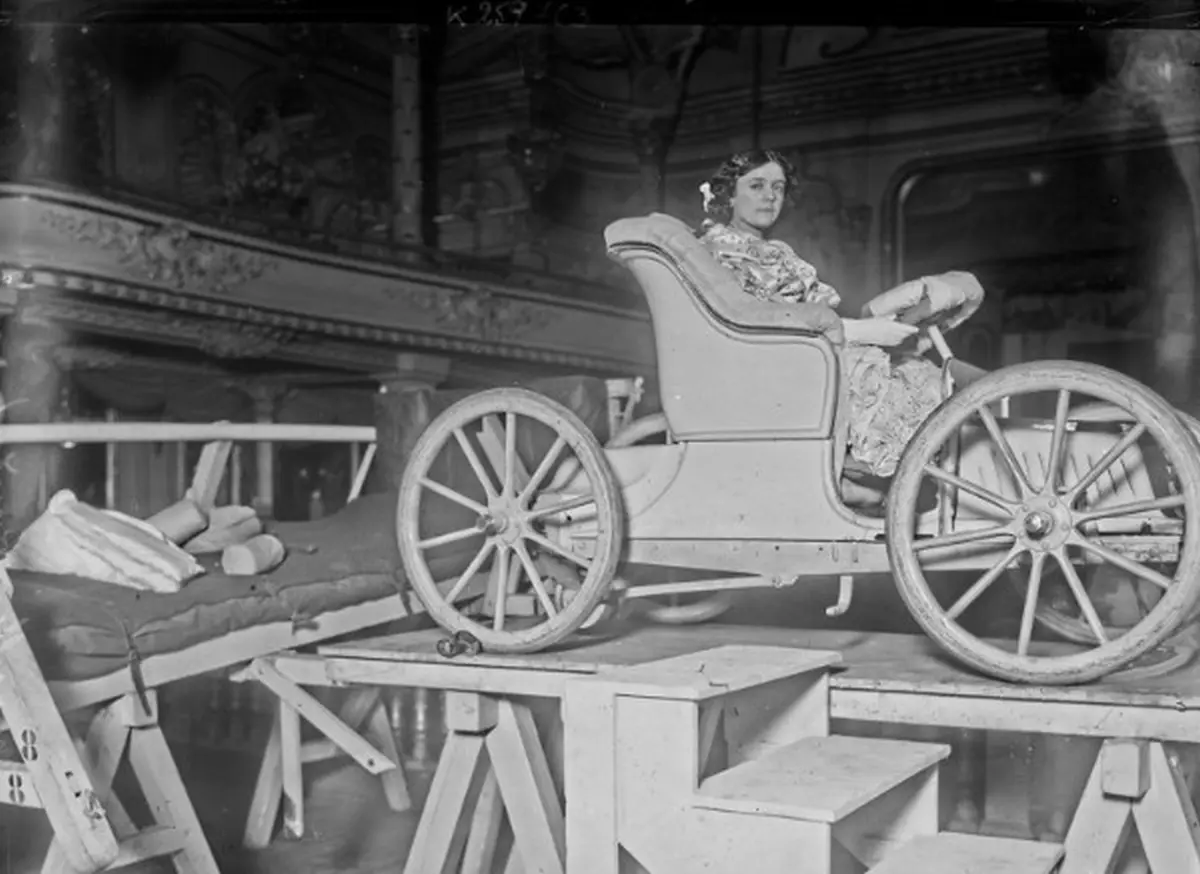
One of the strangest projects associated with Pierre-Joseph Ravel and his son came much later.
In 1905, they filed a patent application for a system designed to make a vehicle perform a somersault in the air.
Today, such an idea sounds more like a stunt than an engineering project. But automobiles were becoming increasingly popular as forms of entertainment as well as transportation, and spectacular mechanical demonstrations attracted large audiences.
The Ravel family turned the idea into a real performance.
The attraction was known as "Tourbillon de la Mort," or "Whirlwind of Death."
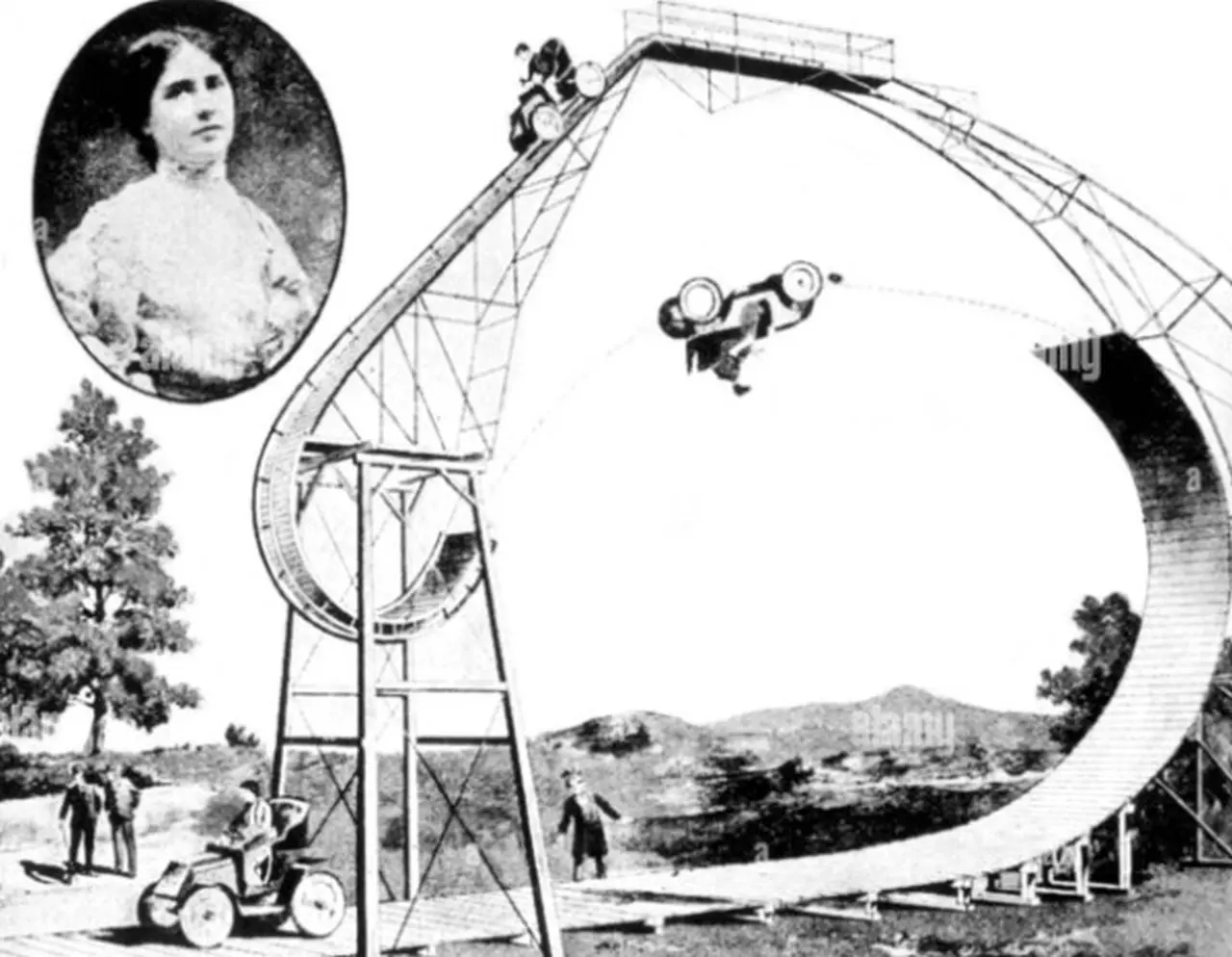
The vehicle was designed to travel through a specially prepared structure and perform an aerial rotation before landing.
The spectacle was performed in the entertainment world in Paris and was later taken to the United States.
Unfortunately, the experiment ended tragically.
During one of the American performances, the vehicle crashed during the landing, killing the driver.
The incident was a grim reminder of the risks involved in the spectacular mechanical experiments of the early automotive era.
Another Unusual Invention: The Artificial-Current Swimming Pool
Pierre-Joseph Ravel's inventions were not limited to automobiles and engines.
Together with his son Édouard, he also developed a swimming system designed to create an artificial current.
The idea was relatively simple but ingenious: instead of requiring a large swimming pool for endurance training, water would be circulated so that the swimmer could swim against a continuous current.
The concept has similarities to modern counter-current swimming systems.
The Versoix heritage organization describes the invention as an ancestor of modern whirlpool systems. It is more accurate, however, to regard it as an early engineering concept for producing controlled water flow rather than as a direct equivalent of the modern jacuzzi.
Pierre-Joseph Ravel and Maurice Ravel
Of course, Pierre-Joseph Ravel is best known today as the father of Maurice Ravel.
Maurice Ravel was born on March 7, 1875, in Ciboure, in the French Basque region.
Only a few months after his birth, the family moved to Paris.
Maurice's interest in music appeared at an early age, and his father supported his musical development.
Pierre-Joseph himself was interested in music and reportedly played the piano as an amateur. Maurice later recalled that his father was knowledgeable about music and encouraged his son's musical interests.
This created a remarkable family environment.
On one side was a father fascinated by engines, railways, machines, and mechanical inventions.
On the other was a son who would eventually become one of the most influential composers of the 20th century.
Engineering and Music in the Same Family
The worlds of engineering and classical music may seem completely unrelated, but the Ravel family presents an interesting combination of both.
Maurice Ravel became famous for his extraordinary attention to detail, precision, orchestration, and technical control.
Some writers have drawn connections between the disciplined environment in which he grew up and his father's engineering background. Igor Stravinsky famously referred to Ravel as a kind of "Swiss watchmaker," a metaphor often used to describe the precision and craftsmanship of his music.
That does not prove that Maurice Ravel's musical style came directly from his father's engineering career.
Nevertheless, the family clearly valued curiosity, craftsmanship, technical skill, and experimentation.
Those qualities appeared in very different forms in father and son.
His Final Years
Pierre-Joseph Ravel continued his engineering interests during the later years of his life.
His health, however, deteriorated in old age.
In 1906, he suffered a cerebral hemorrhage. He subsequently spent time recovering in Hermance, near Lake Geneva in Switzerland. His son Maurice was with him during this period.
Pierre-Joseph Ravel died on October 13, 1908, in Levallois-Perret, France.
He was 76 years old.
Why Is Pierre-Joseph Ravel Important?
Pierre-Joseph Ravel is usually introduced simply as the father of Maurice Ravel.
But his own story is considerably more interesting.
He was an engineer and inventor who lived at a fascinating moment in transportation history. He worked on railway construction, experimented with steam power, developed engine designs, investigated different fuels, and attempted to apply mechanical power to road vehicles at a time when the automobile was still in its infancy.
His early motor vehicle was lost during the events surrounding the Franco-Prussian War. Some of his later experiments ended in dangerous accidents, while others demonstrated an unusually creative approach to mechanical engineering.
His work with Édouard also shows that his passion for invention continued across generations.
Perhaps the most fascinating part of Pierre-Joseph Ravel's story is the contrast between his own career and that of his famous son.
Pierre-Joseph spent his life exploring engines, machines, transportation, and mechanical systems.
Maurice Ravel spent his life exploring rhythm, harmony, orchestration, and musical form.
One worked with machines.
The other worked with sound.
Yet both were products of a family environment in which curiosity, precision, experimentation, and craftsmanship were highly valued.
Today, none of Pierre-Joseph Ravel's early motor vehicles survives as a complete example. His name has also been overshadowed by that of his son.
But his experiments belong to an intriguing period in automotive history, when engineers were still trying to answer one of the most fundamental questions of modern transportation:
How can an engine be made to move a vehicle without a horse?
Pierre-Joseph Ravel was one of the many inventors who attempted to answer that question long before the modern automobile took its familiar form.