TR
TR EN
EN

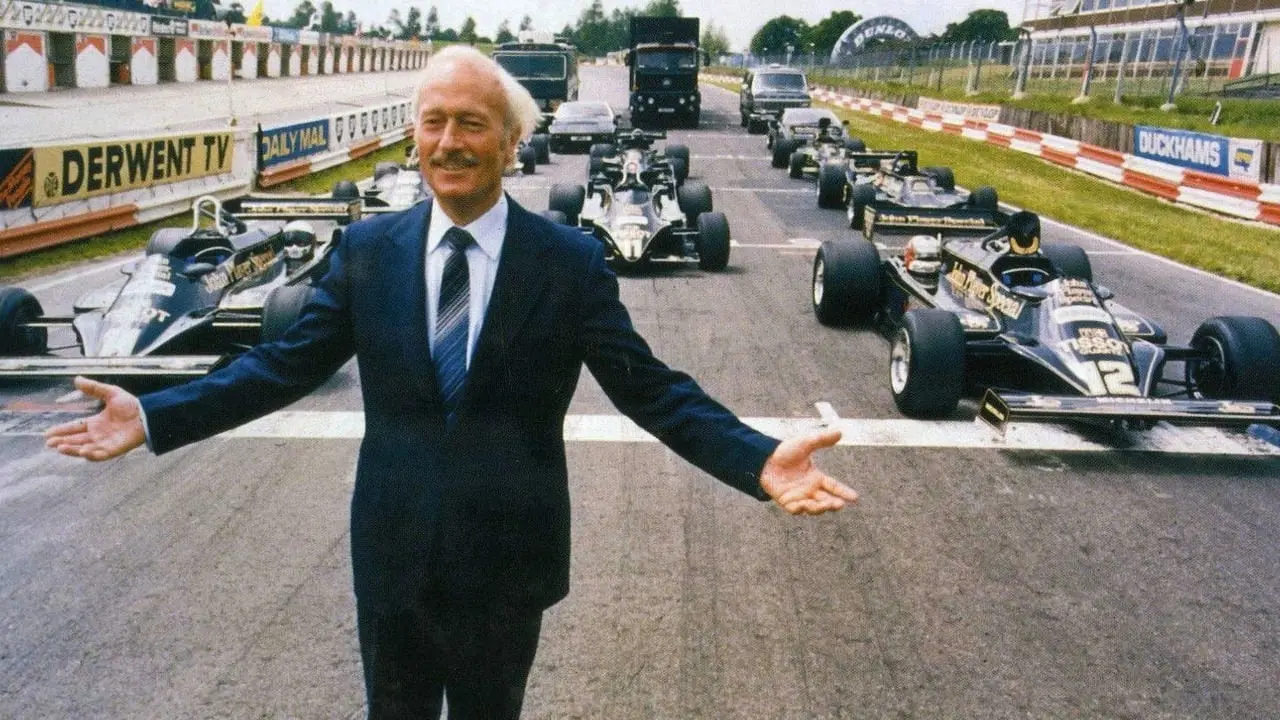
Colin Chapman: The Man Who Changed the Automotive World
When we think about the names that changed the way performance cars are designed, Colin Chapman stands out for a very different reason. He was not obsessed with building the most powerful engine or simply adding more technology to a car. Instead, he believed that performance could often be improved by removing what was unnecessary.
That philosophy eventually became the foundation of Lotus.
Anthony Colin Bruce Chapman, better known as Colin Chapman, was an engineer, designer, entrepreneur and racing team founder whose ideas influenced both road cars and Formula 1. His approach to lightweight construction, chassis design and aerodynamics changed motorsport and created a philosophy that Lotus still identifies with today.
The Early Years of Colin Chapman
Colin Chapman was born on May 19, 1928, in Richmond, West London, and grew up in Muswell Hill, North London. His father operated The Railway Hotel near Hornsey station.
Chapman studied structural engineering at University College London. He later spent a short period with the Royal Air Force, where he learned to fly, before working for British Aluminium.
Engineering was already becoming an important part of his life, but motorsport would eventually give him the opportunity to turn his ideas into something much more ambitious.
The First Lotus: An Austin Seven in a Garage
Chapman's interest in motorsport began in 1947 when he attended a muddy trials event as a passenger. The experience immediately captured his imagination.
He wanted to experience competition from behind the wheel rather than from the passenger seat.
His solution was to build his own car.
Using a 1928 Austin Seven as the basis, Chapman began modifying the car in a small garage behind the house of his girlfriend Hazel Williams' parents. This became the first car that would eventually be known as the Lotus Mark I.
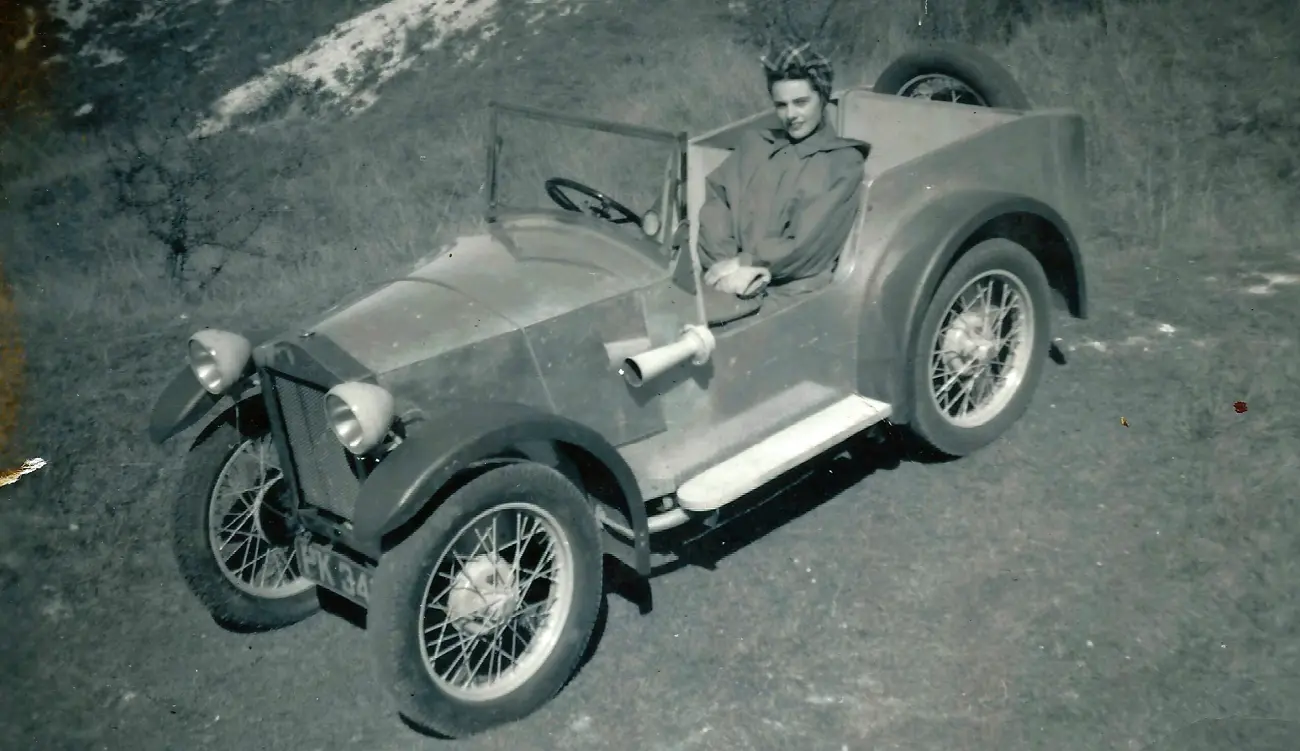
The car was not simply a restoration project. Chapman modified it specifically for competition, experimenting with weight, chassis construction and performance.
The Mark I was the beginning of a much larger story. The Mark II followed, and Chapman continued developing increasingly sophisticated machines.
How Lotus Was Born
Chapman's cars began attracting attention in competition. What started as a personal engineering project gradually turned into a business.
In 1952, Chapman formed the Lotus Engineering Company. According to Lotus' own historical record, the company was established with a £25 loan. Hazel Chapman also played an important role in the early business, contributing financially and helping establish the foundations of the company.

The exact origin of the Lotus name has never been definitively explained. According to Lotus, the true reason for the name remained a secret known only to Colin and Hazel Chapman.
The early cars were identified first by Mark numbers and later by Type numbers. They became increasingly competitive, and Lotus quickly moved beyond local competition.
From Small Racing Cars to Formula 1
Chapman did not want Lotus to remain a small specialist manufacturer.
The company entered more serious international competition, including Le Mans, before making its Formula 1 debut in 1958. That decision marked the beginning of one of the most influential chapters in the history of Formula 1.
The early Lotus Formula 1 cars were often less powerful than their rivals. But Chapman approached the problem differently.
Instead of asking:
How can we make the engine more powerful?
he increasingly asked:
How can we make the entire car lighter, more rigid and more efficient?
That question became one of the defining principles of Lotus engineering.
Colin Chapman and the Philosophy of Lightweight Design
Chapman's most famous engineering philosophy is often summarized as:
“Adding power makes you faster on the straights. Subtracting weight makes you faster everywhere.”
The idea behind it was simple.
Reducing weight improves more than acceleration. A lighter car can also brake more effectively, change direction more quickly and place less demand on its tires, suspension and other components.
This philosophy became one of the defining characteristics of Lotus road and racing cars. Lotus itself continues to describe lightweight construction as a fundamental part of the brand's engineering identity.
Chapman was therefore not simply interested in horsepower. He was interested in the relationship between weight, chassis rigidity, suspension, aerodynamics and handling.
The Lotus Seven
One of the clearest examples of Chapman's philosophy was the Lotus Seven, introduced in 1957.
It was a lightweight, relatively simple sports car designed around the idea that a fast car did not have to be complicated.
The Seven became extremely successful in club racing and remained popular long after its original production ended. Lotus eventually sold the rights to the Seven to Caterham, which continued producing versions of the car.
The Seven demonstrated something important about Chapman: he could create sophisticated engineering solutions, but he also understood the value of simplicity.
The Lotus 25 and the Monocoque Revolution
One of Chapman's most important Formula 1 innovations came with the Lotus Type 25.
Introduced in 1962, the Type 25 used a monocoque chassis. Instead of relying on a conventional separate frame, the structure of the car itself became a major part of its strength.
This approach allowed Lotus to create a lighter and stiffer racing car.
The concept had a major influence on Formula 1 design. Jim Clark drove the Lotus 25 to four Grand Prix victories during its competitive career, and in 1963 he won the Formula 1 Drivers' World Championship while Team Lotus secured its first Constructors' Championship.
The combination of Chapman's engineering and Clark's driving ability became one of the defining partnerships of 1960s motorsport.
Jim Clark and the Golden Era of Lotus
Jim Clark was more than simply a successful Lotus driver. He became one of the central figures in Chapman's racing career.
Clark and Lotus won the Formula 1 World Championship together in 1963 and again in 1965. Team Lotus also achieved major success at Indianapolis, including victory in the Indianapolis 500 with Clark in 1965.
Under Chapman, Lotus worked with some of the most famous drivers in motorsport history, including Graham Hill, Jochen Rindt, Emerson Fittipaldi, Ronnie Peterson and Mario Andretti.
The results eventually became extraordinary.
Lotus would go on to win seven Formula 1 Constructors' Championships, six Drivers' Championships and the Indianapolis 500 during Chapman's era and the broader Team Lotus legacy.
Aerodynamics Becomes Part of the Formula
Chapman's influence was not limited to chassis construction.
He understood that reducing weight was only part of the equation. Aerodynamics could also be used to make a racing car faster without increasing engine output.
Lotus experimented with innovative aerodynamic layouts and helped establish ideas that later became fundamental to Formula 1.
One example was the relocation of radiators from the front of the car to the sides. This helped reduce frontal area and drag while also contributing to better weight distribution.
It was another example of Chapman's tendency to look at the entire vehicle rather than concentrating on a single component.
The Lotus 49 and the Engine as a Structural Component
The Lotus 49 became another important step in Chapman's engineering philosophy.
Its design integrated the engine into the structure of the car rather than treating it simply as a separate mechanical unit.
This approach helped reduce unnecessary structural weight and became an important direction in racing-car design.
The Lotus 49 was also famous for its partnership with Ford Cosworth's DFV engine. Jim Clark gave the car its first Grand Prix victory at the 1967 Dutch Grand Prix.
The relationship between engine, chassis and aerodynamics was becoming increasingly integrated.
The Lotus 72 Changes Formula 1 Design
The Lotus 72, introduced in 1970, was another major Chapman-era innovation.
Rather than placing the radiators at the front, the car used side-mounted radiators. Its wedge-shaped bodywork and aerodynamic design gave it a distinctive appearance, but its significance went much further than styling.
The Lotus 72 became one of the most successful Formula 1 cars of its generation.
Between 1970 and 1975, the Type 72 contributed to multiple Constructors' and Drivers' Championships and won 20 Grand Prix races.
The design demonstrated how much performance could be obtained from intelligent packaging and aerodynamics rather than simply increasing engine power.
Ground Effect: Another Major Lotus Innovation
Perhaps one of the most influential chapters of Chapman's career came during the late 1970s.
Lotus engineers began investigating how the underside of a Formula 1 car could be shaped to create a low-pressure area beneath the vehicle.
This became known as ground effect.
The principle used aerodynamic tunnels beneath the car to generate downforce, effectively helping the car stick to the track without relying entirely on large external wings.
The Lotus 78 introduced the concept in competition, while the Lotus 79 refined it into a highly effective package.
Mario Andretti won the 1978 Drivers' Championship with Lotus, while the team secured the Constructors' Championship.
Ground-effect technology changed Formula 1 and continues to influence race-car aerodynamics.
Lotus Road Cars
Chapman's ideas were not limited to racing.
Lotus also developed a series of important road cars, including the Elite, Elan, Europa and Esprit.
The Lotus Elite was particularly important because it helped provide the financial foundation necessary to continue Chapman's racing ambitions. It also demonstrated his obsession with lightweight construction.
The Elite used a fiberglass monocoque structure and had an exceptionally low drag coefficient for its time.
The Lotus Elan then established another important part of the company's identity: light weight combined with precise handling and steering feel.
Later, the Lotus Esprit became one of the company's most recognizable models and gained worldwide attention after appearing in James Bond films.
Chapman Was Also a Businessman
Colin Chapman was not only an engineer.
He understood that motorsport required money, sponsorship and commercial organization.
During his career, Lotus became closely associated with major sponsorship arrangements, including Gold Leaf and John Player Special.
These sponsorships also changed the appearance of racing cars. Lotus became one of the teams most strongly associated with the transformation of Formula 1 liveries from traditional national racing colors into commercial identities.
This commercial transformation helped provide teams with greater financial resources for engineering development.
Chapman Was Never Afraid of Experimental Ideas
Another defining characteristic of Chapman was his willingness to experiment.
Lotus developed unconventional solutions involving four-wheel drive, active suspension and other advanced concepts.
The Lotus Type 88, for example, used a twin-chassis concept and incorporated a carbon-fibre monocoque. The design became controversial and was ultimately prohibited from competing in Formula 1.
Not every Chapman idea became successful.
But that was part of his engineering philosophy.
He was willing to explore ideas that other teams considered too unusual or risky.
The DeLorean Project
Chapman's career also became connected with one of the most controversial automotive projects of the early 1980s: the DeLorean DMC-12.
Lotus became involved in engineering work for the DeLorean project, helping develop the vehicle and its underlying engineering.
The DMC-12 eventually became famous for its stainless-steel body, gullwing doors and later its appearance in the Back to the Future films.
However, the DeLorean company collapsed into insolvency in 1982.
The project subsequently became associated with financial investigations and allegations concerning missing funds. Chapman himself died before the later legal proceedings were completed and was never tried in connection with those allegations.
This remains one of the most controversial aspects of the final period of his career, contrasting sharply with his engineering achievements.
Colin Chapman's Final Years
Chapman continued to work on Lotus projects until the final year of his life.
In 1982, Elio de Angelis won the Austrian Grand Prix for Lotus in the Type 91. It was the last time Chapman would celebrate a Team Lotus Formula 1 victory.
On December 16, 1982, Colin Chapman died suddenly from a heart attack.
He was only 54 years old.
His death came at a time when Lotus was still developing new technologies and experimenting with ideas that would influence Formula 1 for years to come.
Why Colin Chapman Still Matters
It is difficult to understand modern performance-car engineering without recognizing Chapman's influence.
The use of lightweight structures, monocoque chassis, aerodynamic downforce, ground effect, advanced materials and active suspension all form part of the technological history associated with Lotus during Chapman's era.
But his greatest contribution may not have been a single invention.
It was a way of thinking.
Chapman repeatedly challenged the assumption that better performance required simply adding more power, more equipment or more weight.
His approach was to understand what the car actually needed and remove everything that did not contribute to its purpose.
That philosophy helped turn Lotus from a small British racing operation into one of the most influential names in motorsport.
The Legacy of Colin Chapman
Colin Chapman left behind much more than a successful racing team.
He created a design philosophy that continues to influence Lotus road cars and racing technology decades after his death.
His career included extraordinary victories, groundbreaking engineering, commercial innovation and controversial decisions. It was not a simple story of success, but it was undeniably influential.
Lotus' Formula 1 history includes 79 Grand Prix victories, seven Constructors' Championships and six Drivers' Championships, achievements that form a major part of Chapman's legacy.
Perhaps the simplest way to understand Colin Chapman is to look at the cars he created.
They were rarely the biggest.
They were rarely the most powerful.
But they were designed around a clear idea: make the car lighter, make it more efficient, and make every component serve a purpose.
That idea became the soul of Lotus—and one of the most influential engineering philosophies in the history of the automobile.